What are the basic conditions and precautions for growing hawthorn?
Hawthorn is a fruit belonging to the Rosaceae family, and today it is mostly used to make hawthorn slices, hawthorn tea and other foods. Hawthorn aids digestion, lowers blood lipids, and also has an antibacterial effect that inhibits pathogens, making it a fairly popular crop at present. So what are the basic conditions for growing hawthorn? What precautions are there?
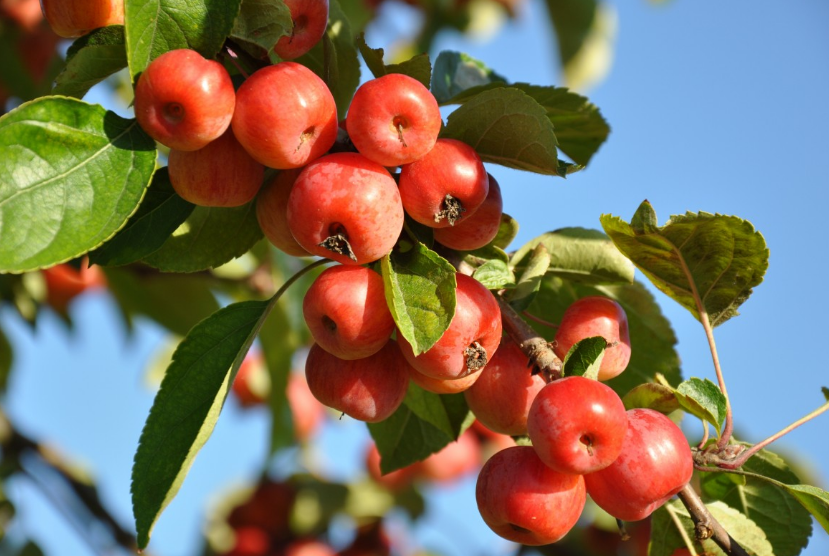
I. Basic conditions for growing hawthorn
1. Environment
Hawthorn has strong adaptability to the environment and prefers cool, humid places. Its cold resistance and drought resistance are both fairly strong. It can survive at temperatures as low as minus 20°C and as high as 30°C. It is mainly distributed on hillsides at mid-slope, sunny slopes and other slopes with an incline of about 20 degrees. It is drought-tolerant, and when humidity is too high its branches will grow more. Although it has few requirements for soil, it grows relatively quickly in fertile, well-drained, slightly acidic soil.
2. Light
Hawthorn is a light-loving crop, but as mentioned, its adaptability is fairly strong, so it can also grow under weaker light, just more slowly. As long as hawthorn's light requirements are met from sowing to maturity, hawthorn will increase its own yield and quality, with plump, fleshy fruit, bright skin color, and more nutrients accumulated. So in the process of growing hawthorn, if you want to increase yield and quality, you must provide the hawthorn tree with enough light.
3. Humidity
Although hawthorn is fairly drought-tolerant and waterlogging-tolerant, expert research has found that the safety level of soil moisture content is 9.34-11.66%, the wilting level is 7.28-9.13%, and the lethal level is 5.8-8.6%. So as long as the soil moisture content is maintained above 14 percent, hawthorn can grow well, and as long as watering is even, a high yield can also be achieved. Although it is fairly waterlogging-tolerant, it should not be planted in soil with a high water table or poor drainage, otherwise poor development may result.
4. Temperature
Hawthorn prefers warmth, but it cannot develop normally in high-temperature areas; some varieties are also extremely cold-tolerant, able to develop normally at 7-14°C, and experiments have shown that hawthorn can adapt to a minimum temperature of minus 34°C and still develop normally. However, hawthorn in such a low-temperature climate may suffer frost damage. Temperature mainly depends on your planting region; the optimal temperature is around 12-30°C, and such temperatures can guarantee hawthorn's yield and quality.
II. Precautions for growing hawthorn
1. Planting time
The first thing to note in hawthorn cultivation is choosing a suitable time for planting. Here the editor wants to tell you that hawthorn has extremely strong resistance, but under normal circumstances we do not plant it in winter. The best planting time is in spring, when the survival rate is very high, generally reaching a survival rate of 97 percent. Next, planting in late autumn is also a very good choice.
2. Planting conditions
Hawthorn has strong resistance, but that does not mean it has no requirements at all for the growing environment. If you want high yield, it is best to choose fertile, sun-facing land, and next, drainage and irrigation should both be fairly convenient. Then, if the average annual temperature of the location can be maintained at around 25°C to 30°C, that is of course best, but if the temperature does not meet the requirement, it will not cause a particularly large impact.
3. Seed treatment
There are generally three methods for growing hawthorn: the first is transplanting, the second is cuttings, and the third is sowing seeds. For these three planting methods, different treatments are needed before planting, which can increase hawthorn's survival rate and its resistance. Transplanted hawthorn seedlings need pruning; for cuttings, the hawthorn should be cut into small sections of about 15 cm, then coated with a liquid medicine before cutting; and seed treatment is troublesome. It requires first washing the seeds clean, then putting them into warm water to scald the seeds, and after 30 minutes removing the seeds and putting them into cold water to soak for about four to five days, then removing them and putting them in the sun to dry, and finally placing them in an environment with a temperature of 3-4°C for germination.
4. Planting density
The hawthorn tree is an arbor plant, so its growth and development will be much better than many other fruit trees. Therefore, planting density is crucial when planting; otherwise, the spacing between plants will be too small, photosynthesis will be insufficient, and problems such as low fruit set and uneven coloring will occur. Under normal sowing conditions, on average one mu requires about 100 jin of hawthorn planting material, with an average row spacing of 35-40 cm and a plant spacing of about 15-20 cm, so that each mu can produce at least more than 50,000 seedlings.
5. Orchard clearing management
Another thing to note in hawthorn cultivation is that the orchard needs to be cleared once every year, generally after the hawthorn harvest is completed each year. When clearing the orchard, the hawthorn trees should first be pruned and shaped, cutting off some old branches, diseased branches, and weak branches, which gives a good guarantee for the next year's hawthorn yield. Then the cut branches and leaves need to be cleaned up, and finally the field should be thoroughly disinfected once.