When Does the Bird of Paradise Bloom? Reasons It Won't Bloom, Growing Methods and Precautions
The bird of paradise (Strelitzia) is a plant with a very unusual form; its fully opened flowers look like brilliant fireworks bursting in the night sky, extremely eye-catching. So do you know when the bird of paradise blooms? What are the reasons it won't bloom? What are the growing methods and precautions?
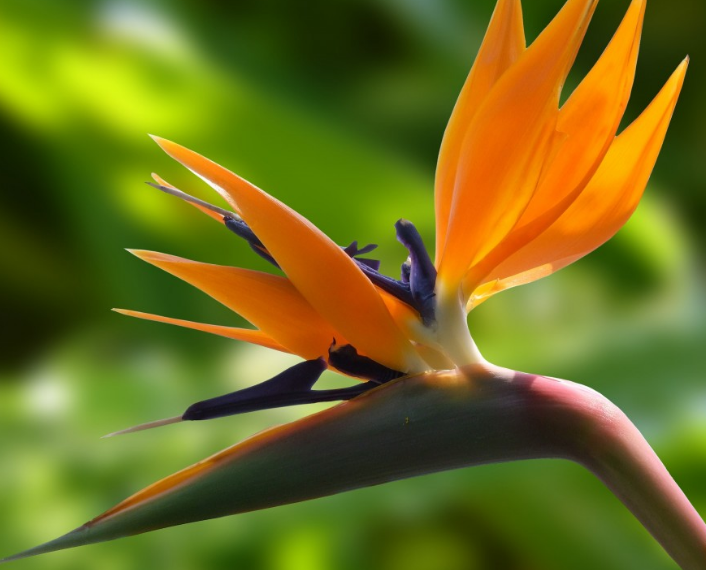
I. When does the bird of paradise bloom?
The bird of paradise has a relatively long flowering period, generally blooming in June and July each year, with a flowering period of more than 100 days. Generally, plants grown from seed will only bloom after 4~5 years. The flowers in the same inflorescence open in overlapping succession; each small flower takes about 3 days to open and can last 10~15 days, and the total ornamental time of each flower spike is about 30~40 days. A larger, well-grown plant can have multiple inflorescences with many flowers opening at the same time. During the year, the bird of paradise blooms most in summer and autumn, and less in winter.
II. What are the reasons the bird of paradise won't bloom?
1. Nutrient imbalance: If the plant is growing too vigorously, consider reducing the amount of nitrogen fertilizer and increasing phosphorus and potassium fertilizer, such as watering with fully decomposed dilute chicken or duck manure water, or using a 0.2% potassium dihydrogen phosphate solution.
2. Pot too large: The pot used to plant the bird of paradise should not be too large, otherwise a large amount of nutrients will be used for root growth, forming a huge fleshy root mass in the pot, which will also affect flower bud differentiation and normal blooming of the bird of paradise plant. For this reason, consider planting it in a slightly smaller pot, which may help promote blooming.
3. Planted too deep: For potted bird of paradise, if planted too deep and the root crown is buried too much, it will likewise affect flower bud differentiation. For this reason, when you change the pot in late autumn this year or next spring, you can just fill soil up to the root crown, as long as the fleshy roots can be buried in fertile potting soil.
III. How to grow the bird of paradise?
1. Temperature
The bird of paradise is not cold-tolerant; its most suitable growing temperature is 15~25°C, and it stops growing below 8°C. When the winter temperature is not lower than 4°C, it can be placed in a spot facing south with shelter from the north wind and with sunlight, watered appropriately less, and overwintered outdoors. In the north, the flowers should be moved indoors or into a plastic greenhouse to overwinter.
2. Light
The bird of paradise likes light. If there is insufficient light, it can easily lead to poor plant growth and affect blooming, so attention must be paid to light.
3. Pruning
To improve the quality of flower buds, promptly remove old leaves, diseased leaves and useless flower and fruit branches.
4. Watering
The bird of paradise is afraid of waterlogging. During summer growth and the autumn-winter flowering period, water should be sufficient, while after early spring flowering, watering should be appropriately reduced. In summer, generally water once a day, and in the morning and evening use a spray bottle to spray clean water on the leaf surface and the surrounding ground to increase air humidity. In winter, reduce watering and keep the soil slightly dry. If you let it continue growing, then watering should be more and more frequent.
5. Fertilizing
The bird of paradise likes fertilizer; an appropriate amount of phosphorus and potassium fertilizer should be added to the soil, and during the growing season, a liquid fertilizer of active humic acid should be applied once every 2 weeks or so.
IV. What are the precautions for growing the bird of paradise?
1. Different light in different seasons
In spring and autumn, the flowerpot should be placed in a sunny place for cultivation, while in winter it should receive more sunlight, otherwise it will directly affect leaf growth and flower color. But in summer, because the sunlight is too strong, the plant should be placed under a shade shed for care, to prevent the leaves from being scorched by the fierce sun and affecting their ornamental value.
2. Focus on phosphorus and potassium fertilizer in autumn and winter
In autumn and winter, fertilizing the bird of paradise should focus on phosphorus and potassium fertilizer. Applying potassium dihydrogen phosphate mixed with water to the roots can make the plant grow robustly and produce more and larger flowers.
3. Repot frequently
The bird of paradise is a large potted ornamental flower with fast growth and a well-developed root system. Generally, seedlings should be repotted and have their soil changed once a year, while after the plant has taken shape, it should be repotted and have its soil changed once every 2~3 years, with division carried out in spring.