Clivia Planting Methods and Root Rot Solutions, with Ten Precious Varieties
Clivia is a relatively popular ornamental plant in China, with very good sales prospects. It is being planted all over the country and then sold as potted plants. So how do you plant clivia? What to do about root rot? What are the ten precious varieties?
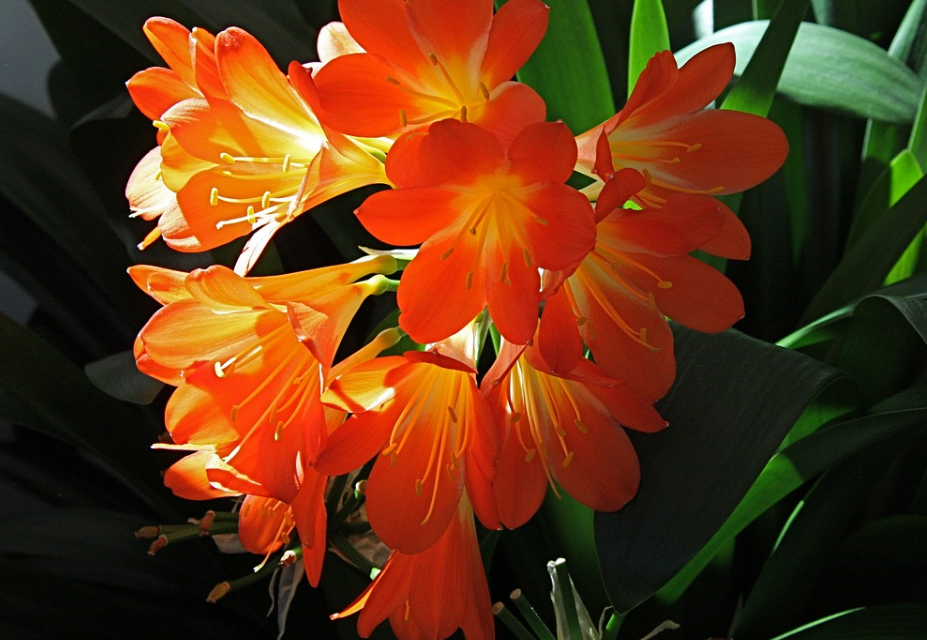
I. How do you plant clivia?
1. Seed collection
Under normal circumstances, it is best to sow the seeds one to two days after they are extracted, as the seeds have more moisture at this time and strong vitality; if left for too long, the seedling emergence rate of the seeds will be affected. Use scissors to cut off the fruit together with the "flower scape", then peel out the seeds. If sowing needs to be delayed, hang the seeds together with the "flower scape" in a cool, ventilated place, where they can be stored for about one month, but the seedling emergence rate will decrease.
2. Planting time
There is no seasonal restriction on the planting time of clivia; the specific sowing time is determined by when the seeds mature.
3. Sowing method
① To fully soften the endosperm and seed coat, soak the selected good seeds in water at about 40°C for about 30 hours before putting them into the soil, then remove and let cool. Treated seeds produce radicles in about 17-20 days.
② Choose a container that is breathable and drains easily; a wooden box is recommended. For initial planting, sawdust and river sand can be chosen; here is a detailed explanation of the river sand method. Choose fine sand, wash and disinfect it, spread it evenly in the container, place the germinated seeds with the eye facing down at intervals of about 4 cm on the sand surface, then spread another layer of fine sand on top; it should not be too thick, a thin layer is enough.
③ River sand planting has large gaps and strong water permeability; if the pot surface is found to be dry, spray or water it. Do not water too much; a humidity of 40% is enough, and keep the temperature between 18°C and 25°C.
Once the climatic conditions are created well, it takes about one month for the cotyledons to grow.
4. Management after seed emergence
After the seeds grow into small seedlings, they should be divided into pots. Choose a flower pot with good breathability, spread about 5 cm of soil at the bottom, place the small seedlings on it, and in the early stage it is best to water by spraying, which can both increase humidity and prevent too strong a water flow from washing away the seeds and seedlings. Place them in a semi-shaded place for a few days to recover.
II. What are the causes of clivia root rot and the prevention and control methods?
1. Fertilizer burning the roots
In the early stage of seedling cultivation, many growers place base fertilizer to help clivia grow better, but when placing the base fertilizer they do not cover it with much soil on top, which leads to the tender roots, which are relatively weak in the early stage, directly contacting the base fertilizer as soon as the clivia root system grows a little, causing severe root burn. Another situation is habitual regular topdressing later on, which causes fertilizer to accumulate too much, and when water is poured during topdressing, the fertilizer decomposes rapidly and then wraps around the root system, also causing root burn. Therefore, in the early stage, the soil covering the base fertilizer should be 5-8 cm or even more, and later topdressing should depend on the situation; apply topdressing only when there is a nutrient deficiency.
2. Water accumulation
Water accumulation is a relatively common cause of root rot and a mistake many growers often make. Many friends choose sprinkler irrigation to make watering easier, but this causes many clivia to receive uneven water, and it is not easy to notice, so the water at the bottom soaks the clivia roots and finally causes rot. You can insert a stick into the soil layer at the edge of the clivia pot, then put in a dry stick and check the degree of moisture to determine whether there is water accumulation. If it is potted, you can make holes in the bottom to prevent water accumulation and drain out excess water.
3. Pathogens
The incidence rate of clivia is relatively low among plants, but once it appears it is extremely easy to infect other seedlings. The most common disease is root rot. When it breaks out there are obvious symptoms: first, the clivia will look very listless and lifeless, then the roots will appear extremely wet and give off an unusual smell. After the disease appears, it is best to replace the growing soil, and the rotten roots must be removed, then later use 70% dexon 1200-fold solution to drench the roots, so as to achieve the prevention and control effect.
4. Unsuitable soil
Clivia is a plant that prefers acidity, so if the soil is alkaline it will seriously cause problems with its roots. If the selected soil is relatively heavy and tends to compact, root rot can also occur, because such soil seriously hinders the normal growth of the root system. In this situation, the soil must be changed immediately, the soil pH should be controlled at around 6-6.5, the soil should be fine, and soil with low stickiness after watering is the first choice; for better breathability, some sand can also be mixed in.
III. What are the ten precious varieties of clivia?
1. Monk Clivia
Monk Clivia has very strong genetic ability, and its flowering period lasts as long as 30-50 days. It is called the mother of short-leaf varieties. If we are talking about the most precious clivia variety, among the many precious clivia varieties it can be said to be a household name, with a great reputation.
2. Da Sheng Li Clivia
If we are talking about which variety of large-flowered clivia is the most precious, it must be Da Sheng Li Clivia. In ancient times it had always been a flower cultivated in the imperial court, and later spread to the common people. Its flowers are large and brightly colored, and it is a clivia variety deeply loved by people.
3. Dye Factory Clivia
Actually, when talking about which clivia variety is the most precious, one must mention Dye Factory Clivia. Its leaves are double-tracked, slightly thin, hard, and gray is its biggest feature, with a head shape of flat acute tip.
4. Hua Lian (Painted Face)
Hua Lian Clivia already existed in the 1960s. Hua Lian means that the leaf veins of the clivia are very clear and obvious, with obvious differences in vein depth; the thinner the leaf mesophyll, the more clearly and obviously the Hua Lian pattern appears.
5. You Jiang (Oil Craftsman)
You Jiang Clivia originated from a variety cultivated by an oil craftsman surnamed Jiang, hence the name. The front of its leaves is bright and round, and the flower color is dazzling and eye-catching. It is an excellent product cultivated in China long ago.
6. Fo Guang Lan (Buddha's Light Orchid)
The flowers of Fo Guang Lan are incomparably delicate and beautiful, with a superiority that other flowers cannot match. It is a flower that delights the eye after viewing, and it also has emerald-green, shiny leaves.
7. Anshan Lan
Anshan Clivia was hybridized from Japanese Blue and Round-headed Short-leaf Monk Clivia, and only after many years of careful cultivation was the excellent new variety Anshan Lan produced. Anshan Lan has the advantages of both orchids, with leaf tips that are rounded and arranged very neatly, and it is a flower loved by many flower enthusiasts.
8. Ma Cai Clivia
Ma Lian Cai Lan is one of the rare colored clivia varieties today. Its characteristics are a neat, short, small plant, upright leaves, and upward-curling leaf tips. The scape and small flower stalks have colored stripes, and the flower color is generally orange-red, very beautiful!
9. Heng Xing (Fixed Star)
The Heng Xing series clivia was hybridized between pure short-leaf round-headed colored clivia, and after five generations of selected cultivation it became one of the rare short-leaf colored clivia varieties today.
10. Peacock Displaying Its Tail
Peacock Displaying Its Tail Clivia is a precious variety bred after hybridizing the Japanese orchid introduced in the 1980s with the Changchun Clivia short-leaf round-head series varieties, followed by multiple rounds of screening and cultivation. Its posture is like a peacock spreading its tail, hence the name, and it is also a precious variety among five-colored clivia.