What to do when Dendrobium leaves turn yellow? Growing methods and differences from Dendrobium officinale
The stems of Dendrobium are upright, fleshy and thick, slightly flattened cylindrical, and have the effects of benefiting the stomach and promoting fluid production, and nourishing yin and clearing heat. So how should Dendrobium be grown well? What is the difference from Dendrobium officinale? What should be done if the leaves turn yellow?
I. How should Dendrobium be grown well?
1. Temperature
The suitable temperature for Dendrobium growth is 15-30°C, but it should not be lower than 5°C, otherwise it will enter a dormant state and may also suffer frost damage. If the temperature is relatively high, move it to a cool and ventilated place; if the temperature is relatively low, take measures to keep it warm.
2. Light
Dendrobium itself grows in a very humid and shady environment, so when growing it, it is best to place it in a place with scattered light and not let it be exposed to strong light. If it is winter when the temperature is relatively low, place it in a place that receives sunlight. Only in this way can it grow better and avoid frost damage.
3. Fertilization
Dendrobium will still grow well without fertilization, but if you want it to bloom, fertilization is necessary. Farmyard manure can be used for fertilization. After it enters the dormant period, fertilization should be stopped.
4. Watering
Dendrobium likes a moist environment, so it should be watered appropriately, but the amount of water must be well controlled. If the amount of water is too large, root rot will occur, which is not only unfavorable for better growth, but will also affect its normal growth. Therefore, watering should be moderate, and when watering, it should be watered thoroughly at one time.
5. Pests and diseases
If you want to grow Dendrobium better, you must promptly remove pests and diseases, clean up diseased leaves, and strengthen ventilation, which can greatly reduce the chance of insect damage.
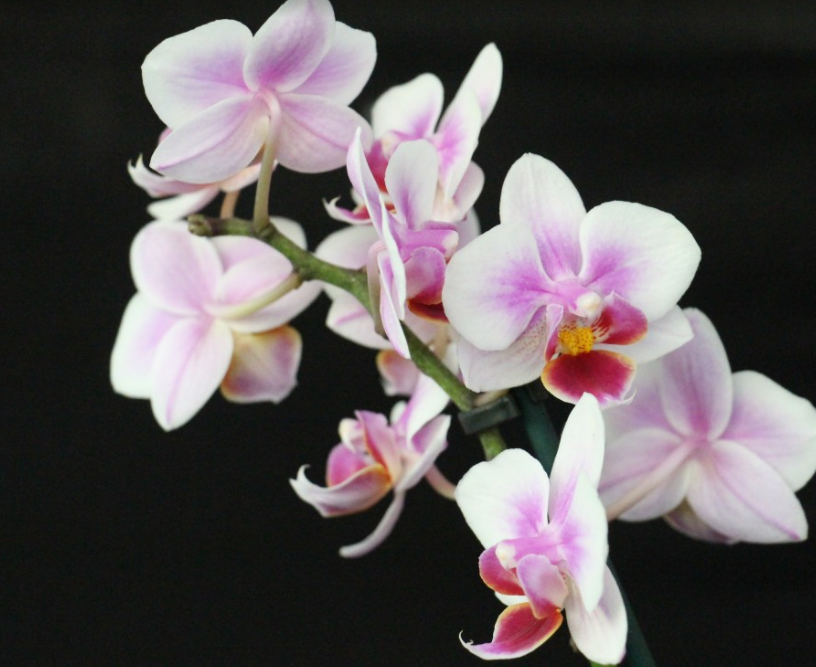
II. What is the difference between Dendrobium and Dendrobium officinale?
1. Differences in appearance
Dendrobium and Dendrobium officinale both belong to the orchid family, but Dendrobium and Dendrobium officinale also differ in appearance.
Dendrobium: Dendrobium is further divided into Dendrobium nobile, Dendrobium chrysotoxum, Dendrobium fimbriatum, etc.
Dendrobium nobile is mostly flat cylindrical, generally up to 20-40 cm long and 0.4-0.6 cm thick, with a golden yellow or yellow-with-green surface and obvious longitudinal lines; after breaking, the cross-section is flat and loose.
Dendrobium chrysotoxum is mostly thick spindle-shaped, about 1-3 cm in diameter, mostly golden yellow, with a smooth surface and a spongy cross-section.
Dendrobium fimbriatum is long cylindrical, 20-150 cm long and about 0.4-1.2 cm in diameter, with a yellow or dark yellow surface, deep longitudinal grooves, and a flat or fibrous cross-section.
Dendrobium officinale: mostly spiral-shaped or spring-shaped, smaller in length and diameter than Dendrobium, usually about 9-35 cm long and 2-4 mm thick, with a surface mostly yellow-green or golden yellow and relatively obvious fine longitudinal wrinkles; after breaking, the cross-section is flat and grayish white or grayish green.
2. Differences in taste
Dendrobium: Dendrobium is the fresh or dried stem of the Dendrobium plant. When chewed in the mouth, it is fleshy and juicy, with a slight odor, a slightly bitter taste, and a returning sweetness, and it is sticky when chewed.
Dendrobium officinale: Dendrobium officinale has a slight odor. When first chewed in the mouth, the taste is mild and sticky, with a faint vanilla aroma, and no obvious bitterness or returning sweetness, but the more it is chewed, the stronger the taste becomes and the greater the stickiness becomes.
3. Differences in effects
Dendrobium and Dendrobium officinale are similar in nature, flavor, and meridian tropism. Both are sweet in nature and flavor and slightly cold, and enter the stomach and kidney meridians, but their effects and actions are also slightly different.
Dendrobium: Dendrobium has the effects of benefiting the stomach and promoting fluid production, and nourishing yin and clearing heat. It is often used to treat symptoms such as dry mouth and irritability, insufficient stomach yin, little food and dry vomiting, and yin deficiency with fire hyperactivity.
Dendrobium officinale: In addition to the effects of Dendrobium above, Dendrobium officinale also has a unique blood-nourishing effect. It can supplement blood, essence, fluids, and humors in the human body, help nourish the myocardium, dredge cardiovascular and cerebrovascular vessels, and can also help lower blood sugar to a certain extent and improve human immunity, with relatively good health-preserving effects.
4. Differences in price
Dendrobium: The price of ordinary Dendrobium is relatively cheap. Depending on the quality of the medicinal material, the price is about several dozen to over a hundred yuan per jin.
Dendrobium officinale: Dendrobium officinale has been listed as a national third-class protected species. Its medicinal value is high and its output is relatively low, so its price is also relatively high. Usually, depending on the quality of the medicinal material, the price of Dendrobium officinale is about several hundred to over a thousand yuan per jin.
III. What should be done if Dendrobium leaves turn yellow?
1. Appropriate light exposure
This plant does not like places with too strong sunlight, so exposure to the sun can easily make its leaves turn yellow. Usually, it is best to place it on a north balcony or in the living room, which are relatively cool places, and move it out for appropriate sun exposure only when the sunlight is not very strong. In winter or early spring, when the sunlight is not yet strong, it can be placed in the sun.
2. Appropriate watering
Unreasonable water control is very likely to cause its yellow leaves, so when watering it, pay attention and do not water too frequently. Watering about once every 7-10 days is enough. When the weather is hot, or when the air is relatively dry, you can use a spray bottle to spray it, or sprinkle water beside its pot, to increase air humidity.
3. Adjust the temperature
This plant does not like excessively high temperatures. If the temperature in summer is too high and appropriate cooling measures are not taken, its leaves are very likely to turn yellow. At this time, we should place it in a cool and well-ventilated place, and appropriately increase the frequency of watering or promptly spray water on its leaves.
4. Replace the soil
If the soil quality is poor, it will be unfavorable for its growth and, in severe cases, will cause its leaves to turn yellow. First, when choosing soil, if you use leaf mold or pine needle soil dug from the wild, be sure to expose these soils to sunlight for several days before use. If you are still worried, you can also treat the soil with zinc sulfate to promptly kill insects in the soil. In addition, be sure to replace the potting soil on time to ensure that it can absorb enough nutrients from the soil.