Cyclamen, the Queen of Potted Flowers: Benefits and Uses, Yellowing Leaf Treatment, and Repotting Tips
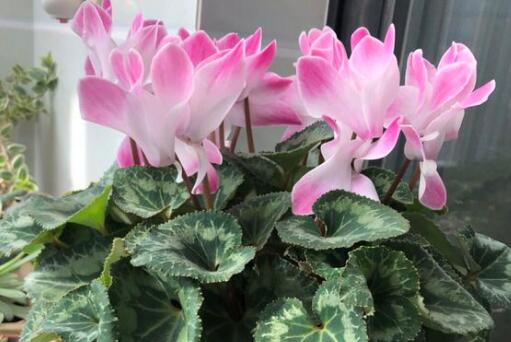
Cyclamen, also called rabbit flower, is a distinctive flowering plant native to the Mediterranean region. It was later introduced around the world and is now one of the most common ornamental flowering plants in countries worldwide, known as the Queen of Potted Flowers. With its beautiful, charming appearance and rich fragrance, cyclamen is loved by many. But do you really know cyclamen? What are the benefits and uses of cyclamen? What should you do if the leaves turn yellow? What should you pay attention to when repotting?
I. What are the benefits and uses of cyclamen?
1. Ornamental value
Cyclamen is hailed as the king of potted flowers. It has a graceful plant shape, abundant blooms, and fragrant varieties, making it very suitable for potted display. It can be placed on a sunny shelf indoors or on a desk. Cyclamen can also be grown in pots using soilless cultivation, which is charming and even better suited for home decoration.
2. Air purification
Cyclamen can absorb harmful gases such as sulfur dioxide from the air. Through its leaves, cyclamen absorbs sulfur dioxide and, through plant metabolism, converts it into non-toxic or low-toxicity substances such as sulfate. Like all plants, cyclamen can absorb carbon dioxide while releasing oxygen, and it can increase the negative ion content in the air and raise air humidity.
3. Mood regulation
Some cyclamen varieties can release a comforting fragrance that helps people relax during stressful work. The floral scent released by cyclamen can regulate people's moods, making us more energetic and lively. Cyclamen also has a calming and sleep-promoting effect, and it can regulate indoor humidity, thereby increasing skin moisture.
4. Feng shui effects
① Living room
Cyclamen symbolizes welcoming honored guests and praying for good fortune to arrive. It lets visitors feel a welcoming atmosphere and also brings peace and happiness to the family.
② Dining room
Cyclamen can inject life and vitality into the dining room, adding a cheerful atmosphere, making the dining room full of vitality and stimulating the appetite.
③ Study
The study is a quiet and elegant place, and potted plants have a calming and soothing effect.
II. What should you do if cyclamen leaves turn yellow?
1. Reduce watering
Cause: Although cyclamen likes water, it is also afraid of waterlogging. Too much watering can cause water to accumulate in the soil, damaging the plant's root system. This prevents it from properly absorbing nutrients from the soil, leading to yellowing leaves.
Solution: Reduce the frequency of watering cyclamen, and place the pot in a well-ventilated area to let the water in the soil evaporate.
2. Increase light
Cause: Insufficient light may prevent cyclamen from carrying out photosynthesis properly and from synthesizing chlorophyll normally, causing the leaves to turn yellow.
Solution: Move the cyclamen to a sunny location for care.
3. Spray water to increase humidity
Cause: Cyclamen prefers humid conditions. Being in an overly dry environment for a long time prevents it from growing normally, causing the leaves to wilt, turn yellow, and lose vitality.
Solution: Pay attention to the humidity around the cyclamen. When it is too dry, use a spray bottle to mist some water around it, or place a basin of clean water next to its pot to increase humidity.
4. Fertilize in time
Cause: If nutrients are lacking for a long time, its leaves may also turn yellow.
Solution: Apply some fertilizer or nutrient solution in time, but be careful not to add too much at once. Fertilize in small amounts but frequently, which will help it recover.
III. What should you pay attention to when repotting cyclamen?
1. Pot selection
Choose a porous unglazed clay pot with good breathability, and move the plant into a pot with a diameter of 16-17 cm. If using an old clay pot, soak it in a 1/5000 potassium permanganate aqueous solution for disinfection. If using a new pot, soak it in clean water for 30 minutes before use.
2. Repotting time
The repotting time is generally chosen before the peak growing season in autumn, or after the peak growing season around Qingming. Repotting can increase the nutrient content in the soil, providing appropriate nutrients for the growth and flowering period of cyclamen.
3. Repotting method
First, mix furnace ash and coarse gravel as a drainage layer, or place broken tiles at the bottom, then fill in the growing medium. Take the tuber out of the pot, remove the old soil around the roots, and trim away long roots, dead roots, and other debris. When planting, place 1/3 of the tuber above the soil surface to prevent it from rotting in the soil.
4. Care method
The plant should be cared for in a well-ventilated place with sufficient light, and the ambient temperature should be kept at around 15°C. After repotting, water the soil thoroughly, disinfect the wounds where branches and leaves were trimmed, and spray the plant uniformly with 800 times diluted agricultural streptomycin. Fertilize once every 7-10 days, and spray the leaves with 500-800 times diluted liquid fertilizer.