Detailed Explanation of Platycodon grandiflorus Planting Time, Per-Mu Returns and Key Points of Artificial Domestication Cultivation Techniques
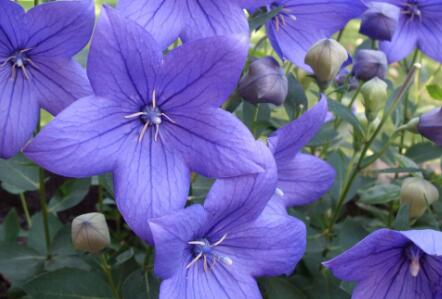
Platycodon grandiflorus is also called balloon flower, bellflower, and monk's hat flower. Judging by the name alone, some people may mistakenly think that Platycodon grandiflorus is the stem of a tangerine, but in fact it has no direct relationship with tangerines or the Citrus genus. Platycodon grandiflorus can be used as an ornamental flower; its root can be used as medicine, with effects such as relieving cough and reducing phlegm, dispersing lung qi, and draining pus, and it is a commonly used medicine in traditional Chinese medicine. When is Platycodon grandiflorus planted? What are the per-mu returns? What are the key points of artificial domestication cultivation techniques?
I. When is Platycodon grandiflorus planted?
Direct seeding of Platycodon grandiflorus is mainly done in spring, and winter sowing is also possible. Winter sowing is carried out in early November; spring sowing is in April.
II. What are the per-mu returns from planting Platycodon grandiflorus?
Planting Platycodon grandiflorus requires an input of 10,000 jin of barnyard manure or 100 jin of compound fertilizer per mu, valued at 120 yuan, 2 kg of seeds, priced at 160 yuan, and about 300 yuan for labor, totaling 580 yuan.
The average annual yield is more than 1,000 kg, with high yields reaching 1,500 kg. Calculated at an export-grade rate of 70%, that is 700 kg; at the current purchase price of 4 yuan/kg, the per-mu income is 2,800 yuan. In addition, 300 kg of substandard product, processed into medicinal material (drying ratio of 3:1), becomes 100 kg; at the current purchase price of 10 yuan/kg, that is 1,000 yuan. There is also seed income: 20 kg of seeds produced per mu in the same year, at 40 yuan/kg, another 800 yuan. The total per-mu income is 4,600 yuan. After deducting costs, the per-mu income is at least more than 3,600 yuan.
III. Key Points of Artificial Domestication Cultivation Techniques for Platycodon grandiflorus
The introduction and domestication of medicinal plants is the process of turning wild plants into cultivated plants and turning nonlocal plants (including foreign medicinal plants) into local plants through artificial cultivation. That is, the process by which people use certain means (methods) to make plants adapt to a new environment.
1. Site selection and land preparation
A sunny, wind-sheltered, fertile, deep and loose sandy loam soil with good drainage and rich in humus should be selected for planting. Deep plow 25-40 cm in winter, and apply sufficient base fertilizer first when plowing. Before sowing in the following spring, plow and harrow again to make the soil fine, and make beds or high ridges according to local practices.
2. Cultivation management
(1) Thinning and final thinning of seedlings
In directly seeded fields, thin the seedlings 1 or 2 times when the seedlings are 3-6 cm high, removing overly dense seedlings. When the seedlings are 6 cm high, carry out final thinning at a plant spacing of 6-10 cm. When final thinning, remove small, weak, and diseased seedlings, and fill gaps where seedlings are sparse or missing. Gap filling is often done at the same time as thinning, that is, planting the larger seedlings removed during thinning into the missing spots.
(2) Weeding and topdressing
During the seedling stage, weeds must be removed frequently and the soil loosened. When pulling weeds at the seedling stage, do it gently to avoid pulling out small seedlings. Thinning should be combined with loosening the soil and weeding. After final thinning, cultivate and weed in a timely manner to keep the soil loose and free of weeds. Loosen the soil shallowly to avoid damaging the roots. After watering the planting site, carry out shallow loosening when the soil is at suitable moisture. When the seedlings are about 15 cm high, apply superphosphate, potassium sulfate, or compound fertilizer as a topdressing according to soil fertility, applying it in furrows between rows, then loosen the soil, and water during drought. Before the rainy season, earth up while loosening the soil to prevent lodging. After final thinning, if drought occurs, water appropriately. In the rainy season, drain accumulated water from the field to prevent root rot.
(3) Flower thinning, fruit thinning, and lodging prevention
Flowering and fruiting in Platycodon grandiflorus consume a large amount of nutrients and affect root growth. Flower thinning and fruit thinning are effective measures for increasing yield. In production, flower buds have always been removed manually. Because Platycodon grandiflorus has strong apical dominance, after removing flower buds, lateral branches can sprout rapidly and form new flower buds. In this way, buds need to be removed once every half month, requiring 5 or 6 removals of flower buds during the entire flowering period, which is labor-intensive and time-consuming and causes great damage to branches and leaves. The plant hormone ethephon can be used to spray the flower buds at full bloom; this method is efficient, low-cost, and safe to use.
For plants kept for seed, remove the terminal bud when the seedlings are 10-12 cm high, so as to promote more lateral buds and encourage flowering and fruiting. In order to concentrate nutrients to supply the middle and upper fruits and promote full seeds, in the seed field the flower buds formed on the lower lateral branches of the stem should be removed.
3. Pest and disease control
(1) Powdery mildew: It mainly damages leaves. When the disease occurs, the diseased leaves are covered with gray powder, and in severe cases the whole plant withers.
Control methods: Clear the garden in winter and pull out diseased plants in time; at the early stage of the disease, spray with lime sulfur mixture, powdery mildew net, or triadimefon.
(2) Root rot: It damages the roots. Black-brown spots appear on the affected roots, and later they rot until the whole plant dies.
Control methods: Pay attention to drainage after rain, and the field should not be too wet; when the disease occurs, spray with biological pesticides.
4. Harvesting and processing
(1) Harvesting
Platycodon grandiflorus is harvested in the same year, the 2nd year, or the 3rd year after planting, in spring and autumn, and those harvested in autumn are heavier, more solid, and better in quality. Generally, dig them when the aboveground stems and leaves wither. If too early, the roots are not yet plump and the drying rate is low, affecting yield; if too late, it is not easy to peel the skin. After digging out the roots, remove the stems and leaves, shake off the soil, cut off the fibrous roots, soak in water and wash clean, then carry out the initial processing of removing the outer skin.
(2) Processing
Use a piece of bowl shard or a bamboo knife to scrape off the outer skin. The skin should be scraped while fresh, preferably right after digging them back, because if time is delayed, the root skin is difficult to scrape. After scraping, wash clean and dry in the sun, remove the rhizome neck, moisten thoroughly, slice, dry in the sun, and store for future use.
Product quality: The best is free of outer skin, rhizome neck, impurities, insect damage, mildew, and fully dry. Roots that are thick and plump, white in color, solid in texture, slightly granular in cross-section, with chrysanthemum patterns, and bitter in taste are top grade.