Pearl flower harvested in spring can sell for 100 yuan per jin. What are its cultivation prospects?
Every spring, farmers go up the mountains to harvest the wild vegetable “pearl flower”. After washing, steaming, dew-exposing and sun-drying, it is made into dried vegetable. When out-of-town buyers come to purchase it, it can sell for 100 yuan per jin, becoming a new way for local farmers to get rich. So what are the cultivation prospects of pearl flower?
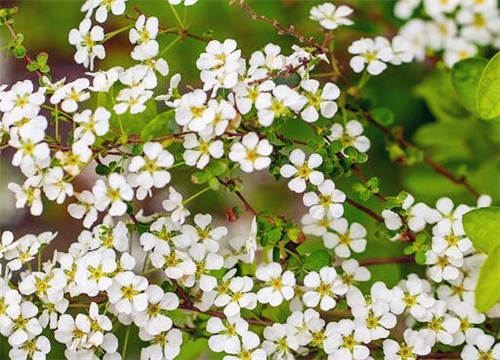
The scientific name of pearl flower is Staphylea bumalda. It is rich in vitamins and various mineral nutrients, and has effects such as harmonizing the spleen, strengthening the stomach, lowering blood pressure, promoting urination and detoxifying, and is deeply loved by consumers.
I. What are the cultivation prospects of pearl flower? There are the following three major advantages!
Advantage one: Easy to grow, many uses
Pearl flower requires little investment and is easy to plant and survive. If the grass is hoed well and fertilizer applied well in the first two years, by the third year it can grow to more than 1 m tall, with spreading branches and leaves, and weeds will no longer grow, making management very convenient.
In addition, pearl flower has particularly strong stress resistance and is suitable for planting in both the north and the south. It can withstand low temperatures of minus 20 degrees in the north and high temperatures of 42 degrees in the south. Its root system is relatively well developed, making it a good tree species for windbreak and sand fixation.
After the flowers fall, its fruit can hang on the tree from June all the way to November without dropping. The fruit, which changes from green-white to yellow-red, has great ornamental value and is also an excellent tree species for beautifying the environment.
At present, pearl flower is still being trial-sold in hotels and restaurants in large and medium-sized cities such as Beijing, Shanghai, Zhengzhou and Wuhan. The cooking methods are relatively wide-ranging, and the response has been very good. Some guests eat three plates of pearl flower in one meal and say it has a “good taste”. As the industry grows and expands, in the future it may be promoted to the family dining tables of residents nationwide.
Advantage two: Broad prospects
Because pearl flower has a low seed germination rate in the wild state and a small amount of resources, and moreover mountain farmers freely pick the flower buds and almost rarely leave the flowering inflorescences to set fruit, the production of pearl flower seedlings has been affected in recent years. Therefore, pearl flower has always been in short supply, and the market prospects for its artificial cultivation are also becoming broader and broader.
Advantage three: High selling price
Taking Gaodian Township, Dawu County, Xiaogan City, Hubei Province as an example, by planting pearl flower, villagers can pick 10 to 20 jin of fresh leaves per tree each year, which can be sun-dried into 4 jin of dry product. The market price is 100 yuan per jin, which equals an economic benefit of 400 yuan per tree per year.
Today, the pearl flower industry has already attained a certain industrial scale in some rural areas and has become a good project for local farmers to increase income and become rich.