How to Grow Phalaenopsis Orchids? A Detailed Guide to Flowering Months and Dealing with Wilted Flowers
Phalaenopsis is a plant suitable for indoor growing, with flowers shaped like butterflies. Elegant and delicate. It has the reputation of being the “queen of orchids,” and the flowers are the most ornamental part of the Phalaenopsis. So how do you grow Phalaenopsis? Which month does it bloom? What should you do if the flowers wilt?
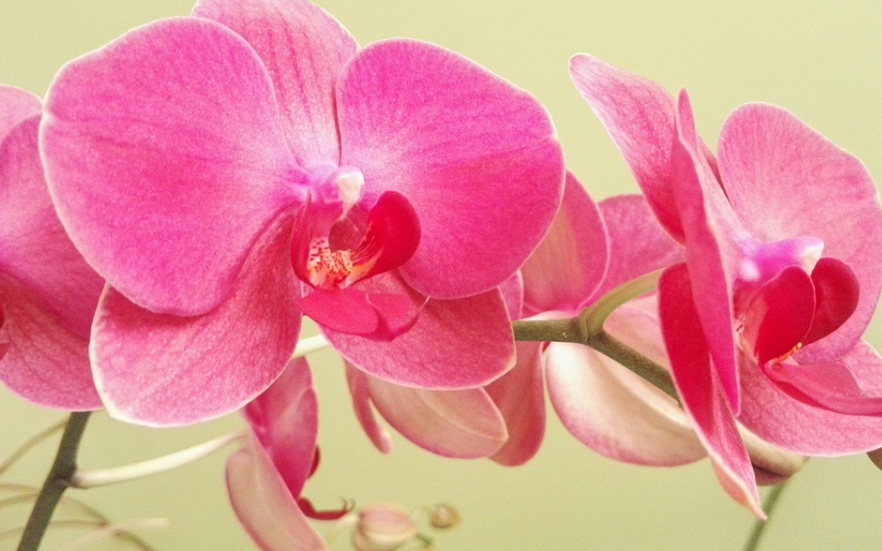
I. How to Grow Phalaenopsis?
1. Growing Environment
(1) Temperature: Ideally 16 to 30 degrees. In winter, do not let it drop below 13 degrees; in summer, do not let it exceed 32 degrees.
(2) Humidity: This refers to air humidity, ideally between 60 and 80 percent.
(3) Watering: During the growing period in spring and summer, you can water more. In summer, you can water twice a day, at 9 a.m. and 5 p.m. Water less during the dormant period, and you may skip watering in winter.
(4) Light: Normally it can be placed in a semi-shaded spot, and provide diffused light around the flowering period.
(5) Fertilizing: It needs a lot during the growing period, so you can apply a dilute liquid fertilizer once every one to ten days. Use phosphorus fertilizer during the flowering period, once every two to three weeks.
2. Pruning
This mainly refers to pruning after the flowering period. The plant usually flowers around the Spring Festival, and the flowers will fade after about two to three months. At this time, you need to promptly cut off the faded flowers to reduce nutrient consumption. If you cut at the fourth to fifth node from the base of the flower stem, it will bloom again, but this is not good for the next year's flowering. Therefore, the correct approach is to cut the flower stem off from the bottom.
3. Repotting
The plant grows very quickly and needs regular repotting. If the medium ages or its air permeability worsens, it should also be replaced promptly. Generally, you can repot around May, before new leaves grow out. Replace the old soil that is nutrient-poor or has poor air permeability, then switch to a slightly larger pot suited to the plant's size. This provides it with a roomy growing environment.
II. Which Month Does Phalaenopsis Bloom?
Phalaenopsis blooms once or twice a year, usually around the Spring Festival, and the ornamental period can last as long as 2 to 3 months.
When the flowers wither, the faded flowers must be cut off as early as possible, as this can reduce nutrient consumption.
Cut the flower stem at the 4th to 5th node from the base, and it can bloom again after 2 to 3 months.
However, in a home growing environment, it often can only bloom once a year.
III. What Should You Do If the Phalaenopsis Flowers Wilt?
1. Control Watering
Cause: Watering too much leads to water accumulation in the soil, and this accumulated water affects the normal physiological activity of the Phalaenopsis root system, causing damage to it. After the roots are damaged, it becomes difficult for them to absorb nutrients, which causes the plant's petals to wilt.
Solution: If the situation is not very serious, you can place the flowerpot in a cool, ventilated place to let the accumulated water in the soil dry out quickly, and then reduce watering. If the situation is relatively serious, then the only option is to repot it.
2. Reduce Light
Cause: If it is left in direct sunlight for a long time, its flowers will also be scorched by the strong light, resulting in a wilted appearance.
Solution: Move the plant to a place indoors without direct sunlight, or use a shade board to block part of the light for the plant.
3. Lower the Temperature
Cause: Excessively high temperatures are also something the plant cannot adapt to. If it grows in a high-temperature environment for a long time, it will be affected and become wilted.
Solution: Lower the temperature around the plant, or simply move the plant to a cooler place indoors for care.