When Do Roses Bloom and Why the Flowers Get Smaller and Smaller, Plus Growing Methods
Roses, honored as the queen of flowers, bloom regularly in the four seasons, with splendid flowers and diverse colors, and are deeply loved by everyone. So when do roses bloom? Why do the flowers get smaller and smaller? How should they be grown?
I. When do roses bloom?
Rose flowers have a faint fragrance, with a flowering period from April to October, blooming most in spring. The fleshy rose hip turns red-yellow when mature, with the top splitting open; the seeds are achenes, chestnut brown.
In the south, generally speaking, as long as they are managed properly and pruned reasonably, they can bloom all year round.
Roses like a warm climate and plenty of sunlight. In the north, they bloom only in spring, summer and autumn, and will not bloom in winter.
II. Why do rose flowers get smaller and smaller?
1. Insufficient light
Roses like plenty of sunlight. If kept in a shaded environment for a long time, the branches will be thin and long, the leaves thin and pale, the flowers few and small, the flower color dull, or they may even fail to bloom. Attention should be paid to increasing light; if conditions allow, open-air cultivation is most beneficial to rose growth, ensuring as much light as possible.
2. Temperature too high
When the temperature exceeds 30°C, rose growth is inhibited, flower buds no longer differentiate, already differentiated flower buds and formed flowers develop slowly, there are few flower buds, the flowers are small, the flower color is dull, and the flowering period is shortened. This situation mostly occurs in buildings; usually the flower pot is placed on a south-facing concrete balcony for cultivation. At noon in summer the balcony temperature is high, the pot soil dries easily, and with the scorching sun, the rising temperature of the pot wall can scorch the tender roots, causing weak growth, not only small, thin flowers but even plant death. To prevent this from happening, some measures should be taken:
① Do not place the flower pot directly on the concrete ground; place a wooden board under the pot and sprinkle water on the surrounding ground;
② Put a larger pot outside the pot to prevent the tender roots from being scorched;
③ Hang a bamboo curtain around noon to shade and cool it;
④ Remove the smaller, pale flower buds to conserve nutrients, so that good flowers can bloom after the intense heat.
3. Lack of nutrients
Roses bloom many times each year and need constant nutrient replenishment to bloom well. If fertilization is insufficient, the flowers will get smaller and smaller, so sufficient fertilizer must be applied to maintain the variety's characteristics and enhance the ornamental effect. After each flowering, promptly cut off the spent flowers and then fertilize in time.
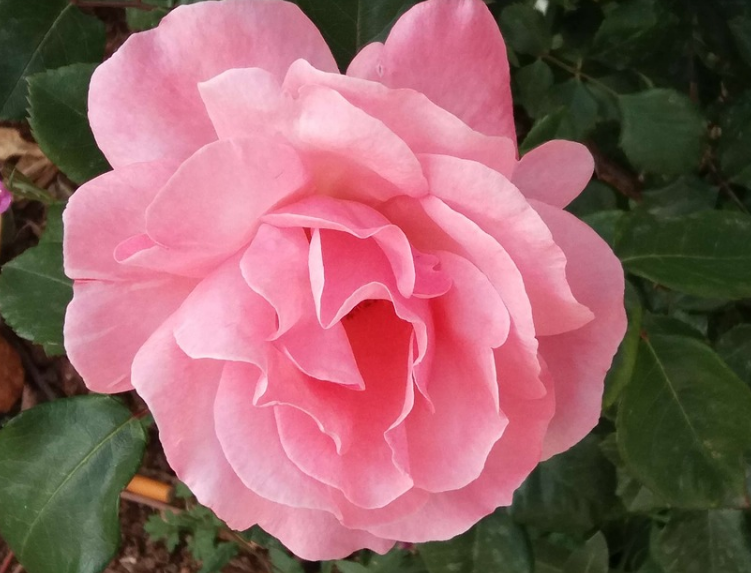
4. Excessive vegetative growth of the plant
If the branches and leaves grow excessively, it will also result in fewer flowers and smaller flowers. Attention should be paid to timely pruning and proper watering to make the rose plant grow robustly; the excessively growing branches and spent flowers should be cut off.
5. No bud thinning
For many rose varieties with larger flowers and side buds, if there are too many side buds they will disperse nutrients, so the flower buds do not get enough nutrients and the flowers become smaller. After budding, the side buds should be thinned out in time so that nutrients can be concentrated to supply the main bud; in this way, the rose flowers will not become smaller.
III. How to grow roses?
1. Light
Roses are a strong-light plant, and they need to be in the sun throughout their entire growth period. If they do not see sunlight for a long time, roses will grow excessively, with smaller, thin and weak leaves, and in serious cases they will fail to bloom or even die.
2. Temperature
Roses can grow normally at room temperature, but above 30 degrees in summer they will enter dormancy. The suitable temperature varies with the variety; in summer high temperatures, pay attention to spraying water to cool them or provide appropriate shade, and keep them ventilated.
3. Soil
Because rose flowers are relatively large and numerous, the soil is required to be loose, fertile and rich in organic matter. We can directly buy growing media on the market, or mix our own loose, fertile nutrient soil.
4. Water
Roses have relatively high water requirements; they cannot be too waterlogged or too dry, and water must be controlled reasonably. If there is insufficient water, the flowers will dehydrate; if there is too much water, yellowing and dropping will occur.
5. Pruning
After roses bloom, when the flowers are about to fade, pruning should be carried out. At this time the petals have already changed color and the outer petals have begun to fall, so they should be cut off in time. When pruning small-flowered roses, use scissors to cut at the place below one leaf, and in this way the branch buds will grow out again and produce new flowers. For large-flowered roses, count down from the flower and cut at the first five-leaflet leaf, keeping the second five-leaflet leaf.
Roses have a characteristic: the wound after pruning will shrink back by half to one cm, so when pruning, leave a certain distance for the branch to adapt itself. Do not cut below the bud, otherwise it will affect the growth of the next branch bud.
In the intense heat, roses will not produce new buds; we call this “blind buds”. Pruning should be controlled to allow normal differentiation. When the weather turns cool, cut off the blind buds and let new buds sprout again so they can continue to bloom. When roses lose their leaves in winter, heavy pruning should be carried out; the current year's branch buds must retain two to four buds, and all other branches should be cut off, so that stronger branches can grow the following year and flowering will be more vigorous.
6. Pests and diseases
There are quite a lot of pests and diseases during the growth of roses, such as powdery mildew, black spot, aphids, caterpillars and red spiders, all of which can harm them, so we must discover them in time and treat them with medication. Generally speaking, the effect of prevention is far greater than that of treatment. Try not to let diseases and pests attack.
In addition, roses are far less competitive than weeds. Once weeds are found around the plant, they should be cleared away in time.