How to Grow Bowl Lotus (Pot Lotus) and When It Blooms, and What to Do If It Doesn't Bloom
Bowl lotus, also called pot lotus, is a type of lotus native to the Suzhou area of Jiangsu, China, and later introduced throughout the country. It is a lotus that can be grown in a bowl, and it can usually be placed indoors, where it plays an important role in beautifying the environment and purifying the air. But how should bowl lotus be grown? In which month does it bloom? What should you do if it doesn't bloom?
I. How should bowl lotus be grown?
1. Choosing the soil
When growing bowl lotus, the choice of soil is especially important. This plant likes fertile soil with a high organic matter content, and rice paddy mud or pond mud can be chosen for cultivation. In addition, the container for growing bowl lotus is best chosen as a porcelain or glazed pot, and before growing, all the drainage holes in the bottom of the pot should be plugged up.
2. Choosing a suitable variety
Bowl lotus has several different varieties. When growing it, you can choose the variety that suits you best; varieties that bloom easily and bloom abundantly are the most popular, such as Xiamen bowl lotus, jade bowl, and "Spark", all of which are among the best choices for growing bowl lotus. In addition, when choosing bowl lotus, be sure to check that the terminal bud of the lotus root is intact; if it is damaged, it will be difficult to survive after planting.
3. Watering in time
Bowl lotus is an aquatic plant. If you want it to grow quickly, it absolutely cannot do without water. When growing bowl lotus, you can first put household water in the sun for one to two days, then pour it into the pot. In addition, after summer arrives, water it once each morning and evening, and after it has standing leaves, keep the water in the pot sufficient; only in this way can bowl lotus grow normally.
4. Sufficient fertilizing
Bowl lotus is a fertilizer-loving plant, but for routine fertilizing you should choose decomposed bean cake or oil residue. Phosphorus, potassium, and nitrogen fertilizers must not be supplied in excess; only after it enters the flowering period can the amount of phosphorus fertilizer be increased, applied once a week, which can prompt bowl lotus to bloom earlier and also make its flowering period relatively long.
II. In which month does bowl lotus bloom?
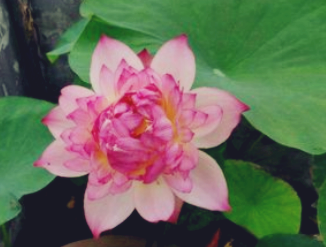
Bowl lotus generally blooms in June, but the specific blooming time varies with the variety, and the length of the bowl lotus flowering period is also not fixed; generally speaking, the flowering period is about 30 days.
Under suitable conditions of temperature and light, lotus seeds take 50-60 days from sowing to flowering in spring, and 60-80 days in autumn.
III. What should you do if bowl lotus doesn't bloom?
1. Switch to a larger growing pot
Cause: The growth of bowl lotus mainly depends on the roots absorbing nutrients. If the space is too small, its roots cannot spread out, which affects nutrient absorption and thus prevents it from blooming.
Solution: Replace it with a larger container. When changing the container, be careful not to let its roots be damaged, otherwise it will likewise fail to bloom.
2. Increase nutrients
Cause: Like most flowers, bowl lotus needs plenty of nutrients to bloom. If nutrients are insufficient, the plant will also fail to bloom.
Solution: Add nutrients to the plant regularly and in fixed amounts. You can appropriately apply poultry and livestock manure to ensure the plant's blooming needs.
3. Change the soil regularly
Cause: Bowl lotus does not like old soil. If the soil is not changed for a long time, the plant will fail to bloom, because old soil is lacking in nutrients and cannot support its blooming.
Solution: What bowl lotus dislikes most is old soil. Soil older than one year will inhibit the plant's growth, so every six months to a year, you should change its soil. When changing the soil, you can appropriately add base fertilizer to ensure the plant's needs for growth and blooming.
4. Weed in time
Cause: If weeds grow around the plant, they will compete with it for nutrients in the soil, and because it absorbs fewer nutrients, it will be difficult for it to bloom.
Solution: When growing it, pay attention to the condition of the soil in the pot, and remove weeds promptly when you find them.