Four Key Points for High-Yield Cucumber Cultivation and How to Treat Yellowing Leaves
Cucumber is one of the main summer vegetables in all parts of China. It likes warmth and cannot tolerate cold, belongs to the Cucurbitaceae family, is monoecious (bearing both male and female flowers on the same plant), and its flowering and fruiting period is generally in summer. Cucumbers taste refreshing, sweet and crisp, and are loved by people of all ages. So, do you know what the four key points for high-yield cucumber cultivation are? How do you treat yellowing leaves?
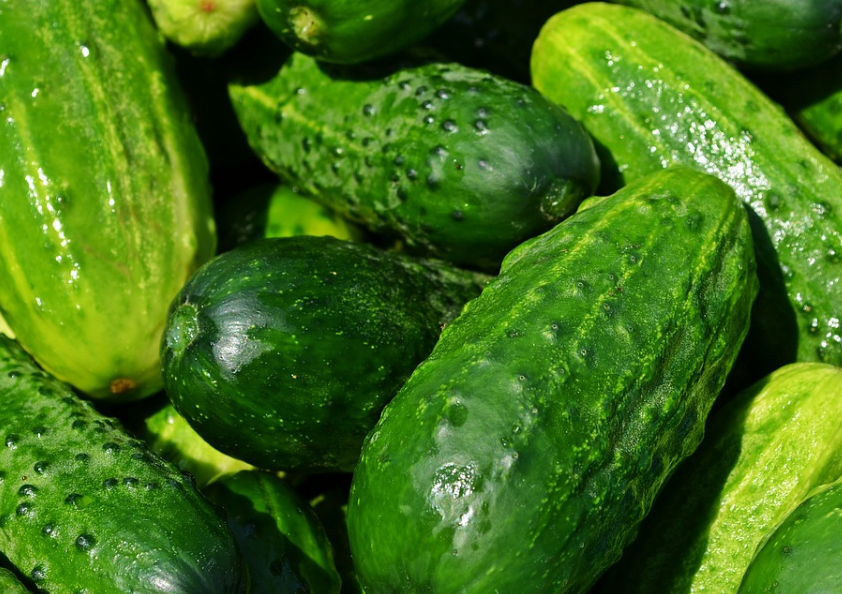
I. What are the four key points for high-yield cucumber cultivation?
1. Choose suitable varieties
It is advisable to choose high-yield varieties with strong disease resistance, many female flowers and strong fruit-setting ability, such as Jinyan cucumber.
2. Seed germination, sowing and transplanting
Cucumber seeds should be germinated 2 to 3 days before sowing. During germination, the seeds should be turned frequently so that they are exposed to the temperature evenly; generally they will sprout in about 24 hours. When you find that the seeds have slightly exposed their sprout tips, the temperature can be maintained at around 25 degrees Celsius.
Once all the sprouts have emerged, you can sow. When sowing, it is best to point all the sprouts in the same direction, and cover with soil immediately after sowing. Cucumber seedlings are generally transplanted on sunny days.
3. Strengthen management
(1) Temperature management inside the greenhouse
In early spring, the temperature is relatively low. If you transplant early, you can consider using several layers of plastic film as cover. About one week after transplanting, the greenhouse should be closed tightly, which can promote seedling recovery.
(2) Humidity management
On sunny days, the humidity inside the greenhouse can be controlled at 55% to 65% during the day, and can be kept at 85% to 90% at night. On cloudy days, the humidity can be kept at 70% to 85% during the day, and at 90% to 95% at night.
(3) Fertilizer and water management
At the early stage of transplanting cucumber seedlings, remember to water the seedlings thoroughly, which can effectively promote early establishment. From after establishment to the late stage of cucumber vine growth, be sure to control watering, then carry out seedling hardening.
4. Prevent and control diseases
Common greenhouse cucumber diseases mainly include downy mildew (Bordeaux mixture can be sprayed), cucumber anthracnose (80% zineb 800-fold solution, etc. can be sprayed), cucumber powdery mildew (200-fold wettable sulfur powder suspension can be sprayed), etc.
II. How do you treat yellowing cucumber leaves?
1. Treatment measures for yellowing cucumber leaves caused by changes in the external environment
When temperature, humidity and light suddenly change too much, it will cause physiological yellowing of cucumber leaves. The treatment for this situation is: make the cucumber growing environment meet the growth needs of cucumbers. Cucumber is a typical warmth-loving plant, and its suitable growth temperature is 10-32°C. The suitable daytime temperature is relatively high, about 25-32°C, while the suitable nighttime temperature is relatively low, about 15-18°C. The suitable temperature for photosynthesis is 25-32°C. Therefore, meeting the above environmental conditions can treat yellowing cucumber leaves.
2. Treatment measures for yellowing cucumber leaves caused by excessive watering and too much moisture
When this situation occurs, the leaves of the cucumber plant will generally turn yellow, especially the top leaves, which become small and grow slowly; in severe cases, wilting may occur. The most suitable relative soil humidity for cucumber is 85%-90%. Cucumber has a relatively strong ability to adapt to air humidity and can even tolerate a nighttime relative air humidity of 90%-100%, but if the humidity is too high and lasts too long, diseases are likely to occur. Therefore, do not water cucumbers multiple times, to prevent the roots from lacking oxygen due to excessive moisture, which prevents normal root growth and causes rot.
3. Treatment measures for yellowing cucumber leaves caused by excessive fertilization
Although cucumbers have a high demand for nutrients during cultivation, the amount of fertilizer supplied cannot be increased arbitrarily. If too many nutrients are supplied, it will cause nutrient excess in the cucumber plant and lead to yellow leaves. Therefore, fertilizing cucumbers needs to be done according to different growth stages. For example, at the seedling stage, use seedling fertilizer and apply an appropriate amount of balanced macroelement fertilizer 20-10-20; at the middle and late stages, focus on balanced and high-potassium fertilizers, and apply 20-20-20 and 15-15-30. At the seedling stage, generally one to two topdressings are enough; at the middle and late stages, applying once every 10-15 days or so can meet nutrient needs. Fast-acting water-soluble fertilizers are absorbed faster and take effect faster than traditional fertilizers, and increase yield noticeably. Of course, base fertilizer is essential before planting cucumbers; note to apply more organic fertilizer and microbial bacterial fertilizer.
4. Treatment measures for yellowing cucumber leaves caused by lack of medium and trace element fertilizers
Cucumbers also need a fair amount of medium and trace elements, such as magnesium, boron, iron, zinc, calcium and other medium and trace elements. If these elements are seriously deficient, it will reduce the quality of cucumber plants, fruits, etc. Therefore, during topdressing at the middle and late stages, these medium and trace elements should also be supplemented. You can spray foliar fertilizer specially for cucumbers to comprehensively supplement the nutrients needed for cucumber growth, so as to improve the quality of cucumber plants and cucumbers, and enhance the resistance of cucumber plants to common diseases.
5. Treatment measures for yellowing cucumber leaves caused by pests and diseases
When cucumbers suffer from pests and diseases, the symptoms mostly occur on the leaves at the growing point of the cucumber, causing yellow-green mottled mosaic leaves. The occurrence of cucumber pests and diseases will cause leaves to turn yellow, so when routinely spraying foliar fertilizer, add fungicide to it as well, killing two birds with one stone, treating nutrients and diseases at the same time, with prevention more important than treatment, keeping pests and diseases completely away from cucumber plants.