Yunshang Fairy Lily Potted Cultivation Methods and Blooming Time: What to Do When the Flowers Wilt?
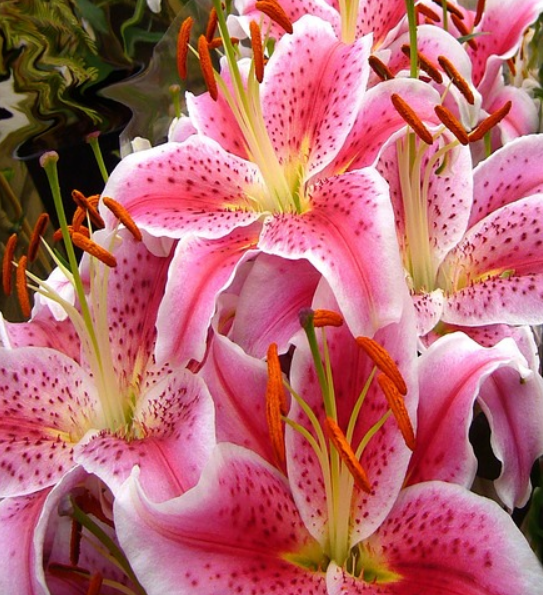
Lilies have long been known as the “Yunshang Fairy.” Their appearance is elegant and pure, their flower posture refined, their leaves fresh green and delicate, and their stems slender and graceful, making them deeply loved by many. So do you know how to cultivate potted lilies? In which month do they bloom? What should you do when the flowers wilt?
I. How are lilies cultivated in pots?
1. Cultivation time: Potted lilies are best planted in September to October.
2. Soil: For the growing medium, it is best to mix leaf mold, sandy soil, and garden soil in a 1:1:1 ratio. Apply plenty of fully decomposed compost and a small amount of bone meal at the bottom of the pot as a base fertilizer. The planting depth is generally about 2 to 3 times the diameter of the bulb. The potting soil should not be too wet, otherwise the bulb will easily rot. Potted lilies should be repotted once a year, replacing the medium and base fertilizer with fresh ones.
3. Fertilizing: Lilies do not have very high fertilizer requirements. Usually, applying fertilizer at the start of spring growth and at the beginning of flowering is enough. Some growers abroad believe that lilies need relatively more nitrogen and potassium fertilizer and should be fertilized once every 10 to 15 days during the growing period, while phosphorus fertilizer should be limited, because too much phosphorus fertilizer can cause the leaves to turn yellow and wither. During the flowering period, phosphorus fertilizer can be applied additionally for 1 to 2 days. To make the bulb plump, the spent flowers should be cut off promptly after blooming to reduce nutrient consumption. Watering only needs to keep the potting soil moist, but during the peak growing season and in dry weather, it must be watered appropriately and more frequently, and water should often be sprinkled around the flower pot to increase air humidity.
4. Temperature: The suitable growing temperature for lilies is 12 to 18°C. In winter, even if the temperature drops to 3 to 5°C, they will not die from the cold.
5. Light: Lilies have the characteristics of being cold-resistant, light-loving, fertilizer-tolerant, and moisture-fearing. Lack of sunlight and long-term shading will affect normal blooming. However, they have broad regional adaptability and can be planted in the ground or in pots in both the north and the south.
6. During the growing period of lilies, the flower pot must also be turned once a week. Otherwise, the plant tends to grow lopsided, which affects its appearance.
II. In which month do lilies bloom?
The blooming time of lilies is generally from April to July, and white lilies usually enter full bloom in July. However, the blooming time of lilies depends not only on the variety but also on the planting time. The entire growth process takes 120 to 150 days. The earlier they are planted, the earlier they bloom.
III. What should you do when lilies wilt?
1. Increase the temperature
Cause: When the temperature is too low, they are prone to cold damage, especially in winter. In this way, they can no longer absorb nutrients, so they begin to wilt.
Solution: Move them to a warmer place. Generally, the most suitable temperature for their growth is between 15 and 20 degrees.
2. Reduce or increase the amount of water
Cause: If they are watered for a long time, the amount of water will be too much. In this way, the roots will be soaked in excess water for a long time and will be unable to breathe, and the roots will begin to rot. At this point, they begin to wilt. But they also cannot go without water for a long time, otherwise they will lack nutrients and also wilt.
Solution: If root rot is caused by overwatering, cut off the rotten roots and then reduce the amount of watering. Specifically, water according to the degree of dryness or moisture of the soil. If it is caused by lack of water, increase the amount of water in time, but do not water thoroughly all at once; give water slowly.
3. Increase light
Cause: They very much like to grow in an environment with sufficient light. If they are placed in too dark a place, they cannot carry out photosynthesis to obtain nutrients, so they begin to wilt.
Solution: Place them in a bright place to obtain sufficient light, and they will soon recover.
4. Reduce the amount of fertilizer
Cause: When applying fertilizer, if too much is applied, it will burn their roots, and at this point they will begin to wilt.
Solution: First cut off the rotten roots, then dilute the excess fertilizer with water. If the effect is not obvious, the soil needs to be replaced entirely so that they can return to normal.