Is there a difference between cosmos and Gesang flowers? Detailed guide to planting time and methods
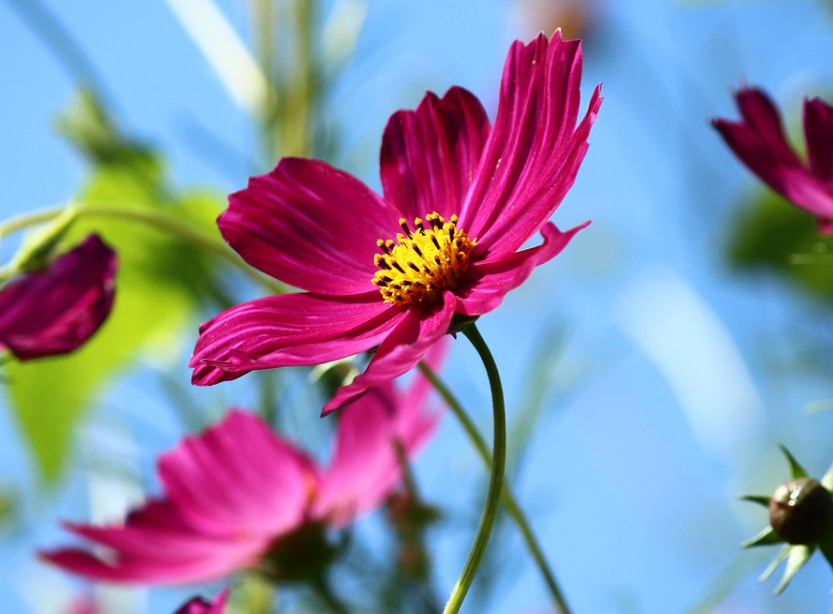
Cosmos is an annual herbaceous plant with slender upright stems, many branches, and smooth stems or stems with fine hairs. Many people think cosmos is Gesang flowers, so is there a difference between cosmos and Gesang flowers? When to plant? How to plant?
I. Is there a difference between cosmos and Gesang flowers?
Most people think cosmos is Gesang flowers, and in many places in our country that is indeed the case. However, if considered nationwide, there is still a difference between them.
First, Gesang flowers are more common in the western regions, because in Tibetan, “Gesang” means beautiful and happy, so in those places many kinds of flowers are called Gesang flowers, also known as “happiness flowers.” They carry very rich emotional connotations. This is because Gesang flowers have a quality that other flowers do not have, namely the ability to live in very harsh environments, being very tenacious. Moreover, the plateau has both the severe cold of the snowy region and the scorching sun of the plateau, yet Gesang flowers can still bloom into extremely beautiful flowers, so in the western regions, people call very tenacious flowers Gesang flowers, that is, “happiness flowers.”
Cosmos, on the other hand, is the Gesang flower of the central and eastern regions. It is the same as Gesang flowers, only with a different name. Of course, this is only the case in the eastern and central regions. Cosmos is a type of Gesang flower, although in the Central Plains region Gesang flowers are cosmos.
In short, nationwide, cosmos is only a branch of Gesang flowers. That is, Gesang flowers are a major category, while cosmos is a minor category. Gesang flowers include cosmos. To put it plainly, in mathematics, cosmos is a subset of Gesang flowers. Therefore, there is a difference between cosmos and Gesang flowers.
II. When to plant cosmos?
It is best to plant at the very beginning of spring, so that it will bloom in May of that year, and by August the flowering will have almost completely ended. After the autumn cools, it can then bloom again, and the flowering period will continue until Frost's Descent. If you choose to plant it in August, it will not bloom until October, and at that time the plant will also appear extremely small and will not look good for viewing. From this it can be seen that the most suitable planting time is in early spring.
III. How to plant cosmos?
1. Soil: First put the prepared seeds into a small plastic bag, then place it in a dry and cool place to keep the seeds fresh. Then prepare a flower pot; a large pot with a diameter of 15cm is about right, then fill it with garden soil. The best seasons for sowing are spring or autumn. Then scatter the seeds into the flower pot, cover with a thin layer of soil to prevent them from being washed out when watering. Then water thoroughly to settle the roots, and place the flower pot in a cool place. When the temperature is above 15°C, the germination rate will be very fast, and generally sprouting begins after one week. At this time, the flower pot can be placed in a place with sufficient sunlight, but strong light should be avoided.
2. Watering and fertilizing: While cosmos is growing, fertilizer should not be applied too much, and watering should not be excessive either, as this will cause cosmos to grow leggy. If the cosmos plant is too tall, it will fail to bloom or produce very few flowers, affecting its ornamental value. It likes to grow in places with sufficient sunlight and avoids waterlogging. If the potting soil is relatively poor, the flowers will bloom even more beautifully and naturally.
3. Pinching: While cosmos is growing, pinch off the top central branch to promote branch development, which helps produce more abundant flowers.
4. Pest control: Cosmos is susceptible to aphids and red spider mites. Be sure to maintain good light transmission and air permeability. When these pests appear, you can brush them off with a small brush, or mix laundry powder and dish soap with water and spray it. A ratio of 1:100 is sufficient. The concentration should not be too high. Spray twice a day for a better effect.
IV. How to water cosmos?
1. Watering before sowing:
Before sowing, be sure to water the soil thoroughly, or you can sow first, then cover the seeds with 1 cm of soil, soak the flower pot in water to a depth reaching 1/3 of the pot, and let the water slowly enter through the small holes at the bottom of the pot until the entire soil in the pot is moist, then take it out.
2. Watering during germination:
While the cosmos seedlings are growing, ensure the soil remains moist. During high temperatures or dry conditions, the frequency of watering can be increased. However, make sure there is no waterlogging.
3. Watering during the growth period:
During the growth period, cosmos needs a large amount of water, and at the same time be sure to keep the soil surface always moist. The soil must not crack.
4. Daily watering:
Daily watering should be controlled in amount; it is fine if the surface soil is slightly dry, but the lower soil should remain moist. When watering, be sure there is no waterlogging, otherwise it can easily cause cosmos to grow leggy, and in severe cases can lead to root rot.