Reasons Why Peace Lilies Do Not Bloom and How to Encourage Flowering
The peace lily (Spathiphyllum) has become an increasingly popular indoor potted flowering plant in recent years. Thanks to its many virtues, it combines flowers to admire, foliage to enjoy, and air purification all in one, meeting most people's needs for growing plants. But many people's peace lilies only grow leaves and never bloom, so what are the reasons a peace lily does not bloom? How can you get a peace lily to bloom?
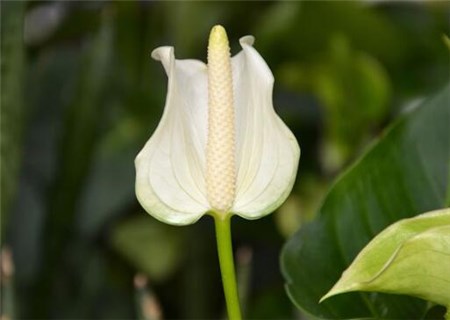
1. In which months does the peace lily bloom?
Under normal care, the peace lily blooms from May to August, and each bloom lasts 4-5 weeks from opening to fading. Gardeners should first make sure whether their peace lily simply did not bloom during its flowering season.
2. Why does the peace lily not bloom?
1. Not enough years of growth
A peace lily needs a certain amount of time to reach blooming maturity. The ones we usually buy from the market have generally already been grown for more than three years and already meet the conditions for blooming. A normally growing peace lily needs 4 to 6 years before it can bloom normally; if it was grown from seed, add another year; seedlings from division need a slightly shorter time, but still need 2 to 3 years before they can bloom. So if your peace lily is still in its juvenile stage, not blooming is normal, and you just have to wait patiently!
2. Not enough growing space
Peace lilies grow quickly, and in general after 1-2 years the plant will fill the pot, with crowded leaves and poor air circulation, and the inner leaves find it hard to receive sunlight, making blooming difficult.
3. Unsuitable care environment
Although the peace lily is called a "lazy person's flower," getting it to bloom still takes a certain amount of effort and care. If a peace lily grows for a long time in a place with insufficient light, or where the sunlight is too strong, its growth will suffer and it will struggle to bloom. This is especially true during the period before flowering in April to May: with insufficient light and dry air, the peace lily will not bloom even when it has reached blooming age.
4. Lack of fertilizer
If a peace lily is never fertilized for a long time, this is bad for the plant's healthy growth and affects blooming. During the growing season from May to September, apply some granular compound fertilizer each month, and the plant will both grow leaves and bloom.
3. How can you encourage a peace lily to bloom?
1. Induce flowering
If the plant has already reached the right flowering age, we can artificially induce blooming by spraying gibberellic acid; the inducer needs to be sprayed one month before flowering.
2. Strengthen routine care
Keep the plant in a bright spot for care, water it promptly, and ensure air humidity. In April and May, frequently sprinkle water around the plant to raise the relative humidity, fertilize once a month, and appropriately increase the amount of fertilizer before flowering to ensure enough nutrients for blooming.
3. Repot in time
Because peace lily leaves grow quickly, if you do not repot in time, the plant will have poor air circulation. Each year in early spring, you can repot the peace lily into a larger pot and replace the soil with loose soil at the same time. After repotting, place the plant in a shady spot for 1 week, then return to normal care. Some peace lilies grow so quickly that they may need repotting twice a year; in that case, besides spring, you can also repot once in autumn.
4. How often should a peace lily be watered?
1. Normal watering schedule
The so-called normal environment is one suited to this plant's growth. First, keep the temperature between 18°C and 28°C, with no strong direct sunlight, but with good air circulation. In this environment, water once every 3 to 5 days, that is, water whenever the top layer of the potting soil becomes slightly dry.
2. Watering times vary
If the temperature rises above 28°C, the soil should be kept slightly moist at all times, and the watering interval should be shortened to about once every 2 days; if the temperature drops below 15°C, the top layer of the potting soil should be a bit drier before watering, and watering about once every 6 to 8 days is enough. The lower the temperature, the longer the watering interval.
3. Points to note
Although this plant likes water, you must not overwater it, otherwise yellow leaves will appear. In severe cases, it may also fall victim to other pests and diseases.
When the temperature drops to 10°C, overwatering at this time can easily cause cold damage; besides moving it to a different environment, you should also reduce watering.
Because everyone's growing environment is different, watering must be adapted accordingly. It is best to check the condition of the potting soil before watering, and watering according to the actual state of the potting soil is the most correct approach.