How to Grow Potted Lemons: Methods and Precautions
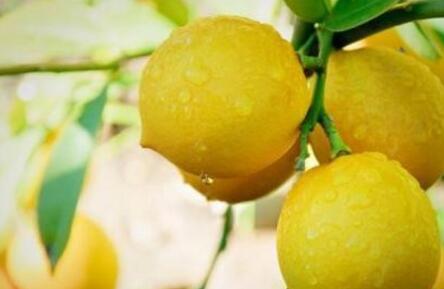
The lemon is an evergreen small tree of the genus Citrus in the family Rutaceae. Its leaves are relatively small, oblong-elliptical, with finely serrated margins. The flowers are solitary, blooming throughout the year, with a rich fragrance. Below, let us take a look at how to grow potted lemons.
I. Key Technical Points for Potted Lemons
1. Seedling raising and potting: In the south, where cultivation is on a large scale, grafting propagation should be used; in the north, where cultivation is on a small scale, cuttings are mainly used, or grafted seedlings can be purchased for cultivation. The lemon's root system has high requirements for water, nutrients and soil, so the potting soil should be mixed into a culture soil that is permeable and aerated, retains water and fertilizer, and is slightly acidic. Potting and repotting can be done after autumn or in early spring, flexibly according to the local climate.
2. Light and temperature: The lemon is a light-loving plant, yet excessively strong sunlight leads to poor growth and development. Generally at noon the plant needs to be moved, and the suitable growing annual average temperature is above 15°C; the optimal growing temperature is 23°C to 29°C; growth stops above 35°C, and at -2°C it suffers freeze damage. In summer, lemons generally do not need cooling; move them indoors before Frost's Descent and outdoors after Qingming, and they can overwinter safely.
3. Watering and fertilizing: Lemons need relatively more water during growth and development, but too much water easily causes root rot. Generally speaking, spring is the period of shoot growth and leaf unfolding, bud pregnancy and flowering, so watering should be moderate. In summer, with strong light and high temperatures, more water is needed. But it must be timely and moderate, otherwise fruit drop will occur. Autumn is the period of autumn shoot growth and rapid fruit enlargement, so there must be sufficient water. Late autumn and winter are the flower bud differentiation period, so the potting soil should be on the dry side. Lemons rather like fertilizer; besides applying sufficient base fertilizer when potting and repotting, the principle of light fertilizer applied frequently should be maintained during the growing period. The number of fertilizer applications and the amount applied must be determined according to growth vigor and phenological phase. For liquid fertilizer, fully fermented cake fertilizer water is best, with a cake-to-water ratio of 1:200. In the north, where the soil tends to be alkaline, ferrous sulfate can be added to the fertilizer solution to make a slightly acidic nutrient solution.
4. Pruning: Pruning is generally divided into winter pruning and summer pruning. Winter pruning should follow the principle of "remove the dense and keep the sparse, remove the weak and keep the strong," cutting off dead branches, shortening weak branches, and removing water sprouts with no fruiting function. Summer pruning on non-fruiting trees mainly involves shortening overly long shoots, while on fruiting trees it involves removing summer shoots and shortening declining branches in the middle and upper parts of the canopy periphery. Promoting flowers and preserving fruit: the lemon is originally a tree species that flowers and fruits in all four seasons, but potted plants in the north mostly flower and fruit in spring. Therefore, after the autumn shoots stop growing, water must be controlled. Wait until the two sides of the leaves begin to curl inward, then water moderately to promote flower bud differentiation. Pay attention to fertilizing in the pot and spraying fertilizer on the leaves to cultivate robust fruiting mother branches.
5. Main measures for preserving fruit: First, strengthen the supply of fertilizer and water to accumulate nutrients; second, carry out artificial pollination; third, thin flowers and fruit. Lemon fruits are large and need many nutrients, with a normal leaf-to-fruit ratio of 30 to 40:1. Following the principle of removing the weak and keeping the strong and even distribution, first thin out excessive and overly dense flower buds; then, when the young fruit is 1 cm in size, thin out some fruits; finally, after physiological fruit drop, determine the final fruit set according to the leaf-to-fruit ratio. Alternatively, leave no fruit on weak branches and only 1 fruit on strong branches.
II. Precautions for Growing Lemons
1. Fertilizer and water management
After the lemon tree is successfully established, nitrogen fertilizer should be used as a top dressing in the first two years, with the aim of promoting the formation of the lemon tree canopy, but the nitrogen fertilizer should also be controlled appropriately. This is because excessive nitrogen fertilizer will cause the lemon tree to grow excessively, making it impossible to ensure nutrition; excess nutrition leads to early fruit ripening, causing flower and fruit drop. While using nitrogen fertilizer, attention should also be paid to the application of compound fertilizers such as calcium, magnesium and phosphorus. In autumn, organic fertilizer is used as the base fertilizer for the lemon tree, providing sufficient nutrition for the tree body and promoting flower bud germination as well as flowering and fruiting. When fertilizing, special attention should be paid during the fruit enlargement period and the shoot emergence period; farmyard manure can be used as fertilizer, but it must be fully decomposed, and more urea and phosphorus-potassium fertilizer should be applied as top dressing. Moreover, the lemon tree is a fruit tree that is extremely intolerant of drought, so it must be watered and irrigated in time.
2. Cultivation and weeding
Cultivation and weeding is an indispensable step in growing lemon trees. Cultivation is to make the soil looser so that the roots can stretch and extend better, and it also enhances the soil's permeability. Weeding is to prevent weeds from seizing nutrients, water, sunlight and other nutrients from the young trees. Especially before the high-temperature and dry season in summer arrives, cultivating and loosening the soil in advance before the drought makes the soil looser, which has a certain effect on reducing water evaporation. Cultivate at least three times a year, at least ten cm each time, but be careful not to damage the roots.
3. Branch training and pruning
Young lemon trees have strong growth capacity and a high flowering rate, and water sprouts easily occur at places where branches bend and on scaffold branches, affecting the tree's shape. Therefore, branch training and pruning of lemon trees requires tying them up with ropes so that the secondary main branches do not bend. Remove sprouts on the scaffold branches to promote the development of the lemon. The lemon is a fruit that grows very vigorously, so pruning should not be too heavy; leave more branches and leaves so that sunlight can penetrate into the canopy. Pinch and shorten in time to prevent excessive growth of the lemon, and burn diseased, disabled and dead branches and other waste branches in a concentrated manner.
4. Preserving flowers and fruit
As mentioned earlier, the lemon tree has very vigorous growth capacity. To prevent the occurrence of excessive growth with many fruits and low quality, root cutting and water control can be carried out on fruiting branches to control their excessive growth. In the early growth stage, about three sprays of paclobutrazol can be applied to inhibit shoot growth; spraying before maturity in September can promote flower bud formation. If continuous rainy weather is encountered, especially in spring, the petals should be appropriately shaken off, which can accelerate the turning green of the lemons and also prevent pests such as tortricid moths from affecting the normal growth and development of the lemon tree.