How to Grow Impatiens (Henna Flower): A Detailed Step-by-Step Guide, Save It Now
Impatiens, also known as henna flower, ji xing zi, or xiao tao, originated in China and India. It is robust and highly adaptable, and can be grown in any type of soil. It is generally sown from seed in spring, raised as seedlings and then transplanted. After planting, when the plant reaches 10 cm to 20 cm in height, pinching out the growing tips encourages more branches and more abundant blooms. During the growing period, apply liquid fertilizer 1 to 2 times as appropriate. In Chinese folk tradition, the petals of impatiens have been used to dye fingernails since ancient times, which is why it is called "henna flower." What are the specific steps for growing impatiens (henna flower)? What are its effects and benefits?
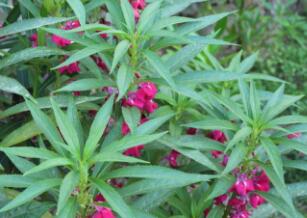
1. How does impatiens disperse its seeds?
Impatiens disperses its seeds not by wind, not by animals, and not by water, but by "self-reliance." When its fruit splits open, the fruit wall curls inward and then suddenly springs outward, flinging the seeds away. There is also a plant called the squirting cucumber: when its fruit is nearly ripe, a lot of mucus forms inside. Once the fruit drops from its stalk, the fruit wall contracts immediately, generating great pressure, and the mucus together with the seeds is squirted out from the stalk end, able to shoot as far as 5 to 6 m away!
2. Specific steps for growing impatiens
1. Planting. Generally sown in spring from March to April, either in a seedbed or directly in a courtyard flower bed.
2. Light and temperature. Impatiens likes light and tolerates shade. It needs at least 4 hours of diffused sunlight per day. In summer it should be shaded, and in winter it should be moved into a greenhouse to prevent cold damage.
3. Watering and fertilizing. After planting, water promptly and fertilize frequently, taking special care not to let the soil alternate between dry and wet. In summer, never water a wilted plant under the scorching sun. Especially during the flowering period, the plant must not suffer drought, otherwise the flowers are prone to drop.
4. Flowering period control. If you want to delay the flowering period, you can sow in early July. You can also use the pinching method, while removing early-opening flowers and flower buds, so that the plant keeps growing larger, with a top-dressing applied once every 15-20 days. After September, more flower buds will form, so that they bloom at National Day. At the same time, attention should also be paid to disease prevention and control.
5. Pest and disease control
Powdery mildew
This disease mainly occurs on the leaves and tender shoots. It generally begins in June, and after July the leaf surface is covered with a white powdery layer. Subsequently, small yellow granules form within the white powdery layer, the color gradually deepening, and finally turning dark brown.
Brown spot
The disease mainly occurs on the leaves. The spots on the leaf surface are initially small light yellowish-brown dots, then expand into circular or oval shapes, after which the center turns light brown with brown edges and indistinct concentric rings. On severely affected leaves, the spots merge into patches, causing the leaves to become withered and yellow, until the plant dies.
Damping-off
The pathogen mainly infects the root and stem area, causing the affected part to turn black or constrict; when moist, white mold-like growth appears on it. After the plant is infected, the leaves can be seen wilting and drying out within a few days, and then the whole plant dies.
3. Effects and benefits of impatiens
1. Effects of impatiens
Activates blood and unblocks menstruation, dispels wind and relieves pain, and detoxifies when used externally. Used for amenorrhea, traumatic injuries, blood stasis with swelling and pain, rheumatoid arthritis, carbuncles, boils and furuncles, snake bites, and hand ringworm.
2. Benefits of impatiens
(1) Effect on ringworm fungi
The fresh flower juice of impatiens has an inhibitory effect on Trichophyton rubrum, Trichophyton violaceum, Epidermophyton inguinale, and Epidermophyton floccosum.
(2) Inhibitory effect on bacteria
The decoction of this product also has varying inhibitory effects on Staphylococcus aureus, hemolytic streptococcus, Pseudomonas aeruginosa, typhoid bacillus, and dysentery.