Loquat Cultivation Techniques: A Detailed Guide to Flower Promotion, Flower Thinning and Fruit Thinning
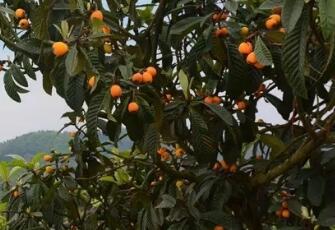
Loquat is a nutritious and health-promoting fruit, available only from March to April each year. Many people mistake the yellow fruit for an apricot, but that is not the case; they merely look similar. In recent years, with the advancement of technology, loquats have become increasingly delicious, with sweeter and more tender flesh, and the economic benefits of loquat cultivation have also improved. Let us now take a look at loquat cultivation techniques: how to promote flowering, thin flowers and thin fruit.
I. How to promote flowering in loquat cultivation?
1. Apply fruit-sizing and shoot-promoting fertilizer early and heavily
In some parts of southern China, summer shoots are the bearing mother branches of loquat, so cultivating excellent summer shoots is one of the measures to ensure a bumper harvest year after year. The fertilization time is from mid-May to early June, after harvesting early- and mid-maturing varieties and before harvesting late-maturing varieties. The specific application rate (calculated on the basis of 1500 kg of fruit per 666.7 sq m) is 1500 kg of decomposed farmyard manure, 45 kg of urea and 60 kg of superphosphate per 666.7 sq m. It is best to apply the fertilizer in shallow trenches.
2. Branch pulling, branch bending and shoot twisting
In July to August, when summer shoots have basically stopped growing, pull and bend the branches; the ideal pulling angle is 90 degrees to the main branch. For some excessively vigorous branches, twist the shoots to promote flowering.
3. Root pruning, water control and maintaining appropriate soil drought
For young, vigorously growing large-fruit loquat trees or loquat orchards with vigorous plant growth, when 1/3 of the leaves on summer shoots have turned green, shallow-to-medium tillage should be carried out on the soil layer under the canopy, with a depth of 20-30 cm being appropriate, and with the coarse roots exposed as the criterion, cutting off most fine roots and a few skeletal roots. From August to September, stop irrigation and keep the soil dry to limit summer shoot growth, accelerate leaf greening, increase nutrient accumulation in the aboveground part, and facilitate early flower bud differentiation.
4. Chemical control
In early July and early August, spray once each time with 15% paclobutrazol at 500 times dilution or PBO growth regulator at 300 times dilution. This method can effectively control new shoot growth, promote flower bud formation and improve flower quality.
5. Girdling, ring-barking and bark inversion
This method is the most effective for controlling shoots and promoting flowering, but it has high technical requirements and a very strict implementation time. Improper measures can easily cause failure to flower, leaf drop or even plant death, and it is only suitable for varieties that are difficult to flower or excessively vigorous trees. Girdling is generally carried out in early to mid-July, with the depth reaching through the bark without damaging the xylem. Generally, make 3-4 rings on skeletal branches and 1-2 rings on small branches, with each ring 1 cm apart. When using ring-barking and bark inversion, the wound must be disinfected and wrapped with plastic film to retain moisture.
II. How to thin flowers in loquat cultivation?
Flower thinning is divided into flower cluster thinning and flower bud thinning. Flower cluster thinning is carried out from September to mid-October, mainly removing flower clusters on weak branches, small flower clusters, pest- and disease-damaged flower clusters and excessive flower clusters, so that the ratio of vegetative branches to flowering branches is 2:1 or 1:1. Early-maturing varieties should be thinned lightly, while late-maturing varieties should be thinned heavily; vigorous trees should be thinned lightly, while old and weak trees should be thinned heavily. Flower bud thinning is carried out when the small flower branches on the flower cluster spread out (October to November), by removing the 1-2 small flower branches at the lower part of the flower cluster and the tip of the flower cluster, leaving only the 2-3 flower branches in the middle. In areas prone to freeze damage, flower bud thinning should not be carried out.
III. How to thin fruit in loquat cultivation?
The time is February, when the last flowers have completely fallen (in areas prone to freeze damage, wait until the temperature has fully risen), and early-maturing varieties should be thinned early. As for the number of fruits retained, large-fruit varieties should retain 1-2 fruits per cluster, while small- and medium-fruit varieties should retain 3-4 fruits per cluster. In short, mid- and late-maturing varieties and vigorous trees and branches should retain more, while the opposite should retain fewer or none, keeping the leaf-to-fruit ratio at 5-8:1, with the yield per 666.7 sq m controlled at around 1500 kg.