Best Time to Plant Strawberries: Skip the Old Methods and Double Your Yield
Strawberries are a spring fruit, and generally a large amount of fresh strawberries ripen and hit the market every year in February and March. So when is the best time to plant strawberries? Many people are still using the same old strawberry planting methods, no wonder their yields are not high. Today we have put together the high-yield strawberry planting methods as follows:
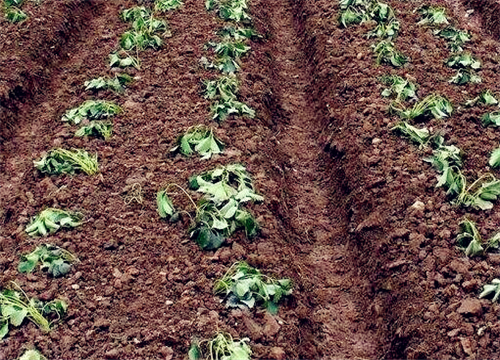
I. When is the best time to plant strawberries?
Nowadays, in fact, some people plant strawberries in all four seasons, but the best planting time is March and April each year. The specific key times are as follows:
1. The best time to sow strawberry seeds is generally July-August each year. From November of that year to March of the following year is the strawberry harvest period, but you cannot use the old planting methods.
2. The normal planting time for strawberry seedlings is to transplant them in March-April each year, and the strawberries can ripen and be harvested in June-July.
II. Strawberry seedling planting methods: plant this way and annual income can reach 40,000 yuan!
1. Greenhouse construction
Winter strawberry planting is mainly carried out in greenhouses. Due to climate differences, the north generally uses winter-warm solar greenhouses, while the south mostly uses plastic arched sheds.
Winter-warm solar greenhouses have good insulation performance and are convenient to manage. They use red bricks or adobe as wall materials, erect hot-dip galvanized steel pipes as the greenhouse frame, and cover the top with special greenhouse film. In winter, to achieve insulation, insulation quilts also need to be added on top. There are two types of insulation quilts, straw mats and silk floss, and the prices of these two differ quite a lot. The rolling and unrolling of insulation quilts is mostly done with a highly automated electric roller shutter machine, which can save a lot of labor. This kind of winter-warm greenhouse comes in widths such as 8 m and 10 m, and the length can be within 100 m depending on the plot. The cost is about 100-300 yuan per sq m.
Plastic arched sheds are relatively simple and also lower in cost. They are mainly composed of steel pipe frames and greenhouse film. The steel pipes are bent with a machine and inserted directly into the ground (concrete piers or ring beams can also be used), and then the film is fastened to the frame with spring clips and channels. This kind of arched shed is generally about 3 m high, with widths of 8 m or 10 m both being fine, and the length can also be arbitrary according to the plot. However, its insulation performance is relatively poor, but it is suitable for winter use in the south. The cost is about thirty to forty yuan per sq m, which ordinary people can generally accept.
2. Cultivation methods
There are many cultivation methods that can be chosen for strawberries. The simple one is direct soil cultivation. If you want to raise the cultivation level, you can choose a vertical cultivation model.
Soil is the foundation on which strawberries depend for survival, so before planting strawberries in a greenhouse, the soil must be well conditioned. For strawberry planting, choose soil that is loose in texture and good for drainage and aeration. First, clean the soil thoroughly, remove surface debris, and carry out one deep plowing. Second, winter production limits the number of waterings, and topdressing is inconvenient. Therefore, applying enough basal fertilizer is very important. Apply about 5,000 kg of farmyard manure per mu of land, or use organic fertilizer fermented from farm livestock manure, straw, and other waste, to save production costs while increasing the content of beneficial microorganisms in the soil and helping strawberries absorb beneficial elements. The plowing time should be early, preferably sunning the soil clods before the dog days so the soil matures. Make beds and ridge according to the transplanting requirements. The north generally uses flat-bed planting. The bed length is determined according to the width of the greenhouse, the bed width is 1-0.8 m, and the bed ridge height is about 15 cm.
There are many types of vertical cultivation models, including column type, A-frame type, rotary type, trough type, hanging type, and so on. Vertical cultivation models have a high technological content and a high level of automation. Watering and fertilizing all use integrated water and fertilizer technology. They are also attractive and quite suitable for developing leisure picking, and can effectively increase the market value of strawberries.
3. Winter greenhouse strawberry varieties
For strawberry cultivation in winter arched sheds, choose varieties with a short dormancy period. Every year many new strawberry varieties come on the market, so growers also need to choose appropriately according to market conditions. In the south, generally choose Sweet Charlie, Toyonoka, Tudela, Nyoho, Chunxiang, Hokowase, Tochiotome, Sachinoka, and so on. In the north, generally choose cold-resistant varieties with a long dormancy period, such as Flame, Allstar, Darselect, Akihime, Tianxiang, and so on. However, when grown in a greenhouse, there are not too many climate requirements.
4. Winter greenhouse strawberry transplanting
The transplanting time for greenhouse cultivation should be determined according to the degree of terminal flower bud differentiation. Through microscopic examination, transplanting can be done when the terminal flower bud differentiation rate reaches 50%. In production practice, if the shortened stem shows an obvious arching back and ear leaves appear on the petioles at the leaf base, then flower bud differentiation has been reached. The transplanting time is generally mid-to-late September. Plant 6,000-8,000 plants per mu. When planting, face the arched back of the seedling crown toward the ditch edge, and cut off half of the root system, otherwise the seedlings themselves will grow excessively, the number of flowers will increase, and the fruit shape will become smaller. The planting depth requires the stem part of the seedling core to be level with the soil surface, so that when shallow the roots are not exposed and when deep the core is not buried. After transplanting, water once immediately to settle the seedlings, and afterward water at the appropriate time according to soil dryness and moisture to help them survive and turn green.
5. Post-transplanting management of winter greenhouse strawberries
(1) Plant management
From transplanting of strawberry seedlings until flower buds emerge, generally 5-6 leaves should be retained along with one bud. Excess old leaves, daughter buds, and axillary buds should be removed in time. After flowering and fruiting, remove the old yellowed leaves and dead leaves on the stem, and remove runners in time to reduce consumption. Remove small branches and weak small fruits. Generally retain 7-9 fruits per inflorescence stalk to enlarge the fruit and improve quality.
(2) Temperature and humidity management
The optimum temperature for strawberry growth is 20-28 degrees. High temperatures above 36°C and low temperatures below 5 degrees are both unfavorable for strawberry growth. Generally, the daytime temperature should be kept between 25-28°C, not exceeding 30 degrees, and at night 7 degrees is suitable. Keep 25 degrees at the early flowering stage, and 23 degrees at the full flowering stage. From late December to the end of January, when the shed temperature is below 5 degrees, a small arched shed with an additional layer of film should be set up inside the greenhouse. During extreme low temperatures, three layers of film should be used for insulation. Humidity inside the shed should be controlled below 80% before flowering, and controlled at 60% from flowering to fruit enlargement. To prevent disease from high temperature and high humidity, use ventilation around noon. By April of the following year, when the temperature rises noticeably, the surrounding film on both sides of the greenhouse can be removed to increase ventilation, playing a role in lowering temperature and humidity and extending the fruit production period.
(3) Pollination during flowering by releasing bees
Although strawberries can set fruit through self-pollination, in greenhouses there is a lack of pollinating insects, which leads to poor pollination and deformed fruit. Using bees to assist cross-pollination has an obvious effect on improving quality and increasing yield. Bees should be released at the early flowering stage, and no pesticides should be sprayed during the flowering period, so as not to affect pollination and produce deformed fruit. Also thin flowers and fruits appropriately, removing the high and keeping the low, removing the weak and keeping the strong.
(4) Fertilizer and water management
Because greenhouse strawberries have sufficient basal fertilizer, and most of it is organic fertilizer, the amount of topdressing is relatively small. However, timely supplementation of phosphorus and potassium fertilizers and multiple trace elements according to strawberry growth still cannot be ignored. Strawberries require sufficient water throughout the entire growth process. During the flowering period, the soil moisture can be slightly drier, and during the vigorous growth period strawberries need more water. Irrigation can be combined with fertilization by dissolving fertilizer in water to make a solution diluted about 1,000 times and applying it. When soil moisture is high and there is no need to irrigate, the fertilizer solution can be applied directly into the soil through pipes. When the soil is dry, the fertilizer can be diluted to 4,000 times, also using the pipe irrigation method, which saves labor and is convenient.
(5) Pest and disease control
No matter what you plant, pests and diseases always follow. The main pests and diseases of strawberries include aphids, spider mites, gray mold, powdery mildew, and bud blight. For the bud blight currently occurring in some strawberry-growing areas, methods such as removing old leaves and improving ventilation and light penetration should be used. Nowadays, pest and disease control for strawberries mostly uses biological control techniques. Pest control can be carried out by hanging sticky insect boards, insect-killing lamps, and other methods inside the greenhouse.
The above are the planting methods for strawberry seedlings. Remember to save them!
II. Strawberry seed planting methods: plant this way and double your yield!
1. Storing seeds
When eating strawberries, you can pick out the strawberry seeds with a toothpick, or buy ready-made strawberry seeds. To improve the seed germination rate, before sowing you can wrap the seeds in gauze, soak them wet for 24 hours, and subject them to low-temperature treatment at 0°C-3°C in the refrigerator for about 15 days to break seed dormancy, then sow.
2. Sowing
Strawberry seeds are relatively small, so sowing must be done carefully. The simplest method is to mix sieved fine sandy loam with some finer humus soil, fill it into a flower pot, and spray it thoroughly with water. Generally choose a ceramic pot, because ceramic pots have good permeability and drain easily.
3. Emergence of seedlings
Before sowing, spray thoroughly with water and spray the seedling substrate thoroughly. Friends using pots directly can keep the pot soil height one cm below the upper rim of the pot, then scatter the seeds evenly. After scattering, cover with about 0.1 cm of sieved fine soil, or do not cover with soil at all, as long as your seedling substrate is soft enough. Cover the pot with plastic film to keep the soil moist. At a temperature of 25°C, seedlings can begin to emerge 15-25 days after sowing.
4. Transplanting
After the seedlings grow for 3-4 months, they can be lifted and transplanted, with a plant and row spacing of 20-30 cm. Trim off the large leaves. The planting depth is as shown in the figure above. Plant them in soft soil, and after planting water thoroughly to settle the roots, then place them in a semi-shaded place. After a few days of recovery, the strawberries can grow smoothly.
5. Daily management
(1) Light: Strawberries like sufficient light, preferably more than half a day of sunlight. Usually place them in a sunny and well-ventilated spot.
(2) Fertilizing: Potted strawberries flower and fruit multiple times a year and consume a lot of nutrients, so nutrient supplementation should be strengthened. You can use animal hooves, fish bones, poultry innards, soybean cake, and so on, add water, let them rot and ferment, and make them into liquid fertilizer water, or apply compound fertilizer as topdressing. Generally topdress once a week.
(3) Watering: Strawberries like moisture but fear waterlogging. Water when the surface soil is almost dry. You can use the soaking pot method, and take the pot out when water reaches the soil surface.
(4) Pruning: For potted strawberries, promptly remove excess runners, old leaves, and diseased leaves to reduce nutrient consumption. Only in this way can the fruiting quality of potted strawberries be improved.
(5) Yellow leaves: Sometimes you may find that the plant has yellow leaves, but do not worry, just remove them. In winter, the yellow leaves can be kept all along, and after new leaves grow out in the following spring, remove the dead yellow leaves.
(6) Shaping: You can use wire or bamboo skewers and so on to make fruit racks of different shapes, place them in the flower pot, and prop up the fruit clusters. This can promote ventilation and light penetration for the fruit clusters, allow the fruit to color evenly, and also prevent soil from contaminating the fruit and reduce pest and disease damage. You can also use runners to create shapes according to the principles of bonsai art to increase their ornamental value.
The above are the high-yield planting methods for strawberry seeds. Remember to save them!
Summary: The above are the strawberry planting times and high-yield methods we have put together for you. We hope they can help you. This article is compiled from the internet.