How to grow the medicinal plant cassia seed? Summary of 8 key cultivation techniques
Cassia seed, also known as cassia tora and false mung bean, is a plant of the Fabaceae family. The seeds of cassia seed are used medicinally and have the effects of relieving constipation, clearing the liver, and improving eyesight, and can effectively treat symptoms such as headache and dizziness, glaucoma, and constipation. Next, this article introduces the cultivation techniques for the medicinal plant cassia seed.
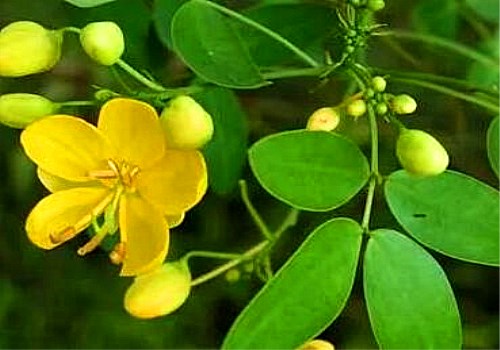
I. Growth habits of cassia seed
Cassia seed prefers a warm and humid climate, is drought-tolerant but not cold-tolerant. It grows well in hot and rainy seasons, and at low temperatures the plants are easily killed by frost. When planted in well-drained, deep, fertile and loose sandy loam, the root system is well developed and the nitrogen-fixing rhizobia are most abundant, but it should not be planted in saline-alkali, low-lying waterlogged plots or plots with heavy clay soil.
II. Land preparation and fertilization
Cassia seed should be planted in well-drained, loose and fertile high and dry plots. After selecting the land, plow deeply 25-30 cm, and apply 2500 kg of fully decomposed and crushed high-quality barnyard manure + 25 kg of compound fertilizer with 15% each of nitrogen, phosphorus and potassium per mu. After fertilizing, level the soil, rake it fine, and make high beds. The high beds are 1.3 m wide, and drainage ditches are opened around the high beds for drainage to prevent waterlogging.
III. Planting of cassia seed
In late April, soak the seeds in water at 50 degrees. During soaking, stir constantly. After soaking in warm water for 12 hours, remove and dry slightly, then open furrows and sow at a row spacing of 35 cm and a furrow depth of 3 cm. After sowing, cover with 3 cm of soil, water, and then cover with a thin layer of burnt soil ash. After sowing, keep the soil moist.
It is recommended to often choose the small cassia variety for planting and producing cassia seed. The seeds in the seed pods vary in size and in degree of plumpness. Mainly select seeds that are large, plump, and free of pests and diseases as seeds.
IV. Field management
When the seedlings are 6 cm tall, carry out shallow loosening of the soil and weeding. Thin the seedlings at a plant spacing of 25-30 cm, and check the seedlings to fill gaps. For places lacking seedlings, large and strong seedlings can be selected for transplanting. When the seedlings are 15 cm tall, carry out intertillage and weeding again, hoeing deeply between rows and shallowly between plants. Combined with intertillage and weeding, finalize the seedlings at a plant spacing of 30-40 cm, and apply 1000 kg of fully decomposed dilute human and livestock manure water per mu as a topdressing. When the seedlings are more than 40 cm tall, strengthen water and fertilizer management to promote more branching, more flowering, and more pod setting.
At the early branching stage, combined with intertillage and weeding, apply 1000 kg of fully decomposed dilute human and livestock manure water + 25 kg of superphosphate per mu as a topdressing to promote more branching and more flowering and fruiting; before the plants close the rows, combined with intertillage and weeding, apply 2000 kg of fully decomposed dilute human and livestock manure water + 30 kg of superphosphate per mu as a topdressing to promote full fruit development and plump seeds.
V. Pest and disease control
1. Ring spot disease: at the early stage of the disease, spray with 1200 times dilution of 50% thiophanate-methyl wettable powder for control.
2. Gray leaf spot: at the early stage of the disease, spray with 1000 times dilution of 50% carbendazim wettable powder for control.
3. Aphids: spray to kill with 1000 times dilution of 40% omethoate emulsifiable concentrate.
VI. Harvesting and processing of cassia seed
When the pods turn dark brown, harvest in batches. After harvesting, transport back and dry in the sun, beat out the seeds with a wooden stick, and dry the seeds in the sun to obtain the commercial product. Seed quality is best when dry, plump, brown, and glossy.