Greenhouse cucumber cultivation techniques are not difficult; sowing time and daily management are the key
Cucumber has always been a fairly popular vegetable variety on the market, and it is widely grown. The main cultivation methods include protected cultivation and open-field cultivation. Because greenhouse cultivation allows the maturity period to be controlled, multiplies yield, and offers relatively high economic returns, it has become the main cultivation model in many places. Greenhouse cucumber cultivation techniques are not difficult; mastering the sowing time and the key points of daily management is essential.
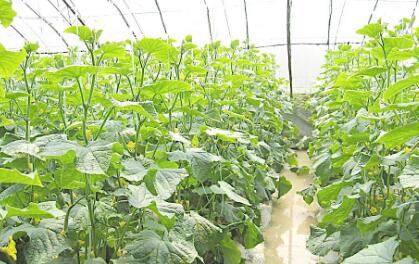
1. When are cucumbers in greenhouses generally sown? What is the specific method?
In the north, planting is mainly in October-November. Generally, the greenhouse is deep-plowed in August-September to deal with weeds and other debris inside the greenhouse and to treat the soil. Around October, cucumber seeds are started in nutrient pots. Basically, the planting time is mid-to-late October and early November.
1. Variety selection: For cucumber cultivation, choose excellent varieties that tolerate low temperatures in the early stage, tolerate high temperatures in the later stage, and have strong disease resistance.
2. Seed treatment: 1-3 days before sowing cucumbers, sun-dry the seeds. After sun-drying, scald the seeds in 55°C warm water for 10-15 minutes, stirring constantly until the water temperature drops to 30-35°C. Rub and wash the seeds repeatedly, rinse off the mucilage with clean water, and soak for 3-4 hours. Wrap the soaked seeds in a clean wet cloth and place them at 28-32°C to sprout for 1-2 days. Sow when 70% of the seeds have “whitened” (radicles emerging).
3. Soil preparation: For cucumber nutrient soil, mix garden soil or field soil that has not grown cucurbit vegetables in the past 3-5 years with high-quality decomposed organic fertilizer, with organic fertilizer accounting for 30%. Mix the soil and organic fertilizer evenly and sieve. To the sieved nutrient soil, add 100 grams of carbendazim per 1 cubic meter of soil and mix evenly to make medicated soil.
4. Sow at the right time: The sowing period for cucumbers is mid-January or late January. Seedlings can be raised in a heated greenhouse or an energy-saving solar greenhouse. Use nutrient pots 10 cm in diameter and 10 cm high, filled with 8 cm of nutrient soil, and water thoroughly. After the water drains through, sow 1 germinated seed in each nutrient pot, cover with 1 cm of medicated soil, and lay plastic film flat over the top to help preserve moisture.
2. Key points of daily management for greenhouse cucumbers
1. Temperature management
Right after transplanting, the soil temperature is relatively low, so the greenhouse needs to be closed immediately to build up heat. Even if the air temperature briefly exceeds 35°C, do not ventilate, so as to raise the soil temperature as quickly as possible and promote seedling recovery.
During the seedling recovery period, if there is no excessively high temperature, ventilation is not needed. For small arched tunnels, uncover them promptly in the morning to raise the soil temperature as quickly as possible. After seedling recovery, ventilate as needed according to weather conditions. Ensure that the time at 21-28°C is more than 8 hours, and maintain the nighttime minimum temperature at around 12°C.
As the outside air temperature rises, gradually increase the vent opening. When the outside air temperature stabilizes above 12°C, ventilation can be done day and night. For the greenhouse air temperature, 25-30°C in the morning and 20-25°C in the afternoon during the day is best.
2. Intertillage and loosening the soil
After the cucumbers recover from transplanting, carry out 3-4 rounds of intertillage and soil loosening, working from near to far and from shallow to deep. Combined with intertillage, earth up the ridges for the cucumber seedlings, ultimately forming small high-ridge cultivation.
3. Reasonable watering
After transplanting cucumbers, water once to help the seedlings recover. After that, do not water unless the soil is dry. When the cucumbers have grown to 12 leaves, and about 60% of the vines have small cucumbers around 12 cm long, water a second time.
After entering the fruiting stage, water demand increases. Adjust the watering interval according to factors such as growth vigor and weather. In the early growth stage of cucumbers, water once every 7-10 days; in the middle stage, water once every 5-7 days; in the late stage, water once every 3-5 days. For early-stage watering, watering on a sunny morning is best.