Detailed Guide to Growing Strawberries in Pots: A Bountiful Harvest at Home
Many people love eating strawberries; they are sweet and delicious, and popping one after another into your mouth is deeply satisfying. They are also highly nutritious, containing more “vitamin C” than most fruits. Strawberries are fairly expensive, and there are rumors of waxed strawberries on the market, which makes people uneasy about eating them. Some gardening enthusiasts have taken to growing strawberries in pots at home. Below is a detailed guide to growing strawberries in pots, to show how you can achieve a bountiful harvest at home.
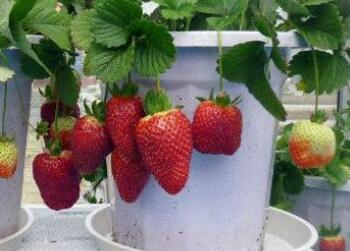
I. Choosing Strawberry Varieties for Pots
For pot-grown strawberries, you can choose everbearing varieties, among which European Four Seasons Red, Changhong No. 2, and 83-38 are preferred.
Pot-grown strawberries can be planted in any season, but the survival rate is highest when planted in autumn, in September to October.
Strawberry seeds are tiny, so be gentle when handling them.
Before sowing, wrap the seeds in clean gauze, soak them in water, then place them in the refrigerator for a low-temperature treatment lasting about half a month. The temperature inside the refrigerator should be kept between 0° and 3°c. Seeds that have undergone low-temperature treatment will have a higher germination rate later on.
When sowing, mix the seeds with plant ash and scatter them onto the surface of the potting soil, then cover them with a thin layer of fine soil. Next, gently spray aged oxygen-rich water or cooled boiled water onto the surface of the medium until the potting soil is thoroughly moistened, then cover it with plastic film to keep the temperature and humidity inside the pot relatively constant.
After doing this, place the pot in a sunny spot for care. After about 20 to 30 days, the young sprouts break through the soil.
II. Choosing and Preparing Growing Containers
For a single pot-grown strawberry, it is best to use an unglazed clay pot with a diameter of 20 to 30 cm. If you are growing more, you can use wooden boxes or similar containers.
Before use, check whether the pot and the bottom of the wooden box drain well. In addition, before planting, soak the pot or wooden box in water to moisten it.
III. Choosing and Mixing Soil
Pot-grown strawberries prefer fertile, loose soil with good aeration. If conditions allow, you can use the humus layer from the surface of broadleaf forests as the medium. This soil has undergone long-term weathering in nature, contains rich nutrients, and also has good water absorption and drainage performance.
Alternatively, you can mix your own growing medium by hand according to local conditions.
The usual method is to take one part garden soil, one part river sand, and one part decomposed chicken, duck, or sheep manure, mix them, and sift before use.
Humus soil has a characteristic: it contains microorganisms. Therefore, before use it must be disinfected with a 0·3% potassium permanganate aqueous solution.
IV. Planting Procedure
Before planting, first select healthy seedlings, cut off the runners and old, damaged leaves, leaving 2 to 3 young leaves, and trim the root system to a length of about 10 cm.
Note that when lifting the seedlings, keep more of the original soil around them.
Next, dig a hole in the potting soil that fits the strawberry's root system, hold the strawberry upright with the roots kept vertical and spread out, seat it in the hole, then gently press the soil flat with your hand.
After planting, gently water along the edge of the pot with aged oxygen-rich water until the soil is thoroughly moistened, so that the plant and soil fit closely together. Then cover it with an open plastic bag to keep the temperature and humidity inside the pot relatively constant.
V. Fertilizer and Water Management
After planting, observe the seedlings and the moisture changes in the pot. If water needs to be added, it is best to do so in the early morning or evening. The water used for watering should be fully aged; do not use tap water directly. Tap water contains residual chlorine, which can harm the plant's roots. At the same time, tap water's temperature is relatively low, and using it directly will shock the roots and make the plant sick.
Everbearing strawberries bloom and bear fruit multiple times a year, so the plant consumes a great deal of nutrients, and nutrient supplementation must be strengthened. At home, you can use kitchen waste and other materials to make excellent flower fertilizer, which is both economical and environmentally friendly.
There are many materials at home that can be used to compost flower fertilizer. For example, peanuts, sunflower seeds, and beans can be composted into nitrogen fertilizer; fine fish bones and hooves and horns can be composted into phosphorus fertilizer; fruit peels, especially banana peels, and rice-washing water can be composted into potassium fertilizer.
These fertilizers are natural organic fertilizers containing various nutrient elements needed for flower growth. Their fertilizer effect is mild and lasting, and they also help the soil form granular structure, thereby improving the soil.
VI. Shaping the Potted Plant
During growth, pot-grown strawberries will produce runners, which should be removed promptly. This reduces nutrient consumption and improves fruit quality.
After the strawberries set fruit, you can use small tools such as bamboo strips to make a frame, and when the fruit stalks droop, use it to prop up the fruit.
The purpose of doing this is, first, to improve ventilation and light penetration for the plant so that the ripe fruit has even color; second, to prevent the fruit from being contaminated by soil and losing quality; and third, to make the plant's shape more attractive and give it a certain ornamental value.
VII. Regular Repotting
After two years of fruiting, the strawberry plant's reproductive function will decline, which inevitably affects fruit quality. Therefore, after two years of planting, it needs to be replanted.
Usually, after fruiting, you can take the plant out of the pot, cut off the aging roots, dead roots, and lower rhizomes, then plant it into fresh potting soil, or simply plant new seedlings.
VIII. Solutions to Pests and Diseases
Pot-grown strawberries rarely suffer from pests and diseases, but if managed improperly, the plants are easily attacked by aphids. In this case, you can spray the plants with the flower-specific insecticide imidacloprid to solve the problem.
There is also a simple method that people have gained from experience: add a few drops of rapeseed oil to a 1:200 laundry detergent solution, stir thoroughly, and spray the plants. The effect is also very good.