How to grow Kalanchoe blossfeldiana? A step-by-step guide to growing it well
Kalanchoe blossfeldiana, scientifically named Kalanchoe blossfeldiana, is a perennial succulent herbaceous plant. Mature plants are roughly 10 to 30 cm tall, and the flowers are mostly orange-red or scarlet, though there are also many other colors such as white and yellow. The flowering period lasts 2 to 5 months. The leaves of Kalanchoe blossfeldiana are dense, emerald green and glossy, and it generally blooms at Christmas. The flowers cluster into balls and come in rich colors, giving it great ornamental value. Even when it is not flowering, its foliage can be appreciated. It is an indoor potted flower loved by many people and holds an important place in the world potted flower market, being one of the fastest-growing flowers in the international flower market. So how do you grow Kalanchoe blossfeldiana?
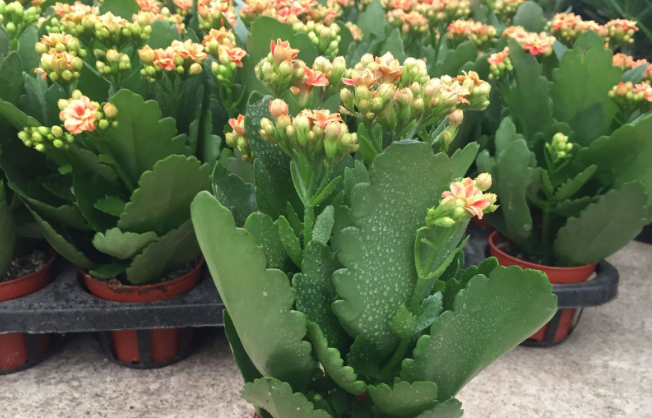
Kalanchoe blossfeldiana is native to Madagascar, Africa, and likes a warm, humid, and sunny growing environment. It is not cold-tolerant but is quite drought-tolerant. It grows at 15°C to 25°C. In summer, temperatures above 30°C will hinder its growth, while in winter, when temperatures fall below 5°C, its flowering period will be delayed.
Kalanchoe blossfeldiana is relatively cold-tolerant, so it does not need to be watered too frequently. Its thick leaves themselves can store some water, so it is generally watered once a week. Note that summer is the dormant period for Kalanchoe blossfeldiana, so in midsummer you should control watering and pay attention to ventilation. In a hot and humid environment, the leaves will rot and fall off. Generally, in summer Kalanchoe blossfeldiana only needs watering once every half month.
Kalanchoe blossfeldiana is not very demanding about soil. Ordinary garden soil can allow it to grow, but you can also choose loose, breathable soil. For example, you can choose peat soil and perlite mixed at a 1:1 ratio, which can help Kalanchoe blossfeldiana grow better. During the growing period of Kalanchoe blossfeldiana, you can fertilize once every half month. You can use "Huizhi" 15-15-30 special fertilizer for potted flowers, or you can water with dilute soybean cake water once every 1 to 2 weeks. It is worth noting that Kalanchoe blossfeldiana must not be fertilized during its summer dormant period.
Kalanchoe blossfeldiana cannot tolerate exposure to the scorching sun and likes a ventilated environment, so during the scorching summer sun it should generally be placed on a balcony separated by glass windows, or it can be placed indoors.
In the process of growing Kalanchoe blossfeldiana, one step is essential -- pinching and pruning. Pinching means removing the tender buds that grow from the top of Kalanchoe blossfeldiana. This proper pinching can help Kalanchoe blossfeldiana grow better and achieve the effect of a beautiful plant, green leaves, and more flowers. Pruning mainly targets the period after flowering: the spent flowers of Kalanchoe blossfeldiana need to be pruned off, cutting off the first pair of leaves below the flower stalk together with the flower stalk. In summer, the branches need to be renewed, because old branches produce relatively fewer flowers during the flowering period. Remove the old branches of Kalanchoe blossfeldiana and let it grow new branches so that it can produce more flowers during the flowering period.
In terms of pest and disease control, Kalanchoe blossfeldiana mainly faces the diseases powdery mildew and leaf blight, and the pests scale insects and aphids, so extra attention should be paid to prevention and control.