What are the cultivation methods for Gerbera (African daisy)?
When people hear "Gerbera," they may feel a bit unfamiliar, but in fact the Gerbera is a common flower for us, and it also has several other names such as African daisy. It comes in many colors and is bright and eye-catching, and is often used in home decor. Below, the editor will introduce the cultivation methods for Gerbera:
I. Gerbera Introduction
Gerbera, of the Asteraceae family, also known as Barberton daisy, African daisy, Transvaal daisy, and day flower, is a perennial herbaceous plant with terminal inflorescences, and its flower colors include red, white, yellow, orange, purple, and so on. It is propagated by sowing or division, and its place of origin is South Africa.
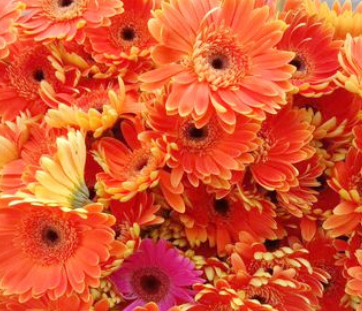
Gerbera is a perennial evergreen herbaceous plant with fibrous roots, and there are about 45 species in the same genus. It prefers an environment that is warm in winter and cool in summer, with air circulation and plenty of sunlight; it is not cold-tolerant and avoids intense heat. It likes fertile, loose, well-drained sandy loam rich in humus, avoids heavy clay soil, and is suited to slightly acidic soil, with the most suitable growth pH being 6.0 to 7.0. The optimum growth temperature is 20 to 25°C, and the optimum winter temperature is 12 to 15°C; when it is below 10°C, growth stops. It is a semi-cold-tolerant flower and can endure short periods of 0°C low temperatures. The plant height is 30 to 45 cm, the leaves are basal, the petioles are long, and the leaf blades are oblong-spatulate, with pinnate shallow or deep lobes. The capitulum is solitary, rising 20 to 40 cm above the leaves, with a flower diameter of 10 to 12 cm; the involucre is disk-shaped and bell-shaped, and the ligulate petals are in 1 to 2 or multiple whorls in a double form, with flower colors including bright red, orange-red, pale red, yellow, and so on. It usually blooms in all four seasons, with the most abundant blooming in spring and autumn.
II. Gerbera Cultivation Methods
1. Soil: Gerbera is very sensitive to water, so a medium with good air permeability and drainage performance should be used, preferably a substrate mixed with peat and perlite. A pH of 5.5 to 6.0 and an EC of 0.7 to 1.0 are beneficial for the absorption of trace elements.
2. Watering: Gerbera is very sensitive to moisture, so the correct watering time must be ensured; water in the morning or evening, and keep the plant relatively dry at nightfall. When the plant begins to grow roots, it must be watered from below, and a bottom-permeation method can be used. During high temperatures, it can be watered from above the plant, but care should be taken to prevent fungal mildew starting from the central part of the plant.
3. Sunlight: The most suitable day length for Gerbera during growth is 11 hours to 13 hours, so artificial supplemental lighting can be used when light is low. Generally, the requirement for artificial supplemental lighting is 3500 to 4000 lux per square meter.
4. Temperature: The most suitable growth temperature for Gerbera is between 15°C and 25°C; the maximum should not be higher than 30°C, and the minimum should not be lower than 13°C. High temperatures will affect normal flower bud differentiation, and low temperatures will cause plant death.
5. Fertilization: Gerbera is a fertilizer-loving fibrous-rooted flower with high fertilizer demand. The ratio of nitrogen, phosphorus, and potassium in fertilization is 15:18:25, once every 5 to 6 days, once every 10 days. If high temperatures or relatively low temperatures cause the plant to enter a semi-dormant state, then stop fertilizing.
6. Pests and diseases: The diseases of Gerbera include leaf spot, powdery mildew, and viral disease. For leaf spot, spray with 70% thiophanate-methyl wettable powder at 800 to 1000 times or 50% carbendazim wettable powder at 500 times. For powdery mildew, use 70% thiophanate-methyl at 1500 times or 75% triadimefon wettable powder at 1000 to 1200 times for control, once every 7 to 10 days, spraying two to three times continuously.
7. Pruning: The lower leaves of the basal leaf cluster of Gerbera easily turn yellow and age, and should be removed promptly. This not only helps the sprouting of new leaves and new flower buds, but also helps ventilation and enhances plant vigor. In addition, if the branches and leaves of the plant are too lush and shade each other so that air cannot pass through, part of the leaves can be appropriately removed.