How much does an orchid cost per pot? A detailed guide to care methods
Orchids are also known as spring orchids, national fragrance, and so on, and have long enjoyed the reputation of "gentleman among flowers." They are epiphytic or terrestrial herbaceous plants of the genus Cymbidium in the orchid family, with extremely high ornamental and cultivation value. China has a history of cultivating orchids of about two thousand years. So how do you grow orchids? How much do they cost per pot?
I. How do you grow orchids?
1. Soil: Orchid soil should be mainly humus, primarily using leaf mold or mountain forest humus. In the south, use humus from the place of origin, commonly known as orchid mud. You can also use leaf mold, vermiculite, perlite, and so on to artificially mix a loose, airy, water-permeable growing medium. Generally, mix 8 parts leaf mold and 2 parts river sand into a growing medium, or mix 7 parts leaf mold, 2 parts perlite, and 1 part river sand into a growing medium, or mix 6 parts leaf mold (peat soil), 3 parts compost soil, and 1 part river sand evenly into a growing medium.
2. Fertilizing: Orchid topdressing mostly uses liquid fertilizer or foliar fertilizer, and the concentration should be lighter than for other flowers. Generally, during the growing season, apply fully decomposed dilute cake fertilizer water of about 15%, or 0.1% urea fertilizer water plus 0.2% potassium dihydrogen phosphate fertilizer water, once every 15-20 days. From before flowering to the flowering period, spray the leaves 2-3 times with 0.2% potassium dihydrogen phosphate or plant ash water to promote the development of roots, stems, and flowers. Orchids have fleshy roots, so do not apply undecomposed fertilizer, to avoid root rot.
3. Watering: Watering orchids should be based on the species, growth condition, and local climate. It should be moist but not wet, dry but not parched. Do not water too much or too little, and grasp the principle of not dry in autumn and not wet in winter. In winter, when the temperature is low, the plants are in a dormant state, so watering should be controlled, generally once every 5-7 days. However, Cymbidium sinense, which blooms in winter, needs more water. In spring and autumn, water once every 2-3 days, and in summer, water 1 to 2 times a day on average.
4. Temperature: In the north, potted orchids should be moved indoors around the Frost's Descent solar term when the temperature drops to 5°C. In the early period after being moved indoors, open the windows often to keep the air circulating. In winter, the indoor temperature should preferably be kept at around 10°C. After Grain Rain, move them outdoors for care. The suitable growth temperature for orchids is 16-24°C. In winter, the indoor temperature is generally required to be relatively low, preferably 10-12°C during the day and 5-10°C at night. The temperature and humidity should not be too high, and in summer the temperature should not exceed 30°C.
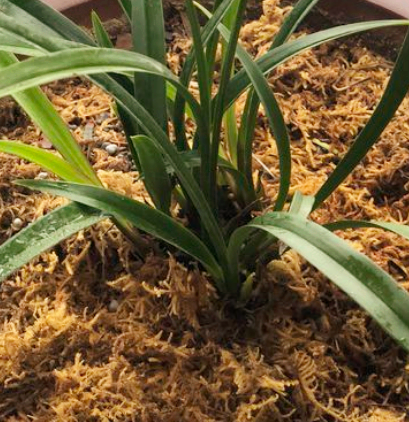
5. Light: Orchids prefer shade and fear direct strong light, so shade should be provided in spring, summer, and autumn. For growing orchids at home, to control the amount of light, it is best to place them on a balcony windowsill or under the eaves with bamboo blinds for shade. Generally, provide shade from 9 a.m. to before 6 p.m., and pull the blinds open in the morning and after 6 p.m. so they receive scattered sunlight. In winter, move them indoors to a place with visible scattered light, but also avoid direct sunlight. Among orchids, Cymbidium sinense has the strongest shade tolerance, followed by Cymbidium ensifolium, while Cymbidium goeringii and Cymbidium faberi have weaker shade tolerance.
6. Pruning: During orchid cultivation, the plants need pruning. For example, when old leaves turn yellow and withered, they all need to be pruned, which benefits the growth of other leaves and also improves ventilation. Diseased leaves especially need timely pruning to prevent contagion. In addition, scissors also need to be disinfected to prevent infection.
7. Repotting: Orchids grow slowly, so they can be repotted once every 1-2 years after the flowers fade. When potting, first fill the bottom of the pot with about 3 cm of tile pieces, cinder, and so on to aid drainage. Then put in a layer of growing medium, place the orchid seedling in the center of the pot, straighten the roots, and let them spread naturally. When the soil is filled to halfway, lift the orchid seedling gently while shaking the pot so that the soil and roots combine closely. When the soil is filled to 2-3 cm from the pot rim, gently press it firm with your hands.
II. How much does an orchid cost per pot?
There is no fixed price for orchids, because different orchid varieties have vastly different prices. Ordinary orchids are very cheap; a few yuan can buy many. In fact, wild-collected orchids are sold by the bag, while high-quality orchids are sold by the seedling, and some seedlings can even sell for tens of thousands or hundreds of thousands of yuan. The "Suguan Heding" produced in Yunnan should be the most expensive orchid on the market at present. Composed of four Lianban orchid seedlings, the "Suguan Heding" is extremely rare on the market and belongs to the "rare treasures" among orchid varieties, valued at 15 million RMB.
III. How are orchid prices determined?
1. Pricing by petal: Whether the petal type of an orchid is good or not is an important measure for judging the grade of an orchid. Plum petals, lotus petals, and narcissus petals have always been recognized petal-type flowers, and the prices of these orchids are several times, or even dozens of times, higher than ordinary bamboo-leaf-petal orchids.
2. Pricing by fragrance: Orchids have such laudatory titles as "ancestor of fragrance," "fragrance of kings," and "the finest fragrance under heaven," so fragrance is also an important basis for judging the grade of an orchid. Among flowers of the same petal type, fragrant ones are priced higher. If they achieve both fragrance and form in one, they are fine products.
4. Pricing by color: Orchids include pure white, peach red, bright red, purple red, white-green, emerald green, dark green, golden yellow, cream yellow, purple-black, and so on. Generally speaking, dazzling red has the highest price, followed in order by yellow, white, purple, and so on.
5. Pricing by rarity: The more unusual the flowers and leaves of an orchid, the higher the grade. Especially those orchids that are strangely beautiful, alluringly beautiful, and cutely strange have obvious aesthetic characteristics and reach a relatively high ornamental value, and can create abundant wealth in transactions.
6. Pricing by quantity: When an orchid variety has a large number and is widely grown, and everyone has it, this will inevitably affect the transaction price. A rare variety with a small quantity is in a state of supply falling short of demand, so the price will naturally be somewhat higher.
7. Pricing by form: Orchids emphasize the unity of spirit, leaf posture, flower posture, and color, with overall coordination. A variety excellent in form, fragrance, color, and charm must be deeply loved by the broad community of orchid enthusiasts.
8. Pricing by species: There are many orchid varieties, and the same petal type has different prices due to different species. For example, lotus-petal and Douban orchids may usually trade for only a few thousand yuan per plant, while Chun Jian and Lianban orchids are several times more expensive than Douban orchids.