How do you grow "agate among fruits" bayberry? What about its market prospects and economic benefits?
Bayberry is one of China's specialty fruits. Because its fruit is brightly colored, tastes sweet and sour, and is highly nutritious, it is also called the “agate among fruits.” Many growers want to grow bayberry to increase their income, so how do you grow bayberry? What about its market prospects and benefits?
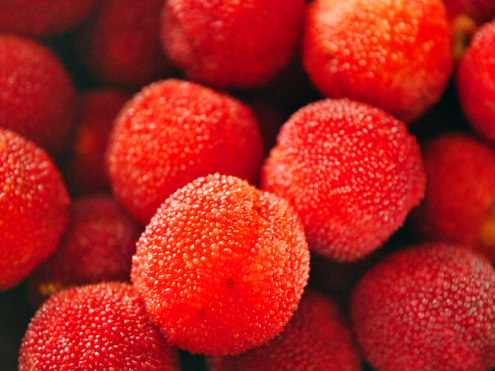
I. How do you grow bayberry?
1. Site selection
Bayberry does not have very high soil requirements, so it can generally be grown even in poor soil, but the most suitable places are hillside plots close to a water source and fertile, deep, slightly acidic soil. In addition, be careful to separate bayberry varieties by maturity and market period: grow mid- and late-maturing bayberry varieties in areas between 400-800 m above sea level, and grow early-maturing bayberry varieties in areas below 400 m above sea level.
2. Planting
After selecting the plot, the bayberry saplings used before planting should preferably be those with strong adaptability, stress resistance, and disease resistance, as this helps increase the survival rate. The best time for planting is during February-March in spring, when the temperature is more suitable for the growth of young trees. In addition, the bayberry tree has a large canopy and can reach 7-8 m tall. To ensure the permeability of each plant, pay attention to density during planting. Generally, about 25-30 plants per mu is enough. When planting, pay attention to digging large holes, using large seedlings, and applying sufficient base fertilizer. Keep the seedlings upright, spread the roots, and plant deeply. Pay attention to the proportion of male plants and use excellent pollen for pollination.
3. Fertilization management
To increase bayberry yield and make the trees grow quickly, fertilization management is essential. In addition to applying sufficient base fertilizer, topdressing should also be carried out according to the growth stage. Generally, the fertilizers used for topdressing are mainly farmyard manure and plant ash, plus an appropriate amount of chemical fertilizer and organic fertilizer. Generally, fertilizer is applied 2-3 times each year, but during the bayberry tree's fruiting period, potassium fertilizer should be emphasized. In addition, three or four months after planting, the surrounding soil needs to be deeply turned and loosened, because by then the bayberry roots will fill the planting hole, and their growth will be hindered by hard soil or stones, so deep turning and loosening the soil is beneficial to root growth.
4. Shaping and pruning
Shaping and pruning bayberry during cultivation can promote more branching to form a canopy and bear fruit earlier. The specific method of shaping and pruning is as follows: after the seedlings are planted and survive, to promote sprouting, first cut off the top shoot of the trunk. After sprouting, keep the upper buds and remove all the lower buds. This can concentrate nutrients and promote the growth of thick branches. In the second year, keep 2-3 strong main branches and cut off the remaining branches. Then keep 2-3 new buds on the main branches so they can continue to branch. This can quickly form a round canopy. In addition, when pruning, all weak, withered, overly dense, pest- or disease-damaged, and leggy branches that are unfavorable to the growth of the main branches need to be cut off. After harvesting the fruit, old branches need to be cut off to avoid excessive nutrient consumption.
II. What about the market prospects and benefits of growing bayberry?
1. Market prospects
The calcium, phosphorus, and iron content in bayberry fruit is more than 10 times higher than in other fruits. It is highly nutritious and has effects such as promoting salivation and quenching thirst. It is a natural green health food, and it has a wide range of uses. It can not only be used as ornamental landscaping seedlings and for forest fire prevention, but the leaves, roots, and branches of bayberry can also be used to extract flavonoids and essential oils for use as reddish-brown dyes and astringents in medicine.
China's bayberry-growing areas are mainly coastal provinces, especially represented by the Yunnan-Guizhou region. The bayberries produced there mature early, have excellent quality, a long storage period, low production costs, and high economic benefits. At present, the planting area in the western region is still relatively small, so if production is introduced and developed in the western region, the prospects will be very broad.
In addition, bayberry can also promote the healthy development of tourism and other leading industries. It can not only serve as a tourist attraction, but its fresh fruit can also be processed into products such as dried bayberry, bayberry juice, bayberry preserves, and bayberry wine. In addition to the domestic market, it also sells well in international markets. From this perspective, with the continuous development of science and technology, bayberry's future market prospects will be very broad.
2. Benefits
Generally, the cost of growing one mu of bayberry includes 3,600 yuan for 12,000 seedlings, 7,200 yuan for fertilizer and pesticides, and so on. The growth cycle of bayberry is 3 years. If planted and managed well, bayberry can yield 50 kg per mu. Calculated at a market price of 50 yuan per kg, growing one mu of bayberry brings 22,500 yuan. After subtracting costs and other expenses, the net profit is 18,300 yuan, and the input-to-output ratio is 1:3. Moreover, bayberry has relatively wide uses. Large-scale bayberry cultivation can not only sell the fruit directly, but also deeply process bayberry to make other products such as bayberry wine for sale. It can also be used as a scenic spot to develop tourism and sightseeing. From this perspective, the benefits of growing bayberry are still quite good.
Summary: The above is the relevant introduction to bayberry cultivation methods, market prospects, and benefits. I hope it is helpful to friends who need it!