Detailed Explanation of the Key Techniques for Home Cultivation of Lingzhi (Reishi Mushroom) Bonsai
Many people think that lingzhi (reishi mushroom) is either cultivated by growers or found in the wild, but in recent years bonsai cultivation of lingzhi has become very popular. Many people choose an attractive bonsai pot, then select the variety they want to grow, and place it at home, where it serves as an ornamental piece. So do you know all the key techniques for everyday home lingzhi bonsai cultivation? Here is a detailed explanation for everyone:
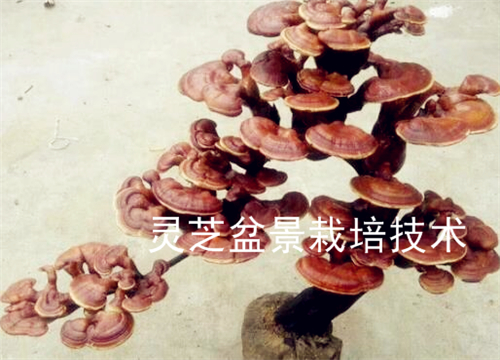
I. Selection of Bonsai Pots and Varieties
Because there are many types of lingzhi, including red lingzhi (Ganoderma lucidum) and pine-fir lingzhi (Ganoderma tsugae), for these two types of lingzhi varieties it is best to choose brown and purple bonsai pots. If it is purple lingzhi (Ganoderma sinense) or black lingzhi, choosing a white bonsai pot is best. For both the lingzhi and the bonsai pot, it is best to choose colors that form a strong contrast, so that when placed at home it also has considerable ornamental value.
II. Selection of Cultivation Substrate
For the cultivation substrate of lingzhi, the choice is generally based on wild lingzhi and artificially cultivated lingzhi, but we all know that wild lingzhi is relatively expensive. If you want to buy genuine wild lingzhi, it is best to make frequent visits to lingzhi-producing areas; you might just come across genuine wild lingzhi. But you must choose ones that are relatively intact and, best of all, distinctive and with ornamental value.
III. Making the Bonsai
1. Generally, the type of soil chosen is quartz stone sand grains or other sand grains packed in, letting the lingzhi grow among the sand and stones, but you must be careful that the sand and stones do not exceed the height of the bonsai pot, which would affect the aesthetic appeal. After securing it, use wire to form a net and place it into the pot, insert the lingzhi stalk into a suitable mesh opening, and finally fill it in with sand and stones.
2. Use glass glue to firmly attach the lingzhi and other accessories, preventing them from tipping over to one side, which is beneficial for later growth. After securing them, you can find some accompanying decorations, such as sun-dried moss, fruticose lichen, Selaginella tamariscina and other plants that do not easily break apart or rot, making the bonsai appear more natural and closer to life. If a transparent lacquer is applied to the surface of the lingzhi, it can be preserved and enjoyed for a long time.
IV. Methods for Preserving Lingzhi Bonsai
1. Be careful not to place it in a spot with sunlight. If you leave it in a spot with sunlight for a long time, the lingzhi will become increasingly dried out, affecting its aesthetic appeal, and it may later wither away completely, so you must pay attention to this. If you do a big cleanup at home, be sure to move it aside to prevent dust contamination; if there is dust, it is best to wipe it clean with a clean cloth.
2. Pay attention to moisture-proofing the lingzhi bonsai. A finished bonsai must be stored in a dry, ventilated place; do not place it in the kitchen or by the bathroom door, as this makes it very prone to moisture, causing it to rot and then gradually become moldy, at which point it is completely ruined. If it is a wild lingzhi, that is quite a pity.
3. Pay attention to pest-proofing the lingzhi bonsai. Place a few camphor balls in the pot to prevent and kill insects. If pest damage is found, it can be treated by fumigation, freezing and drying; it can also be exposed to sunlight, but prolonged exposure is not recommended. If the lingzhi develops breaks or insect holes, seal them with adhesive tape to prevent pests from invading or breeding again. The mycelium of lingzhi is most prone to developing maggots or insect eggs; alcohol can be injected or applied with an alcohol cotton ball. However, do not spray alcohol on the surface, as it will damage the surface and cause it to lose its original luster.
4. Pay attention to painting and dust-proofing. A lingzhi bonsai can be kept for a long time if preserved well, but if you do not clean it for a long time, it will easily cause surface contamination of the lingzhi and accumulate a lot of dust, gradually losing its luster. To prevent contamination and loss of luster, we need to brush a layer of paint on the surface of the lingzhi to protect it, so that it can maintain its luster for a long time; if there is dust, simply wipe the surface and the luster will reappear. But the main thing to note is that when painting, do not apply it too thickly, as too thick a layer will crack, which greatly affects the appearance, so just a light thin coat of paint is enough. If you feel unsure about doing it yourself, you can buy a white glass cover online to cover the bonsai, just like an exhibit in a museum.
Summary: The above is a compilation of the key points for the cultivation and protection of everyday home lingzhi bonsai, hoping to help friends in need. This article is compiled from the internet.