How to Grow and Care for French Marigold (Tagetes patula)
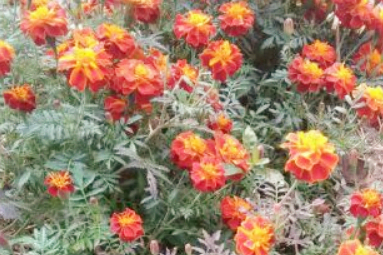
French marigold, also known as dwarf marigold, red-yellow herb and so on, is an annual herbaceous plant of the genus Tagetes in the Asteraceae family. Because of its brilliant petal colors, high ornamental value, and very strong adaptability, it is easy to grow and therefore very popular. So now let us introduce the growing methods and precautions for French marigold:
I. Introduction to Growing French Marigold
In southern China, French marigold blooms from March to May and from August to December. It takes only 70 days from sowing to flowering. Seedlings raised in early spring can be grown in a greenhouse without heating, and after the last frost they can be planted out in courtyards, flower beds, or containers. Under protected conditions in the middle and lower reaches of the Yangtze River, it can be sown all year round. In the warm south it can be sown all year round, while in the north spring sowing is common. If raising seedlings in early spring, care should be taken to ensure a certain growing temperature and to avoid growth stagnation as much as possible. For sowing, a relatively loose artificial medium should be used, with bed sowing or box sowing for seedling raising, and plug tray seedling raising can be used where conditions permit.
II. Growing Methods for French Marigold
1. Transplanting and potting up: French marigold raised in plug trays should be transplanted and potted up when it grows to 2-3 pairs of true leaves. In the Zhejiang area, most people habitually use 12 cm diameter nutrition pots, potting up once and for all without a second repotting. If sowing is done in open seedling trays by broadcasting, then sow thinly, and at 2-3 pairs of true leaves, transplant the seedlings directly into pots.
2. Light regulation: French marigold is a sun-loving plant, and both growth and flowering require sufficient sunlight. Sufficient light also helps prevent the plants from becoming leggy. However, from July to September in our province, direct sunlight should be avoided, and shading and cooling are needed around midday.
3. Temperature control: After potting up, the temperature for French marigold can be lowered from 22°C to 18°C, and after a few weeks it can be lowered to 15°C. Before and after flowering it can go as low as 12-14°C. This temperature is ideal for forming a good plant shape, but in actual production it may be difficult to achieve these conditions. So generally speaking, as long as the temperature is above 5°C there will be no frost damage, and it can grow well between 10-30°C.
4. Water management: The key to water management for French marigold is to use a well-drained medium. While keeping the medium moist is important, appropriate drying before each watering is necessary. Of course, the medium must not be allowed to become so dry that the plants wilt.
5. Fertilization method: For French marigold grown entirely in an artificial medium, fertilizers 20-10-20 and 14-0-14 should be used, applied alternately once every 7-10 days at a concentration of 200-250 ppm. When winter temperatures are relatively low, reduce the amount of 20-10-20 fertilizer used. If the medium is ordinary soil, a compound fertilizer can be mixed in appropriate amounts as a base fertilizer before potting up the medium. If fertility is insufficient, then topdress with a water-soluble fertilizer.
6. Pest and disease control: Common diseases of French marigold include brown spot and powdery mildew, which are fungal diseases. Choose a good site for cultivation, pay attention to drainage and irrigation, remove diseased plants and leaves, burn the remaining branches, and promptly spray fungicides such as Xiufenning.
III. Precautions for Growing French Marigold
1. French marigold not only has single-petaled and double-petaled varieties, different flower colors, and different heights, but also the related marigold of the same genus; natural hybridization between them also easily leads to degeneration. Varieties with good flower color should be selected, sown separately and planted separately, and kept more than 100 m away from other varieties. Seeds should be harvested separately and stored separately.
2. The pH value of the medium is too low. The main symptoms are necrotic spots and scorched edges on old leaves, and death of the growing point. A pH value below 6.0 can also cause deficiencies of certain trace elements such as magnesium, iron, sodium and zinc. The main solutions are: keep the pH value of the medium between 6.0-6.7 (this can be adjusted by adding 1 pound of lime to 100 gallons of water); choose less sensitive French marigold varieties.
3. When raising seedlings at low temperatures in early spring, if humidity is too high, blight is likely to occur. It first appears as water-soaked areas at the base of the stem, and then the plants become necrotic and fall over. Therefore, in early spring seedling raising, raise the temperature as much as possible and control humidity to prevent disease.
4. Pay attention to nutrition during the seedling stage. If fertilizer is lacking during the seedling stage, the plants will be thin and weak, forming small old seedlings—that is, the phenomenon of plants flowering during the seedling stage caused by lack of fertilizer. Such seedlings often cannot form a good plant shape and cannot be sold, causing losses.