Is the kalanchoe (also known as the longevity flower) toxic? How do you grow it?
Kalanchoe, also known by people as the “longevity flower”, is a perennial succulent herbaceous plant that usually blooms around Christmas. It is popular because of its bright, beautiful flowers and excellent auspicious meaning. Many flower lovers want to grow it, but rumors say it is toxic, so they are rather worried. So is kalanchoe really toxic? How do you grow it?
1. Is kalanchoe toxic?
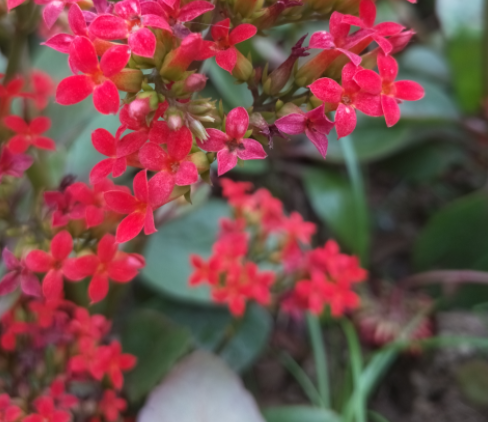
Many people always worry that flowers are toxic when growing them at home, yet many flowers are only weakly toxic or not toxic at all. For example, rumors say kalanchoe cannot be grown indoors, but this is somewhat misleading. In fact, kalanchoe is non-toxic and can absolutely be grown indoors. Whether there are children or pregnant women at home, it can be grown with peace of mind. Kalanchoe is a relatively easy-to-grow potted flower. Its plant is small and compact, its leaves are dense and emerald green, and its flowers are rich in color. Because its flowering period is near Christmas and lasts a long time, it has also become a holiday flower used by people to set off the festive atmosphere. In addition, kalanchoe's leaves are dense, dark green and glossy, giving it high ornamental value. Placing kalanchoe in a newly decorated house can not only beautify the home environment but also absorb harmful gases, making it a very ideal indoor potted flower.
2. How do you grow kalanchoe?
1. Choosing a flowerpot
Before growing kalanchoe, you must first choose a good flowerpot. Kalanchoe is prone to root rot in heavy clay soil, so generally the flowerpot for growing kalanchoe is suitable for small, well-ventilated, loose and breathable sandy loam and earthenware pots. However, considering the aesthetics of indoor placement, you can put a plastic pot or porcelain pot on the outside, or you can directly plant it in a purple clay pot or plastic pot. Then place a layer of crushed wood, charcoal blocks or broken hard plastic foam blocks at the bottom of the pot to enhance ventilation. Specifically, you can use leaf mold and garden topsoil mixed in equal amounts plus 5%-8% maintenance soil, and bone meal or nitrogen-phosphorus-potassium compound fertilizer can be used as base fertilizer.
2. Water control
Kalanchoe is a succulent plant. Its body contains relatively much water, and it is fairly drought-tolerant and afraid of waterlogging. Therefore, watering must be moderate and the air should be kept dry so that kalanchoe can thrive with abundant branches and leaves. In spring and autumn, if the potting soil is dry, keep it often slightly moist, and watering thoroughly about once every 3 days is enough. In summer, water less, preferably once every 5-7 days. If kalanchoe is placed outdoors for growing, pay attention to sheltering it from rain during the rainy season to avoid root rot, leaf drop and even death. In winter, water about once every 7 days.
3. Reasonable fertilization
Kalanchoe is suited to surviving under conditions with sufficient fertilizer. To promote the growth of stems and leaves, 15 days after kalanchoe is potted and planted, or 15 days after old plants are divided, apply 2-3 times a nitrogen-based liquid fertilizer. After flowering, to promote its rejuvenation, apply one nitrogen-based liquid fertilizer. Apart from stopping application in summer, at other times only nitrogen-phosphorus-potassium compound fertilizer can be applied. To avoid flowers and leaves rotting easily, be careful not to get fertilizer on the leaves when fertilizing. If the leaf surface is accidentally dirtied, rinse it off with water. In addition, kalanchoe has a long flowering period. To avoid later flowers becoming smaller and paler due to lack of fertilizer, during the flowering period apply a thin nitrogen-phosphorus-potassium fertilizer or 0.2% potassium dihydrogen phosphate solution once a month.
4. Light control
Kalanchoe is suited to surviving in an environment with abundant sunlight. Apart from needing shade in the afternoon of midsummer, at other times it needs to be placed in a sunny place. At least more than 4 hours of direct light must be guaranteed for healthy and vigorous growth. In addition, turn the flowerpot once every half month so that it receives light evenly and avoids an uneven crown, which would reduce its ornamental value. Placing it in half shade will make the stems thin, the leaves thin, the flowers few and the color pale. If it is too shaded, the flower color easily becomes dull and then turns yellow and withers.
5. Suitable temperature
The most suitable temperature for growing kalanchoe is 15-25°C. If the temperature is higher than 30°C, growth will slow and it will enter a semi-dormant state. If the temperature is lower than 10°C, growth will stagnate. Below 8°C, kalanchoe's leaves will turn red and flowering will be delayed. Below 0°C, it is easily frozen to death. Therefore, to grow kalanchoe well, in the afternoon of midsummer pay attention to avoiding strong light exposure, place it in half shade with sufficient scattered light, and also pay attention to sprinkling water on the nearby ground and ventilating to cool it down, but do not sprinkle it on the whole plant. In autumn, it can gradually be exposed to sunlight, causing it to transform from vegetative growth to reproductive growth. In winter, when the temperature drops to about 10°C, it should be moved indoors and placed in front of a balcony so it can see sunlight. Keep the nighttime temperature at 10°C and the daytime temperature at 15-18°C, and it can bloom in December.
Summary: The above is the relevant introduction to kalanchoe's toxicity and growing methods. I hope it is helpful to friends who need it!