Dandelion Planting Methods, Market Prospects and Profit Analysis
Dandelion, also known as huanghua diding or popodding, is a perennial herb of the genus Taraxacum in the Asteraceae family. Its entire plant can be used as medicine, and it is also a delicious and refreshing wild vegetable. It can be cut 6 or 7 times a year, giving good planting returns. So how do you plant dandelion? What are its market prospects and profits?
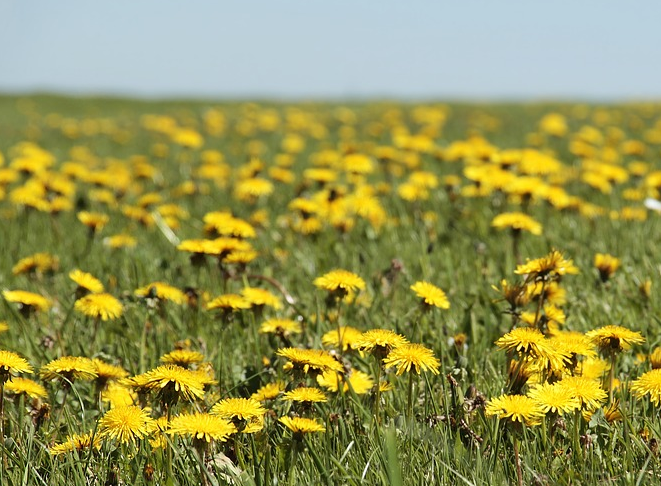
I. Dandelion Planting Methods
1. Seed Preparation
Harvest time: Under wild conditions, dandelion plants can flower and set seed once they are two years old. The harvest time for dandelion seeds is when the flower head turns from green to yellow-green and the seeds turn from milky white to brown. Be careful not to wait until the dandelion flower head splits open before harvesting; once the flower head splits, the seeds scatter and are difficult to collect, which leads to losses.
Picking method: When picking the seeds, you can first pick the dandelion flower heads and store them indoors, preferably waiting one day for them to fully ripen before processing. After the dandelion flower heads have all opened up, dry them indoors in the shade for 1-2 days until the seeds are half-dry, then rub off the fluff at the tips of the seeds, and sun-dry the seeds for later use.
2. Land Preparation and Fertilization
The best soil environment for dandelion growth is loose, fertile, well-drained sandy loam. Dandelion is fond of fertilizer; about 2000-3500 kg of organic fertilizer per mu should be applied, mixed with 15 kg of superphosphate, and evenly spread onto the ground.
Sowing requirements: Dandelion should be sown under moist soil conditions. If the soil is dry, water it thoroughly two days before sowing. For spring sowing, it is best to use plastic film mulching to keep the soil moist. For summer sowing, because rainfall is abundant, plastic film mulching is not necessary.
3. Sowing and Propagation
Since dandelion seeds have no dormancy period, seeds that have matured and been harvested can be sown at any time from spring to autumn; in winter, because temperatures are lower, they need to be sown in a greenhouse.
Sowing method: Treating the seeds with warm water to promote sprouting can bring about earlier emergence. Warm water treatment means placing the seeds in warm water at 50-55°C, soaking for about 8 hours, taking the seeds out and wrapping them in a wet cloth, placing them in a spot at about 25°C, covering them with a wet cloth, and watering once with warm water each morning and evening. After about 3 or 4 days, once the seeds begin to sprout, they can be sown.
II. Dandelion Market Prospects
In recent years, market demand for dandelion has grown steadily. Dandelion is now not only a commonly used traditional Chinese medicinal herb, but also a specialty vegetable that is very popular on the market. Dandelion is rich in nutrients; in particular, its carotene and iron content is 2-3 times that of ordinary vegetables, and it has long been served at the table as a green, healthy vegetable. When dandelion is sold as a food ingredient, the profit is often 2-3 times that of selling it as a medicinal herb. Large-leaf dandelion is precisely the most popular edible dandelion.
III. Planting Profits
For large-leaf dandelion sold as a medicinal herb, the yield of dried product per mu can reach 580-650 kg, the market price is 5-6 yuan/kg, and the return per mu is 2900-3900 yuan. The yield of dandelion root per mu is 200-250 kg, the market price is 12-13 yuan/kg, and the return per mu is 2400-3250 yuan. As a new vegetable, dandelion currently sells for 20-30 yuan per kg on the market, which shows that this is much higher than the price when sold as a medicinal herb.
The above is a brief introduction to dandelion planting methods, market prospects and profits. As an emerging vegetable variety, dandelion has large market demand, and its economic returns are also considerably higher than those from medicinal use, making it a very good planting project.