Bamboo Palm (Guanyin Bamboo) is a classic indoor ornamental plant: an introduction to its cultivation methods and precautions
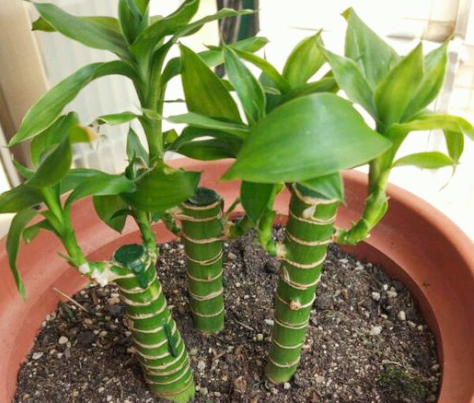
Guanyin Bamboo, also called Phoenix-tail Bamboo, is a very typical indoor ornamental plant. Not only are its branches and leaves elegant and its posture graceful, but it also has the ability to absorb indoor carbon dioxide and improve indoor air, so many people love it and want to grow it. So let me briefly introduce the cultivation methods and precautions for Guanyin Bamboo:
I. Cultivation Methods for Guanyin Bamboo
1. Temperature
Guanyin Bamboo is a typical evergreen clumping shrub plant. It is suitable for growing in warm, humid environments and has poor cold tolerance, so when growing it in winter the temperature should be above 0°C. Normally the most suitable growing temperature for Guanyin Bamboo is between 20-35°C, but in summer it should also be protected from harsh sun exposure.
2. Light
Guanyin Bamboo likes to grow in conditions with ample light, but it is also fairly shade-tolerant, so in daily cultivation it can simply be placed in filtered light. In winter it should be placed in a sunny spot, where it can grow well. It should not be kept in a shaded environment for a long time. In spring, summer and autumn, placing it in a ventilated spot by a window is fine. Generally, Guanyin Bamboo planted in the ground grows new leaves after spring.
3. Soil
Guanyin Bamboo is suitable for growing in acidic, slightly acidic or neutral soil. The best soil pH is 4.5-7.0. Heavy clay and alkaline soil must not be used for growing it. Soil in the north is generally strongly alkaline, so 0.2% ferrous sulfate can be added before planting. The best soil for this is loose, fertile, well-drained sandy loam. You can choose to use farmland soil mixed with red-yellow soil, humus soil and fine sand.
4. Watering
Potted Guanyin Bamboo likes to grow in a humid environment but is also afraid of waterlogging. After potting Guanyin Bamboo, the first watering should be thorough. After that, the amount of water should just keep the potting soil moist. Do not water too much, as this can easily cause the rhizomes and roots to rot. Generally, water once every 3-4 days in spring and autumn, once every 1-2 days in summer, and once every 7 days in winter.
5. Fertilizing
The fertilizer for Guanyin Bamboo should be mainly organic fertilizer. The fertilizer can be made by mixing decomposed livestock manure, garbage compost and river mud, etc. Organic fertilizer is mainly mixed into the potting soil as a base fertilizer. The amount applied is generally 10%-15% of the potting soil volume. During the growing period of Guanyin Bamboo, fertilize 1-2 times a month with a thin nitrogen fertilizer.
II. Precautions for Growing Guanyin Bamboo
1. Pay attention to observing the bamboo leaves of Guanyin Bamboo. When the bamboo leaves curl, it means the potting soil is short of water. At this time, water it promptly, and after watering the bamboo leaves will unfold again. Although you should water less in winter, you should still keep the potting soil moist to avoid the phenomenon of "dry freezing."
2. Note that before Guanyin Bamboo has taken root, it is best not to move its position, so that the plant cannot fail to adapt to the new environment, which is not good for growth.
3. No matter which method is used to cultivate Guanyin Bamboo, when pest problems occur, a small amount of carbendazim wettable powder or potassium permanganate should be sprayed to disinfect and sterilize, ensuring good growth.
4. Note that during the cultivation of Guanyin Bamboo there is no need to repot every year. Generally, repotting once every two years is enough.
5. In spring the temperature gradually rises. Generally after Qingming, Guanyin Bamboo should be moved outdoors for care. In summer, placing it in a semi-shaded, humid environment can allow new branches to grow continuously and keep old leaves green. Note that if scorched leaves or dead leaves are found, they need to be pruned promptly. When pruning, the leaves at the base of the bamboo stems of Guanyin Bamboo should be cut off, and the base can be cut at a slant to increase the area for absorbing nutrients.
Summary: The above is an introduction to the cultivation methods and precautions for Guanyin Bamboo. I hope it is helpful to those who need it!