Two major secrets to growing Aglaia odorata: learn them and it blooms every day
Aglaia odorata, also known as zhulan, is an evergreen ornamental plant. Its leaves and flowers are both very small, but when it blooms, its fragrance is extremely rich. It is especially suitable for growing indoors, but people do not understand how to grow it. So how do you grow Aglaia odorata? And what are the two major secrets that can make it bloom every day?
1. How do you grow Aglaia odorata?
1. Suitable temperature
Aglaia odorata likes warmth. The higher the temperature, the more fragrant the flowers it produces. Generally speaking, at temperatures above 30°C and under sufficient sunlight, the flowers it produces are strongly fragrant; conversely, in an environment below 30°C, if it is also in a shaded place with insufficient light, the flowers it produces are not as fragrant as those at high temperatures. To grow Aglaia odorata well, the suitable temperature range is between 20°C and 35°C, and from June to October it can bloom as many as 5 times.
2. Sufficient light
Aglaia odorata should be placed in a sunny place in all four seasons. If it is placed in a courtyard or on a balcony with sufficient light and good ventilation, with 8 to 12 hours or more of light per day, the plant's leaves will be dark green, its branches will grow thick and strong, it will bloom many times, the flowers will be bright yellow, and the fragrance will be relatively rich. If Aglaia odorata is kept in an environment with insufficient sunlight and shade, the plant's branches and leaves will grow leggy and weak, the number of blooms will decrease, and the fragrance will be faint.
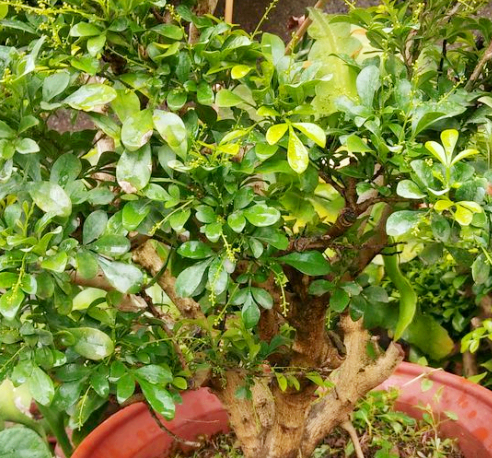
3. Reasonable fertilization
Aglaia odorata has a strong flowering capacity and blooms many times, so nutrients must be replenished in time. After each bloom, nutrients should be replenished promptly. Insufficient fertilizer is the main reason Aglaia odorata only grows leaves without flowering or drops leaves and buds. Therefore, when the temperature rises, Aglaia odorata should be moved outdoors for care. After one week, loosen the soil and apply some dilute nitrogen fertilizer; 10% to 20% decomposed cake fertilizer water or human excrement and urine are both acceptable. After that, apply a liquid fertilizer about once every 10 days to promote the growth of branches and leaves. From the beginning of June, Aglaia odorata enters its peak growth and flowering period, until mid-October. About every 15 days, apply a stronger fertilizer based mainly on phosphorus fertilizer, or spray a 0.3% potassium dihydrogen phosphate solution once every 15 to 20 days, and it will bloom even more abundantly. Pay special attention that during the flowering period, phosphorus fertilizer must be the main type, otherwise it will only grow leaves without flowering. During the flowering period from June to October, if fertilization is insufficient, not only will the number of blooms decrease and the flowers not be fragrant, but flower buds that have already appeared will also wither and fail to open.
4. Water at the right time and in the right amount
The number of times Aglaia odorata is watered must depend on the size of the plant, changes in climate, and the place where it is kept, so as to water at the right time and in the right amount. Applying extra phosphorus and potassium fertilizer before flowering, with frequent scattered sunlight and moderate watering, will make its flowers strongly fragrant. Summer is the peak growth season for Aglaia odorata, and its water demand increases accordingly, generally requiring watering once a day. On hot, clear days, watering once in the morning and once in the evening each day is enough. If it lacks water, the leaves will turn yellow or even fall off. If there is a rain shower, tip the pot to drain the water after the rain to prevent root rot.
2. What are the two major secrets that can make Aglaia odorata bloom every day?
1. Secret one: replenish nutrients
If you want Aglaia odorata to bloom every day, the first thing needed is an accumulation of nutrients. Generally, after a plant has bloomed once, it needs to rest before it can bloom again. But if Aglaia odorata is to bloom every day, the accumulation of nutrients is indispensable. For nutrient accumulation, first of all, light, water, and fertilizer must keep up. With sufficient light, photosynthesis will be very good, and nutrients will accumulate to a certain extent. With appropriate amounts of water and fertilizer, pay attention not to use too much or too little, so that the plant can accumulate nutrients.
2. Secret two: pruning
In addition to accumulating nutrients, when growing Aglaia odorata, appropriate pruning is also needed, that is, bud thinning. This can reduce the consumption of nutrients by Aglaia odorata to a certain extent and keep it in a state of constant blooming.
In spring, Aglaia odorata begins to be covered with flower buds. At this time, bud thinning can begin. First remove the flower buds on one or two branches, and after a few days, thin out the flower buds on another one or two branches. Carry this out several times in succession, until the 6th or 7th time, by which point the branches that have been thinned reach 60%--70%. After that, when it blooms again, the branches on the Aglaia odorata plant can bloom in turn.
At this point, the flowering mechanism of Aglaia odorata is that the branches that have not undergone bud thinning will bloom first, and then after about 10 days, the branches that underwent bud thinning for the first time will bloom, and afterward the branches that have undergone bud thinning will bloom in sequence. Basically, for a very long period, Aglaia odorata can let you enjoy beautiful flowers every day.
Note that the plants to be thinned of buds are best those growing relatively vigorously.