Zinnia Sowing Time and Daily Management Key Points
Zinnia is a common ornamental flower with bright and rich colors. It is mostly used for holiday decoration such as welcoming May Day and celebrating National Day. Of course, it can also be potted indoors for decorative accent. As the saying goes “no flower stays red for a hundred days,” but zinnia refutes this view. Its flowering period is long, lasting as long as 4 months, which confirms its name. Today let us learn together: when is zinnia sown? What are the key points of daily management?
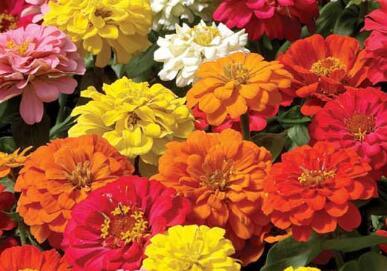
I. When is zinnia sown?
The sowing time of zinnia is generally concentrated in spring, around April, when the temperature is just right for its growth. In late May, it can be planted out into flower beds for decoration. If sown too early and the temperature during the seedling emergence period is not high enough (temperature below 15°C), it can easily cause zinnia seedlings to stop growing, leading to problems in later growth, such as failure to bloom or failure to set seed.
If it is for May Day decoration, it can be sown early in a greenhouse, as early as February. If it is for National Day flower bed decoration, sowing can be postponed to June. Generally, autumn sowing is not recommended, because the flower shape and color of zinnias grown this way are not attractive.
Before sowing, the seeds should be disinfected. The suitable temperature for sowing is around 23°C. Under normal conditions, seedlings can emerge in about a week.
The seeds needed for a flower bed are determined by flower type. Large-flowered, medium-flowered and multi-flowered types require about 100, 300 and more than 1,500 seeds respectively.
II. Key points of daily management of zinnia
1. Zinnia needs sufficient light
As a light-loving flower, zinnia needs sufficient light and can be exposed directly to the sun. If light is insufficient, it will affect plant shape, flower color, flower type, etc. Especially during the period before flowering, light must be sufficient. But in summer, water should be replenished in time, because water evaporates easily when the temperature is high. Generally, watering once a day is acceptable, especially for large flower beds.
For household potted zinnia, proper shading is needed at noon, and water should be sprayed on the leaves to cool them and increase humidity.
2. Zinnia growth temperature
Zinnia likes to grow in a warm environment, but it also grows poorly when it is too cold or too hot. The most suitable growth temperature is 20°C during the day and 16°C at night.
3. Zinnia needs topdressing in addition to base fertilizer
In the soil, in addition to ensuring sufficient base fertilizer, appropriate topdressing should also be applied according to growth conditions, so that the root system can become thick and strong and produce more flowers. Generally, about 2 times a week. Before flowering, supplement a certain amount of phosphorus and potassium fertilizer.
4. Control late-stage leggy growth of zinnia
There are mainly 3 methods to control late-stage leggy growth of zinnia: first, ensure nutrition; second, lower the temperature; third, pinch off the growing tips at the right time. Among them, the most common is pinching to promote branching and flower bud growth. After pinching, using a certain amount of dwarfing agent can control its growth height.
5. Prevent and control zinnia diseases
If zinnia is attacked by diseases, the leaves and flowers will be affected. The most common diseases include black spot, mosaic disease, white star disease, etc. Achieve early detection and early treatment. Generally, professional pesticides can eliminate the damage.
Warm reminder: To make zinnia bloom well, watering should also be noted. Especially for household potting, be sure not to overwater. After waterlogging causes root rot, the leaves will turn yellow and even the whole plant will die.