How to Grow the Radiation-Proof Plant Monstera deliciosa? Detailed Growing Methods and Precautions
Monstera deliciosa, also known as the "iron wire orchid," is not only quite elegant and refined in appearance with open, handsome leaves, but is also a plant with radiation-proof properties, which is why many people like it and want to grow it. So let me introduce the growing methods and precautions for Monstera deliciosa:
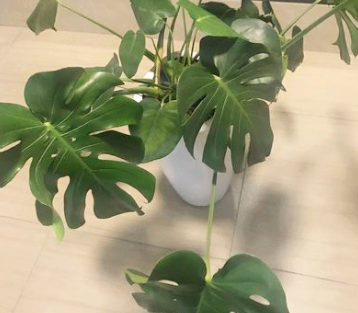
I. Growing Methods for Monstera deliciosa
1. Soil
Monstera deliciosa is suited to loose, fertile soil with good drainage. This kind of soil can be made by mixing leaf mold, garden soil and sand at a ratio of 1/3 each. In addition, before adding the soil, you can place some hoof pieces or crushed bone at the bottom of the pot as a base fertilizer.
2. Sunlight
Monstera deliciosa is suited to conditions with sufficient light, but it must not be placed in strong direct sunlight for fear that overly intense sunlight will scorch the leaves. However, the light must not be too dim either, lest the leaf color fade. In daily life it can be kept in filtered light; in summer the pot can be placed in a shaded spot by a window, but in winter it needs sufficient sunlight.
3. Temperature
Monstera deliciosa is suited to warm conditions and is not very cold-tolerant. The most suitable temperature for its growth is around 15-25°C. When the winter temperature drops below 5°C, it should be moved indoors to prevent cold damage, and the indoor temperature should be maintained between 15-20°C.
4. Water
Monstera deliciosa is suited to moist conditions, but the soil must not become waterlogged, to prevent root rot. The best level is dry without cracking and moist without being soggy, and an air humidity of 60% is suitable. In summer, spray and water the leaf surface every day; in winter this is not needed, to avoid black spots appearing on the leaves or even blackening and rotting.
5. Fertilizing
April to September is the vigorous growth period of Monstera deliciosa. At this time, to provide the nutrients it needs, apply a thin liquid fertilizer about once every half month. During the growing period, water with a 20-80 or 30-70 nitrogen liquid fertilizer about once every 14 days; this can promote robust growth. To make the stems thicker and stronger and prevent lodging, phosphorus and potassium fertilizer can be added after autumn.
6. Pruning
After Monstera deliciosa has taken shape, for the sake of a natural and attractive look, you can appropriately prune areas where the stem nodes and leaves of the whole plant have grown too densely and where the vines have grown too long. If you want the stems and vines to grow taller quickly, you can moderately prune the lower aged leaves.
7. Pests and Diseases
During its growth period, Monstera deliciosa is prone to pests and diseases. The common disease is mainly gray leaf spot; for control, spray with a 70% thiophanate 1000-fold solution or a 0.5% equal-amount Bordeaux mixture. In addition, plant care should be strengthened. The common pest is mainly scale insects; for control, spray with a 40% omethoate emulsion 1000-fold solution.
8. Repotting
Monstera deliciosa is a relatively fast-growing plant. To provide sufficient space for its growth, it needs to be repotted once a year, and the best time for repotting is between March and April. Before switching to a pot one size larger, you can remove some of the old soil and dead roots along the way.
II. Precautions for Growing Monstera deliciosa
1. Note that during the cultivation of Monstera deliciosa, slightly acidic soil is best. If you do not have the conditions to make loose, fertile soil with good drainage and water retention, you can also directly use leaf mold or peat soil.
2. The most suitable temperature for the growth of Monstera deliciosa is between 20-25°C. Note that during the seedling stage, the nighttime temperature in winter must not be lower than 10°C, to prevent cold damage.
3. The growth period of Monstera deliciosa is when the plant grows rapidly, and the cultivation space needs to be a bit more spacious, so as not to affect the extension of stems and leaves and cause the leaf shape to become less handsome.
4. In summer, Monstera deliciosa needs frequent spraying and maintenance of relatively high air humidity. In addition, the leaves need to be kept clean, which is beneficial for photosynthesis.
5. Monstera deliciosa is somewhat toxic; in particular, its sap has an irritating and corrosive effect. If its sap is rubbed into the eyes or comes into contact with wounds, it will cause unnecessary pain and burns, and it must not be eaten by mistake, otherwise it will burn the tongue. Therefore, attention must be paid during cultivation.
Summary: The above is the relevant introduction on the growing methods and precautions for Monstera deliciosa. I hope it is helpful to friends in need!