How do you grow osmanthus so it thrives and blooms abundantly?
Osmanthus is also regarded as a traditional famous flower of our country. It is a tree species with both high ornamental and practical value, and it is very popular among people. However, many people's osmanthus fails to bloom, which shows that growing it well requires considerable effort. So how do you grow osmanthus so it thrives? How can you make it bloom more?
I. How do you grow osmanthus so it thrives?
1. Water at the right time
For potted osmanthus, master the principle of not watering when the soil is not dry, and watering thoroughly when you do water. You can spray the leaves with clean water once a day. After March and April, move the osmanthus outdoors and water it thoroughly once. In summer, water in the morning and evening; in winter, water around midday. The water temperature should be close to the soil temperature, and waterlogging must be avoided.
2. Fertilize reasonably
To ensure the ornamental value of osmanthus, give it sufficient fertilizer. When osmanthus sends out new shoots, apply nitrogen fertilizer 1-2 times. Before flower bud differentiation and blooming, fertilizer should be mainly phosphorus fertilizer. Before fertilizing, let the potting soil dry slightly and loosen the soil, which helps the absorption of fertilizer. After fertilizing, water thoroughly once.
3. Repot and change the soil
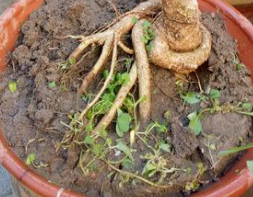
Every 2-3 years, osmanthus needs to be repotted and given fresh soil. During repotting, cut off some old roots and dead roots and spread a layer of river sand at the bottom of the pot to improve aeration and drainage. In addition, you can place decomposed cake fertilizer as a base fertilizer. When filling with soil, press it firmly. The soil can usually be prepared with garden soil, composted manure and river sand at a ratio of l/3 each.
4. Pruning and shaping
When shaping osmanthus, a combination of bending, tying and pruning is generally used, and the best time is after autumn. If the tree shape is very poor, you can cut off all the branches at the top at the 2/3 or 3/4 point. If the branches are too dense, thin them out. After blooming, you should also cut off leggy, diseased, pest-damaged, dead and densely crowded weak branches.
5. Winter management
During the winter period for osmanthus, the room temperature should be maintained at 0-5°C, and the humidity should be kept at around 50-80%. In addition, indoor light should be good, especially when the buds swell in early spring, when sunlight should be even more sufficient. After Grain Rain the following year, the potted osmanthus can be moved out of the room and placed together in a sheltered, sunny spot so it gradually adapts to the outdoor environment.
6. Pest and disease control
During the growth period, osmanthus is prone to pests and diseases, so measures should be taken to control them. Common diseases include leaf spot, sooty mold, algal leaf spot and root rot. For leaf spot, sooty mold and algal leaf spot, control can be done by spraying 0.5 Bordeaux mixture or 5% carbendazim 500-1000 times solution. For root rot, pay attention to keeping the soil loose and breathable and avoid waterlogging. Common pests include sawflies, whiteflies, mites and long white scale insects. Sawflies, whiteflies and mites can be killed by spraying 40% dimethoate 1500-3000 times solution. For long white scale insects, besides manual brushing off, you can also spray 40% omethoate 1000 times solution or 40% fenitrothion 500 times solution.
II. How do you make osmanthus bloom more?
1. Choose good potting soil
For potted osmanthus, the potting soil can be mixed with mountain soil, humus soil and sandy soil in a ratio of 5:3:2, or you can use half leaf mold and half sandy loam. The soil should not be too acidic, so as to avoid slow growth and yellow, withered leaves, and alkaline soil should not be used either, so as to avoid causing the leaves to wither and even die after 2-3 months.
2. Water at the right time
When watering osmanthus, it should be done according to the situation. Before new shoots appear and on cloudy and rainy days, water less. In dry weather in summer and autumn, water more. Normally, it is best to keep the potting soil at about 50% water content when watering. In the rainy season, drain promptly to avoid water accumulating in the pot and rotting the roots.
3. Apply topdressing skillfully
If you want osmanthus to bloom more, starting in early spring after the osmanthus is moved outdoors, apply decomposed, diluted pig manure liquid. In April and May, apply it once every 10-15 days; in June and July, apply it once every 7-10 days; apply the last time in early August. This not only makes osmanthus grow luxuriantly and bloom more, but also makes it more fragrant. If there is no pig manure, decomposed cake fertilizer liquid can also be used. Insufficient fertilization easily leads to fewer branches, fewer flowers and no fragrance.
4. Prune appropriately
Osmanthus has a well-developed root system and strong sprouting ability. An adult osmanthus tree can send out new shoots twice a year. Therefore, to make osmanthus bloom more, it needs appropriate pruning to maintain the physiological balance between reproductive and vegetative growth. When pruning, generally cut off leggy, thin and weak, diseased and pest-damaged branches. This helps with ventilation and light penetration and concentrates nutrients, enabling osmanthus to develop more and fuller flower buds.
Summary: The above is a related introduction on how to grow osmanthus so it thrives and how to make it bloom more. I hope it is helpful to friends in need!