How much does a fig sapling cost? Detailed growing guide
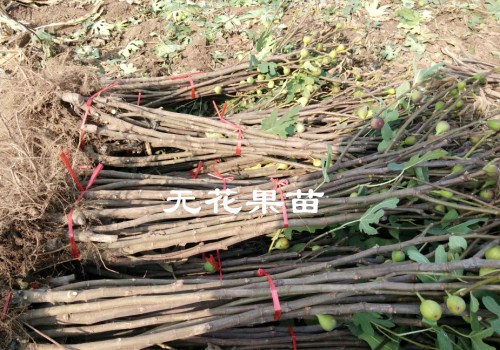
The fig is a flowering plant in the mulberry family. Its fruit is sweet and has a unique fresh fragrance, suitable for both young and old. Besides being eaten, it can also be used medicinally; moreover, its tree form is elegant and it can be grown as a potted ornamental. So, how much does a fig sapling cost?
I. Introduction to figs!
1. Does a fig bear fruit once a year?
No. Figs generally bear fruit twice a year, namely the summer crop and the autumn crop. The summer fruit only reaches 7-8 parts ripe, counts as unripe fruit, tastes very sour, and is not suitable for eating but suitable for use as medicinal material; the autumn fruit is fully ripe, counts as ripe fruit, and tastes sweet and sour.
2. Can figs be eaten raw or can the skin be eaten?
The fig is pear-shaped, and its color is purplish red or yellow. It can be eaten directly raw, and can also be made into dried fruit, preserved fruit, jam, juice, fruit tea, fruit wine, beverages, canned goods, etc.; moreover, its skin can also be eaten, but note that it must be cleaned thoroughly when eaten; if it is a freshly picked fig, its stalk will exude a white milky sap, and this white sap is mildly corrosive and cannot be eaten.
II. How much does a fig sapling cost?
There are many varieties of figs, and the specifications also differ, so the prices of the saplings are also different. According to information provided online, the prices of fig saplings are as follows:
| Merchant | Variety | Specification | Price |
| Anhui Shouxian Banqiao Fruit Tree Research Institute | Japanese Purple Fig | 40 cm | 5 yuan/plant (minimum order ≥10 plants) |
| 70 cm | 5.5 yuan/plant (minimum order ≥10 plants) | ||
| 100 cm | 6 yuan/plant (minimum order ≥10 plants) | ||
| Three-year large sapling | 20 yuan/plant (minimum order ≥10 plants) | ||
| Chinese fig sapling | 40 cm | 2 yuan/plant (minimum order ≥10 plants) | |
| 70 cm | 2.5 yuan/plant (minimum order ≥10 plants) | ||
| 100 cm | 3 yuan/plant (minimum order ≥10 plants) | ||
| Zhuangshun Fine Fruit Tree Varieties | Green Skin Fig | Single plant | 10 yuan/plant |
| Hundred plants | 9 yuan/plant | ||
| Thousand plants | 8 yuan/plant | ||
| Japanese Purple Fig | Single plant | 5 yuan/plant | |
| Tai'an Development Zone Rongcheng Nursery | Boji Hong fig sapling | 1-year-old | 3 yuan/plant (minimum order 1000-1999 plants) |
| 2.5 yuan/plant (minimum order ≥ 2000 plants) |
III. How are figs grown?
1. Planting time
Figs can be planted in spring from March to April and in autumn from September to October. In North China it should be around Qingming, in Northeast China it is best around Guyu, and in the south it can be after leaf fall in autumn. The planting site can be wasteland slopes, fields, courtyards, etc. The planting density can use 1×2 m or 2×3 m, and base fertilizer should be applied before planting.
2. Fertilizing and watering
Figs are relatively tolerant of fertilizer. For young trees, apply about 5 kg of decomposed mixed manure per plant, applying fertilizer about 40 cm away from the main root; for potted plants, apply 1 kg; for mature trees, apply about 15 kg of decomposed farmyard manure per plant, fertilizing before and after leaf fall, during the peak new shoot growth period, and during the rapid fruit swelling period. Figs are not tolerant of waterlogging, so attention should usually be paid to drainage and water removal; however, during the new shoot growth period and fruit swelling period the water demand is relatively large, and at other times watering can be omitted as normal rainfall is sufficient.
3. Pruning and shaping
Figs use the multi-main-branch natural open-center training method, keeping 3—5 main branches for the whole plant and leaving no side branches. During the young tree stage, focus on cultivating the main branches to promote more branch growth; during the initial fruiting stage, cultivate more branch groups; during the full fruiting stage, pay attention to cultivating scaffold branches; for those that are aged or suffer from pests and diseases, the main branches and branch groups can be re-cultivated.
4. Daily management
After the fig plants survive, loosen the soil and remove weeds. Carry out fertilizing work as usual, and also pay attention to drainage and water removal; after the trunk shape is set, prune every year, removing dense branches, diseased and pest-infested branches, and dead branches; also pay attention to preventing and controlling diseases, pests, and bird damage.
5. Fruit harvesting
Figs generally ripen from mid-July to November. The skin of ripe fruit is mostly red or yellow, and at this point it can be picked. Picking is best done in the morning or evening on sunny days. If they are to be sold on the market, they should be picked early, otherwise storage and transport will be inconvenient.
The above is an introduction to the prices and growing methods of fig saplings. We hope it is useful to everyone.