What to do when the leaves of the heartleaf ice plant turn yellow? Find the right cause and it will regain its emerald green
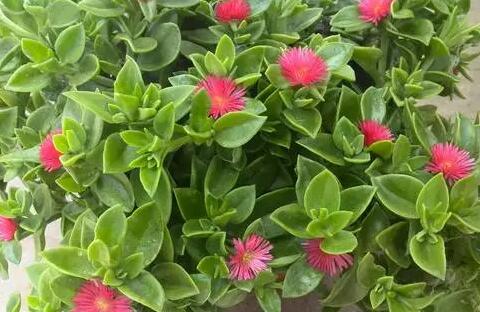
The heartleaf ice plant (Aptenia cordifolia) is also known as dew plant, flowering vine, heartleaf ice plant, dew flower, sun rose, goat-horn hanging plant, cherry blossom hanging plant, and so on, but it does not belong to the genus Chlorophytum. Because its appearance resembles that of spider plant, it is often cared for as if it were a spider plant. What should you do if its leaves turn yellow during care? What are its cultivation methods?
I. What to do when the leaves of the heartleaf ice plant turn yellow?
1. Natural metabolism
If the heartleaf ice plant has been grown for a long time, the leaves at the bottom will naturally wither and turn yellow. This is a very normal phenomenon, and growers need not worry. Even if there are many withered yellow leaves at the bottom, it does not matter, as long as the leaves at the top are normal.
2. Intense sun exposure, or no light for a long time
If the heartleaf ice plant is exposed to blazing sunlight, its leaves will be scorched yellow; on the contrary, if it is kept in an environment without light for a long time, chlorophyll will decrease, and yellowing of the leaves will also occur.
3. Lack of fertilizer or excessive fertilization
Some growers have kept their heartleaf ice plant for a long time without repotting or changing the soil, so the various nutrient elements contained in the potting soil have been exhausted, and the three key elements of nitrogen, phosphorus and potassium have not been replenished in time. The plant lacks nutrients, and the leaves appear yellow and thin. It should be repotted in time with fertile loam and watered with alum fertilizer water.
Excessive fertilization is relatively easy to judge; the main thing is to check whether fertilizer has been applied recently. If the amount of fertilizer exceeds the plant's needs, the leaves will appear glossy and uneven, then the root system will rot and the leaves will turn yellow. Fertilization should be stopped, more clean water should be poured, or the plant should be repotted, the roots cleaned, and new soil replaced.
4. Waterlogging
Some succulent growers' heartleaf ice plants have potting soil with poor air permeability, and they water frequently, which causes the potting soil to remain waterlogged and not dry out for a long time. The root system has difficulty breathing, which causes the leaves to turn yellow. In this case, loosen the soil and control the moisture in time.
II. What are the cultivation methods for the heartleaf ice plant?
1. Plenty of sunlight
If you want the heartleaf ice plant to bloom more, it is best to place it in a place with plenty of sunlight, because the heartleaf ice plant likes sun, and it needs at least more than 6 hours of light every day. However, shade it at noon in summer; in the other seasons it can receive direct sunlight.
2. Fertilization method
Fertilizing the heartleaf ice plant is mainly based on phosphorus and potassium fertilizers. Be careful not to apply nitrogen fertilizer frequently, otherwise the heartleaf ice plant will not bloom. Phosphorus and potassium fertilizers can make the roots and stems of the heartleaf ice plant grow more robust. From late spring to early autumn, apply a thin organic fertilizer solution once every week, or you can make organic fertilizers such as bone meal and eggshells at home.
3. Watering frequency
From March to September each year is the vigorous growth period of the heartleaf ice plant, and it needs a large amount of water, so during this period it should be watered once every 2 to 3 days. After September, gradually reduce the number of waterings. In winter, if the temperature is lower than 10°C, control watering and master the principle of not watering until dry.
4. Winter pruning
In winter, the heartleaf ice plant is basically in a dormant period. At this time, cut off its diseased and pest-infested branches and weak branches, as well as overlapping branches. Overly lush branches should be thinned and cut back, keeping the heartleaf ice plant in a perfect shape, and this can also promote more branches and buds to grow the following year.