Beginner's guide: How to grow and care for Chloranthus spicatus
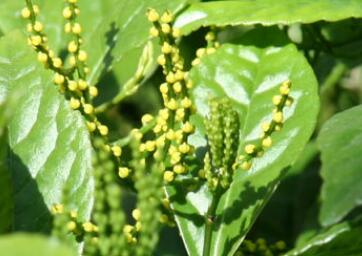
Chloranthus spicatus, also known as zhenzhulan, pearl orchid, jinsulan, yuzilan, chalan, and jizhualan, has emerald green, soft and tender branches and leaves with an elegant posture. Grown at home in summer, it has a rich floral fragrance and is suitable for display in front of windows, on balconies, and on flower stands. Its fragrance fills the room, making people feel relaxed and happy, and it is very popular. To make Chloranthus spicatus grow well, you must pay a little more attention to its care. Today let us learn about the growing methods and precautions for Chloranthus spicatus.
I. Growing methods for Chloranthus spicatus
1. Watering
Because the roots of Chloranthus spicatus are thin and weak, watering should be moderate. Generally, after it is brought out of the room in spring, the temperature is not yet very high, so it can be watered once every day at noon. In summer, when the air is dry, it needs to be watered once in the morning and once in the evening every day. When the weather is dry, the leaves should also be sprayed with water frequently; in the rainy season, when air humidity is relatively high, watering should be controlled, otherwise if the potting soil is too wet, Chloranthus spicatus will turn black segment by segment and wither and decline. In autumn, when the climate turns cooler, watering can be changed according to conditions to once every 2-4 days.
2. Fertilizing
Chloranthus spicatus likes fertilizer. During the growing period, attention should be paid to timely fertilizing, applying thin fertilizer frequently, so that Chloranthus spicatus blooms more and has a strong fragrance. Use decomposed cake fertilizer or a diluted decomposed bone meal liquid; if conditions permit, decomposed human feces and urine are best. It is advisable to apply more before and after flowering, and additionally apply 0.2% potassium dihydrogen phosphate aqueous solution 1-2 times (to prevent early bud drop or flower drop due to phosphorus deficiency). In this way, Chloranthus spicatus will have clusters of flower branches, overflowing fragrance, and emerald green, shining leaves. Note that after each fertilization and watering, the soil should be loosened in time to facilitate aeration. In autumn, fertilizer should be applied less, and in winter it should be stopped altogether.
3. Shading
Chloranthus spicatus is a shade-loving plant and likes scattered light, so in summer special attention must be paid not to let it be exposed to strong sunlight. A shade shed must be set up for shaded care, otherwise the leaves easily turn yellow and the ornamental effect is affected. If conditions permit, it is best to plant some shade-providing tree species around the shade shed to prevent direct sunlight and keep the temperature inside the shed in summer from becoming too high.
4. Pruning
The stems and branches of Chloranthus spicatus are slender and weak and somewhat trailing, and attention should be paid to two aspects:
Because its stems and branches are slender and weak and cannot stand completely upright, bamboo rings or wire supports should be used on the pot to support its growth, so as to prevent it from bending, drooping, and becoming messy. If allowed to grow naturally, it is prone to leggy growth and lodging. Therefore, from the seedling stage onward, it should be pinched back several times to encourage more branching. At the same time, old leaves should also be removed frequently. After autumn, dead branches and diseased or pest-damaged branches should be cut off to help save nutrients and improve ventilation.
5. Cold protection
Chloranthus spicatus is not cold-tolerant, so in the Yangtze River basin area it should be moved indoors around the time of Frost's Descent, placed in a spot that receives sunlight, and the room temperature should be kept no lower than 5°C. Generally, water once every 7-10 days, just keeping the potting soil slightly moist. Indoors, relatively high air humidity should also be maintained. When the temperature is relatively high at noon, it can often be moved outside and its branches and leaves sprayed and washed with warm water. This not only keeps the leaf surface clean regularly, but also prevents the occurrence of sooty mold.
II. Precautions for growing Chloranthus spicatus
1. How can the fragrance of Chloranthus spicatus be enhanced?
For Chloranthus spicatus, attention should be paid to timely fertilizing so that the flowers are numerous and the fragrance is strong. Fertilizer can be decomposed cake fertilizer or human feces and urine. Apply once after it is brought out in spring, once during the plum rain period in summer, once in autumn, and once again after pruning the seedlings in autumn. Applying during the flowering period a dilute fertilizer water made from decomposed fish offal, meat scraps, bones, and the like will enhance the fragrance of the flowers.
2. How can Chloranthus spicatus be prevented from lodging?
Because the stems and branches of Chloranthus spicatus are weak and somewhat trailing, if allowed to grow freely, it is prone to leggy growth and lodging. Therefore, from the seedling stage onward, it should be pinched back more, and supports should be set up, which can also encourage more branching. Old leaves should also be removed frequently, and after autumn, weak and dead branches must be pruned off.
3. Other precautions for Chloranthus spicatus
(1) When Chloranthus spicatus grows larger, it is best to set up a support to secure it and prevent creeping growth.
(2) On nights with particularly cold weather, cover the plant with two layers of plastic bags for insulation, then open the bags for ventilation the next day at noon after the temperature rises.