A detailed guide to growing and caring for Alocasia, the large-leaved foliage plant
“The arrival of spring quietly releases an ambiguous air; in the season when a hundred flowers bloom, you have a fresh and refined poetic quality.” From the song “Alocasia Love” we can tell that the flower introduced today, “Alocasia,” is a green plant with fresh and elegant charm. In recent years, more and more people have been growing Alocasia; compared with other flowers, it is not simple to care for. Today let us learn about the growing methods and precautions for Alocasia.
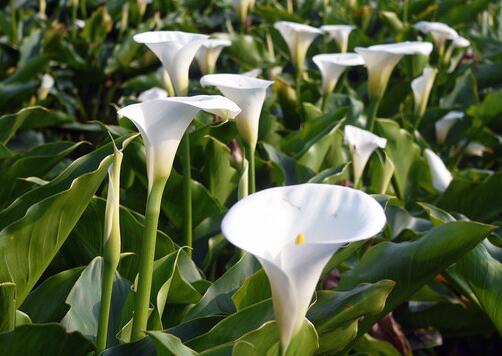
I. How to grow Alocasia
1. Potting soil requirements
First mix peat soil, river sand and leaf mold into a blended soil, then add a certain amount of nutrients, and plant the Alocasia. After planting, water thoroughly until it drains from the bottom of the pot, then place it in a semi-shaded, bright-indirect, ventilated spot for care.
Note: Loosen the soil once a month to improve its air permeability and drainage. Repot once every spring.
2. Watering to keep the potting soil moist
When the potting soil is kept moist, the water supply for Alocasia is generally sufficient. In summer you can appropriately increase it a little, and in autumn and winter you can reduce it. Generally, if the soil is not dry, do not water, because consumption is not as great as in spring and summer. Of course, to keep the leaves clean and increase air humidity, it is fine to spray the leaves with water appropriately.
3. Apply fertilizer in time
As a fertilizer-loving plant, Alocasia needs, in addition to base fertilizer that meets its growth needs, an appropriate additional application of liquid fertilizer, about 1-2 times a month. Nitrogen, phosphorus and potassium fertilizer is also suitable.
Note that when the temperature is too low, there is no need to fertilize. At the same time, the concentration of each fertilization should not be too high; it must be kept dilute to avoid burning the roots. When fertilizing, do not let it touch the leaves, to avoid the phenomenon of yellowing leaves.
4. Optimum growing temperature 25-28°C
Alocasia likes a warm environment. Even in winter, as long as the temperature is not lower than 8°C, it can successfully overwinter.
5. Bright indirect light is enough
Alocasia can grow well as long as it has a semi-shaded environment, and it is generally enough to place it on a windowsill for care. In summer, pay attention to sun protection; in winter, supplement light in time, and as soon as there is sunlight, move it to the balcony or outdoors.
6. Propagation in early spring
Generally after early spring, Alocasia propagation should be carried out, and the commonly used method is division. Note here that when cutting the rhizome, the wound must be disinfected before planting. It can take root in about a month, and throughout the process be careful to avoid light and keep the potting soil moist.
II. Precautions for growing Alocasia
1. When growing Alocasia, pay attention to its toxicity: Alocasia is a toxic flower, and the sap in its stems and leaves contains toxins. If you accidentally touch it or eat it by mistake, numbness and swelling and pain can occur. During care, be sure not to break it, and if you touch it, wash your hands promptly.
2. Alocasia needs repotting: Generally the repotting time is in April of the following year. When repotting, be careful to cut off diseased and rotten roots, then prepare fresh nutrient soil and plant it again. At this time, water the potting soil thoroughly, then place it in a cool, ventilated place for one week of care.
3. When watering, be careful not to overwater: too much water in the potting soil will prevent the roots from breathing, causing rot, which leads to yellowing and dropping leaves and even the death of the whole plant.
4. Pay attention to whether Alocasia lacks fertilizer: Alocasia likes fertilizer and is very prone to slow growth due to lack of fertilizer. At this time, you can observe whether the new leaves are pale in color and yellowing. If this phenomenon occurs, it may need additional fertilizer.
Through our article, I believe you have some understanding of the growing methods and precautions for Alocasia. Hurry and plant a pot to practice.