How to grow Zinnia (Zinnia elegans) and how it differs from Calendula
Zinnia, also called zinnia elegans, is an annual herbaceous plant in the Asteraceae family. It has an attractive plant form, very large flowers, many flower colors, and a long blooming period. It can be planted in flower beds, flower borders, flower strips, flower pots, and courtyards, and it looks very beautiful. So, how do you grow zinnia? How is it different from calendula? Below, we introduce how to grow zinnia and how to tell it apart from calendula.
I. A brief introduction to zinnia!
1. What does zinnia look like?
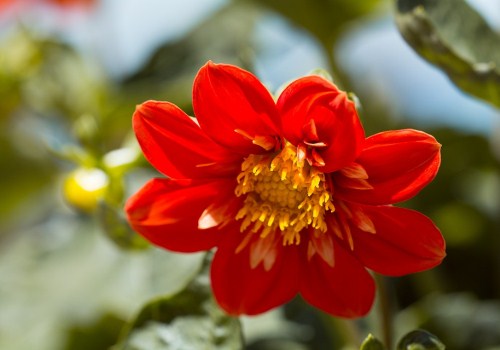
Zinnia generally grows 30-100 cm tall. Its leaves are 5-10 cm long and 2.5-5 cm wide, broadly ovate or oblong-elliptic in shape. The flowers are solitary at the ends of the branches and may be single or double. Flower colors include deep red, rose, violet, yellow, orange, white, mixed colors, and more. The petals are obovate or ovate-lanceolate.
2. What is the flower language of zinnia?
Zinnia comes in many flower colors, and different colors have different flower meanings, for example:
The flower language of zinnia is: rising step by step;
The flower language of zinnia (magenta) is: lasting love;
The flower language of zinnia (mixed colors) is: remembering an absent friend;
The flower language of zinnia (purplish red) is: unchanging forever;
The flower language of zinnia (white) is: kindness;
The flower language of zinnia (yellow) is: a daily greeting.
II. How do you grow zinnia?
1. Soil
Zinnia is vigorous and tolerant of poor soil, and it is not strict about soil requirements. However, it grows better in fertile soil that is deep, loose, and well aerated. You can mix leaf mold, peat, perlite, and river sand in a 2:2:2:1 ratio to make a growing medium.
2. Propagation
Zinnia can be propagated by sowing or by cuttings. Sowing can be done from late March to late June. Before sowing, disinfect the soil and the seeds, then sow the seeds in holes or broadcast them over the growing medium, cover with about 1 cm of thin soil, and finally water. They usually germinate in 5-10 days. For cutting propagation, you can take side shoots about 10 cm long for cuttings. After cutting, water them, and they usually root in 5-7 days.
3. Temperature
Zinnia likes warmth and is not cold-tolerant. During the growing period, the suitable temperature is between 18-20°C during the day and between 15-16℃ at night. In winter, the temperature must not be too low, otherwise it will suffer cold damage. You can move it indoors and keep the temperature above 10°C.
4. Light
Zinnia likes sunlight and fears intense summer heat. During normal care, you can use full sun. If there is not enough sunlight, the plant is prone to leggy growth, which affects flowering, but do not expose it to scorching sun. If it is winter, you can move it indoors to a south-facing balcony with good light for care.
5. Watering
Zinnia is drought-tolerant, but it still needs watering normally. Water moderately, not too much, otherwise the roots will rot, and not too little, otherwise the normal growth of the plant will be affected. If it is in the seedling stage, the soil should not be too wet; just keep the moisture content at 50%-60%. If it has been planted in a pot, water thoroughly once, then keep the potting soil slightly moist and on the dry side. If it is in a place with particularly strong sunlight in summer, you can water a moderate amount more. If it is in a place with insufficient light, reduce watering.
6. Fertilizing
Once the root system of zinnia grows to the bottom of the pot, you can begin topdressing. Fertilize 2-3 times per week; apply water-soluble fertilizer on sunny days and granular fertilizer on rainy days. You can also apply 1 supplemental calcium fertilizer. Once it enters the vigorous growth period, fertilize about once every 10 days, mainly with phosphorus and potassium fertilizers, to promote strong plants and abundant flowering.
7. Pinching & diseases
Zinnia should be pinched starting 1 week after planting out to promote branching. Pinch the branches repeatedly to promote a compact, dwarfed, and vigorous plant. Common diseases of zinnia include white star disease, black spot, and mosaic disease, which can be controlled by spraying.
III. How do you tell zinnia and calendula apart?
Difference 1. Different genus and species: zinnia is an annual herbaceous plant in the Asteraceae family, Heliantheae tribe, Zinnia genus; calendula is a biennial herbaceous plant in the Asteraceae family, Calenduleae tribe, Calendula genus.
Difference 2. Different stems and leaves: zinnia can grow to 100 cm tall, and the whole plant is covered with rough hairs or long stiff hairs; calendula can only grow to 60 cm, and the whole plant is covered with white downy hairs. Zinnia leaves are broadly ovate or oblong-elliptic, while calendula leaves are elliptic or elliptic-obovate.
Difference 3. Different flower forms: zinnia flowers include single, double, curled-petal, and wrinkled-petal forms; calendula flowers include double and curled-petal forms. The flower center of zinnia is yellow or brown, while the flower center of calendula is green or deep purple.
Difference 4. Different flower colors: the flowering period of zinnia is June-October, and it has many flower colors, including deep red, rose, yellow, orange, white, bicolor, and more. The flowering period of calendula is December-June, with peak bloom from March-June, and its flower colors are relatively single, including golden yellow, orange-yellow, yellow, and brown.
The above is an introduction to how to grow zinnia, and it can be distinguished from calendula using the 4 methods above. We hope it is useful to everyone.