Erica is called the queen of South African endemics, so how do you care for it?
Erica is a flowering plant native to South Africa, and it is deeply loved by people because of its very good looks. Although it does not have the elegance of orchids or the vividness of azaleas, its clusters of flowers gather together like strings of little bells, swaying in the wind and giving off fragrance. Erica is especially friendly to lazy flower growers. Why is that? Because it is highly adaptable, and growing it in pots is also relatively simple. So how do you care for Erica, which has the fine title of "queen of South African endemics"? Let's take a look at the specific growing methods.
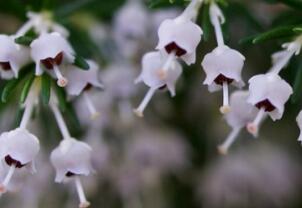
I. Introduction to Erica
1. Another name for Erica: heath.
2. Origin: Erica is a plant from the Mediterranean region, northern Europe, southern Africa and other areas. There is now a nature reserve for Erica in northern Germany called the Luneburg Heath, which is very famous and is also a tourist destination.
3. Flower color and flower meaning: The flower color of Erica is white with red, and its flower meaning is loneliness; it also symbolizes lonely yet happy love, which is self-contradictory.
4. Main value: Erica has medicinal value, edible value and ornamental value.
When used as medicine, Erica can have a sterilizing and calming effect. It can not only help the body excrete waste, but also whiten and beautify the skin. If used for bathing, it can also relieve fatigue and soothe the muscles and joints.
If used as food, it is generally used to make honey or brewed as tea. Paired with other flower teas, it is a very good choice, not only good in taste but also beautifying.
There is no need to say much about Erica's ornamental value. Its flowers are very beautiful and have a fresh scent. Whether kept at home or in a courtyard, it plays a certain decorative role.
II. How do you care for Erica?
1. Diverse propagation methods
Erica's propagation methods are divided into cuttings, sowing, layering and division. Different propagation methods also have certain differences in planting methods. Generally, sowing and cuttings are more common. For sowing, spring pot planting is generally chosen, and at a growing temperature of 15-25°C it can sprout in half a month. For cuttings, it is generally done in summer or autumn and winter, and roots can form in about a month.
2. Soil requirements
Generally, when growing Erica, it is recommended to choose acidic soil. At the same time, the soil must be fertile, loose, and good in both drainage and aeration.
3. Light conditions
Erica's growth requires sufficient light. If the light is poor, it may not bloom or the blooms may not look good. If you want beautiful blooms, give it about 3 hours of light every day for one month before the flowering period. In summer, the light is too strong, so it is not recommended to place it outdoors for a long time; shade it appropriately to prevent sunburn.
4. Watering
When watering Erica, it is best not to use raw water. Generally, water that has been exposed to the sun is best. The number of waterings and the amount of water mainly depend on the moisture level of the potting soil and the season, and it must not be too much or too little. Especially during the vigorous growth period, the water needed is relatively large. During the rainy season, we should constantly check the potting soil to avoid excessive water accumulation causing root rot. In winter, the watering interval can be longer; we choose once every half a month. To increase air humidity, water can be sprayed around the leaves. Similarly, in summer, it is also necessary to cool it appropriately and increase air humidity so the leaves become greener.
5. Fertilizing
Erica is not a flower that likes fertilizer, so as long as all kinds of nutrients in the soil are balanced and sufficient, it can generally grow normally. But if you want good blooming and vigorous growth, you can apply additional fertilizer appropriately during this period to ensure its growth nutrients keep up with its growth rate.
In addition, we should usually keep it in a ventilated environment for care. Too dark and humid conditions make it very easy to get pests and diseases, such as red spiders and aphids. At the same time, be sure to keep the leaves of the whole Erica plant clean, as this can also prevent insects.