Sowing Time and Key Planting Methods for Dandelions
Dandelion is a plant that everyone is very familiar with, especially in childhood, when the wind blew and dandelion seeds scattered everywhere, a scene that felt incredibly beautiful. Dandelion is actually a traditional Chinese medicinal herb with heat-clearing and detoxifying properties. Besides the wild ones growing by the roadside, some growers also cultivate dandelions on a concentrated scale. So when should dandelions be sown? What are the key planting methods?
1. When should dandelions be sown?
To know when to sow dandelions, we first need to understand their growth habits. Dandelion is a plant with excellent heat tolerance and cold tolerance, and it rarely suffers from pests and diseases, so it can be cultivated in many parts of the country.
The most suitable growing temperature for dandelions is generally around 15-25°C, so we usually choose to sow in spring, that is, in April. However, with the development of cultivation techniques, greenhouse cultivation of dandelions is now very common. Unlike the usual open-field cultivation time, we choose to sow from late November to early December, and then raise seedlings. If growing in a small arch shed or large arch shed, you can choose to cover with agricultural film in February-March of the following year, and then harvesting can generally be done around late March. Compared with traditional cultivation methods, this planting method offers higher economic benefits, and when sold out of season, farmers' pockets are fuller.
It is worth noting that when sowing, you should choose seeds of high planting quality, uniform, and plump, so as not to affect the yield. At the same time, before sowing, mix them evenly with fine sand, then evenly scatter them into the dug furrows, and do not cover them with soil that is too heavy.
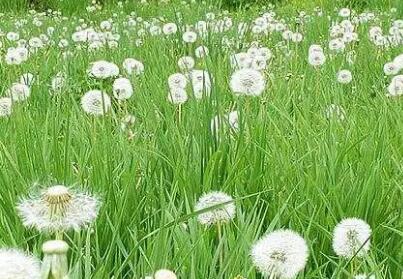
2. Key points of dandelion planting methods
1. Choose suitable soil and prepare the land finely
Dandelion is a traditional Chinese medicinal herb with very strong adaptability, so it has low soil requirements. You will often see them by roadsides, in fields, and other places. However, if you want to grow them as a cash crop, it is recommended to choose moist sandy soil with good drainage, good fertility, and good drainage.
Before sowing, the land must first be finely prepared, the soil loosened, and then sufficient base fertilizer applied. Water before sowing, and water thoroughly in one go to maintain soil moisture. The planting site chosen should ideally be a sunny spot, so that growth is better.
2. Sowing and seedling raising
Dandelion seeds do not have a dormant period, so they can be sown all year round, as long as the temperature meets their growing requirements. Generally, if the temperature is above 15°C, they will sprout in about a week; if it is too high or too low, they will not sprout or will sprout slowly.
3. Temperature conditions
Generally, in winter, film covering should be done before winter arrives to maintain temperature and ensure that dandelion seedlings can grow healthily.
4. Water and fertilizer
Watering and fertilizing are key factors in ensuring dandelion growth. If these two points can be done perfectly, a high dandelion yield is not difficult. Therefore, maintain a certain frequency of watering in normal times to keep the soil moist, especially during the seedling emergence period, which is very critical.
In addition to the base fertilizer applied earlier, appropriate topdressing is also necessary to ensure growth. To maintain the wild character of dandelions, we generally choose farmyard manure or organic fertilizer and do not use chemical fertilizers. Generally, after topdressing, water promptly so that the nutrients are fully absorbed.
5. Pest and disease control
Dandelion cultivation generally rarely suffers from pests and diseases. If disease or pest infestation does occur, use medication scientifically and correctly, and remember not to exceed the standard. It is best to choose biological or agricultural measures for control.
Finally, when harvesting dandelions, be careful to clean off the soil as much as possible before transporting them home. After drying in the sun, they can be sold. Remember not to expose them to strong sunlight, otherwise their quality will be affected.