A detailed guide to bayberry tree cultivation techniques: grow them this way and they will bear fruit in 3 years
The bayberry is one of the famous fruits of the Jiangnan region of China, and it is especially loved by everyone when the bayberry season comes around. That is why the price of bayberries has been rising again and again in recent years. When you go to the market to buy bayberries in May and June, the price is generally around 10-15 yuan per jin; in November and December the price is generally around 18-20 yuan per jin. The prospects for growing them are still very good, so some farmer friends want to plant bayberry trees. Today we will introduce bayberry tree cultivation techniques for you! Grown this way, they will bear fruit in 3 years!
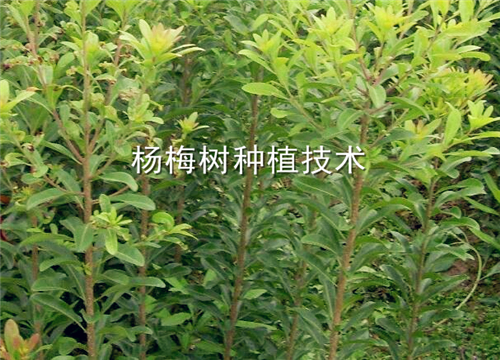
I. Introduction to bayberry tree cultivation techniques!
1. Soil selection for planting bayberry trees
For planting bayberries, it is best to choose loam soil, among which lateritic soil, latosolic red soil, red soil and yellow soil are the best, because they are acidic soils, and bayberries like to grow in acidic soil. If the soil is alkaline, it is not good for their growth.
2. Site selection for planting bayberry trees
We all know that the Jiangnan region has many mountains and hills, while the northern region has many plains, but bayberries like to grow in the mountains and hills of the Jiangnan region. Different types of mountain terrain will all affect the growth of bayberries.
(1) When bayberries are planted on sloping land, because the terrain is low, the soil has sufficient water content, and the bayberry fruit produced tastes relatively bland.
(2) When bayberries are planted in mountain valleys, this type of soil is deep and can receive direct sunlight, so the fruit produced is relatively large and of relatively good quality.
(3) When bayberries are planted on steep hillsides, the soil fertility is relatively thin, but the fruit tastes relatively sweet; the yield is not very ideal.
3. Variety selection for bayberry trees
Different bayberry varieties differ somewhat in fruit and sweetness, and the areas suitable for planting them also differ. Below we introduce the varieties mainly grown by growers.
(1) Dongkui bayberry, suitable for planting in the Zhejiang area; the fruit color is purple-red, the flesh columns are relatively thick, and the acidity is relatively low.
(2) Wandao bayberry, which ripens 20 days later than other bayberries, hence the name Wandao bayberry; suitable for planting in the Jiangnan region, such as Jiangsu, Zhejiang and other places.
(3) Crystal bayberry, usually called Baisha bayberry; the color is crystal-clear like jade, the fruit is round and large, and the taste is fresh and sweet, but it is very difficult to cultivate.
4. Bayberry cultivation techniques
(1) Land preparation: when building a bayberry orchard, the land should first be loosened. After loosening the land, build it by terracing or digging pits.
(2) Planting bayberry trees: apply base fertilizer before planting, generally using farmyard manure and compound fertilizer as the base, then plant according to row spacing. When planting bayberries, the row spacing is best kept at 20-25 cm; do not plant too densely, as this is not good for later growth. After planting, cover with soil, tread it firm, and water.
(3) Planting time for bayberry trees: it can be divided into two periods for planting. The first period is in spring, in February-March, when bayberry trees can be planted; the second is in autumn, in October-December, when bayberry trees can be planted. Fruit growers can choose according to their own free time.
5. Later-stage management of bayberry planting
(1) If the bayberries are found to be growing poorly, they should be given additional fertilizer; generally, additional fertilizer in autumn and spring is best.
(2) If the orchard soil is found to be relatively dry, irrigate with water in time; this is good for growth.
(3) If pests or diseases are found, spray with medication in time, otherwise the time to fruit will be prolonged.
(4) When it comes to flowering and fruiting, artificial pollination and artificial fruit thinning can be carried out when necessary. Fruit thinning means removing the poor or weak fruits from places where too many fruits have formed; this is mainly done to increase yield.
The above 5 points are the bayberry cultivation techniques introduced for you.
II. Grown this way, bayberry trees will bear fruit in 3 years!
Under normal circumstances, bayberry trees only bear fruit after 4-5 years, but some professional growers have found that through the following methods, bayberry trees can bear fruit after only 3 years of planting.
1. Choose high-quality bayberry saplings over 3 years old for planting, and with careful management afterward, they will bear fruit after 3 years of growing.
2. After the bayberry seedlings are planted, graft excellent varieties onto them in the 2nd year, and they can bear fruit in 2-3 years.
If you want bayberry trees to bear fruit as early as possible, you need to put in extra management and effort after planting. It is not a case of doing nothing after planting, neither weeding nor fertilizing; grown that way, they may find it very hard to bear fruit even after 5-6 years. So this depends on how the fruit grower sums up how to care for them.
Summary: The above is the knowledge we have organized for you about the results of bayberry tree cultivation. We hope it can help friends who need it. This article is compiled from the internet.