How to grow bayberry (Chinese bayberry, Morella rubra) for high yields? Introduction to cultivation methods for this specialty fruit
Bayberry, also called tree berry, is one of China's specialty fruits. Because of its unique taste, high edible and medicinal value, wide range of uses and good market prospects, it is favored by many people, but the bayberry yields grown by many growers are not high. So the editor will introduce the high-yield cultivation methods for bayberry:
I. Site and seedling selection
Bayberry does not have very strict requirements for the plot, but hillside plots close to a water source and slightly acidic soil with deep, fertile layers are preferable. In addition, to increase bayberry yield, before planting bayberry you need to select seedlings with a high survival rate and vigorous vitality. Specifically, carefully observe whether the bayberry roots and branches and leaves are vigorous. If the roots and branches and leaves grow relatively luxuriantly, are emerald green in color, and are full of moisture, the survival rate is higher. Second, when planting, to reduce nutrient consumption, excess branches and leaves on the seedlings need to be pruned off, which can also increase the survival rate to a certain extent.
II. Reasonable close planting
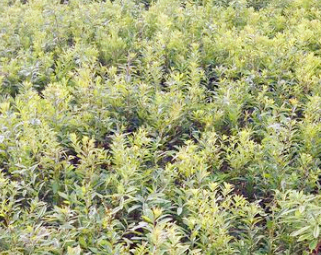
After selecting good seedling varieties, planting can proceed. Generally, the planting time is chosen in spring from February to March, when the temperature is more suitable for young tree growth, which helps increase the planting survival rate and thus increases yield. When planting, it is best to control the planting hole to 1 m wide * 80 cm deep, and add farmyard manure and nitrogen fertilizer into the hole as base fertilizer. In addition, planting density also greatly affects the survival rate. Since bayberry needs light throughout the year to maintain growth, the density cannot be too high. For the permeability of each plant, generally plant 25-30 plants per mu, with row spacing of 4-5 m and plant spacing of 3-4 m being preferable. At the same time, to maintain normal density, pruning treatment is needed and sufficient base fertilizer must be applied.
III. Fertilizer and water management
To enable bayberry to grow quickly and increase yield, fertilizer and water management is a key step. In addition to applying sufficient base fertilizer, to promote seedling growth, topdressing is also needed according to the growth stage. Generally, topdressing fertilizers are mainly plant ash and soil-and-miscellaneous manure, plus an appropriate amount of chemical fertilizer and organic fertilizer, with topdressing applied 2-3 times each year. Especially during the fruiting period, potassium fertilizer needs to be emphasized. In addition, 3-4 months after planting, the bayberry root system will fill the planting hole. At this time, to benefit root growth, the surrounding soil needs to be deeply turned and loosened. Second, bayberry is not drought-tolerant and has a relatively large water demand. The soil can be kept moist and water regulation carried out appropriately. During the growing period, it is best to maintain humidity at around 60%-70%, and during the fruiting period it is best for humidity to be around 40%-50%. This can not only promote the growth of bayberry trees, but also smoothly allow them to enter the fruiting period, ensuring bayberry yield and quality.
IV. Shaping and pruning
During the growth period of bayberry plants, to promote more branching and form a canopy to increase yield, shaping and pruning are needed. Specifically, after the seedlings survive planting, cut off the top shoot of the main trunk to promote sprouting. After sprouting, to concentrate nutrients, all the lower buds can be removed, leaving only the upper buds. In the second year, 2-3 strong main branches can be retained to continue branching, and the remaining branches should be pruned off. This helps quickly form a round canopy. In addition, when pruning, to avoid excessive nutrient consumption, diseased and pest-damaged branches, weak branches, leggy branches, dead branches and dense branches should all be pruned off to avoid harming the growth of the main branches.
Summary: The above is the relevant introduction to high-yield cultivation methods for bayberry. I hope it is helpful to friends who need it!