A Detailed Guide to the Blooming Time and Care Methods of the Bird of Paradise Flower
The bird of paradise flower, also known as the crane flower (Strelitzia reginae), originates from southern Africa, so it prefers a warm environment. Its flowers look like a bird about to take flight, which is very unusual, and its leaves stay evergreen all year round. In China it is commonly seen planted in parks and used to accent flower beds, and it can also be grown indoors in pots to decorate the home environment. So when does the bird of paradise flower bloom? How do you care for it? Let's find out below.
I. When does the bird of paradise flower bloom?
1. The blooming period of the bird of paradise flower is in winter, and it generally lasts three to four months. The long blooming time is one reason people love it. Of course, with improvements in cultivation techniques, the bird of paradise flower can now be made to bloom all year round, as long as its growing temperature, light and other conditions are met, and starting from May a light fertilizer solution is applied once every 2 weeks to promote flower bud growth and development and increase the blooming rate.
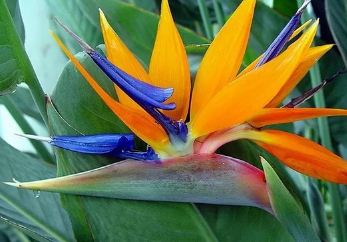
2. The colors of the bird of paradise flower alternate between orange-yellow and dark blue, which is very rare. The style protrudes outside, and each flower has 3 styles.
3. The flower language of the bird of paradise flower is fairly broad and has two meanings. One is that, like a bird that can fly to paradise, it can carry all kinds of longing emotions to paradise; the other is that no matter what time or place, never forget that the person you love is waiting for you in the same place.
II. How do you care for the bird of paradise flower?
1. Choose a suitable potting soil
The bird of paradise flower is a plant with fleshy roots and has low soil requirements, because it has a very strong ability to take up nutrients and water. Precisely because of this, the roots can easily grow too fast or become too thick, so at this point we need to prepare a suitably sized pot and pay attention to observing it.
For the soil, a mixed soil is best, and it can be made from leaf mold, coarse sand, garden soil and fertilizer in proportion. This is because the soil's air permeability and drainage must be ensured; if there is too much standing water, root rot will occur.
2. Only with a suitable temperature will it bloom well
The most suitable growing temperature for the bird of paradise flower is between 12-25°C. If it can be kept in a greenhouse all year round, the blooming time can be extended. At the same time, when caring for the bird of paradise flower in winter, remember to place it indoors somewhere no lower than 5°C, otherwise it will easily enter a dormant state and stop growing or grow more slowly.
3. The bird of paradise flower likes light
For the bird of paradise flower to grow well, it must receive no less than 4 hours of light every day. Especially in autumn and winter when it enters the blooming period, light affects the number and quality of the flowers; if conditions allow, artificial lighting can be provided. In summer, however, it still needs appropriate shading, otherwise the leaves will turn yellow and wilt.
4. Watering should be determined according to the season
The bird of paradise flower needs more water in spring and summer. At this time, not only should you water according to the moisture level of the potting soil, but you should also spray water around the leaves to raise the air humidity and lower the temperature. By late autumn, after the temperature gradually drops, the amount of watering should be controlled; generally it is enough to keep the potting soil moist but on the dry side.
5. Fertilize lightly
To prevent root burn, when fertilizing the bird of paradise flower you should apply a relatively dilute fertilizer solution, about twice a month. For example, household rice-washing water is a good choice; grown this way, the flowers produced are even more beautiful.
In summary, the blooming period of the bird of paradise flower is in winter. To grow it well, you must meet its growing conditions such as soil, temperature, light, water and fertilizer.