How to grow chayote for high yields? Introduction to cultivation methods for a new vegetable variety
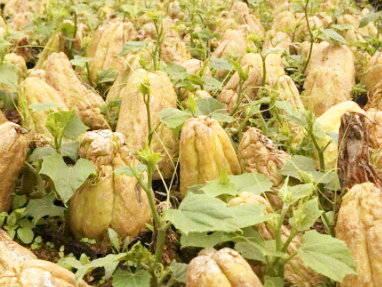
Chayote, also called longevity melon, gets its name because its shape resembles the hand of Buddha. It is a newly emerging vegetable variety in recent years. Because its flesh is tender and fresh, and its nutritional and medicinal values are both high, it is deeply welcomed by everyone. Market demand is high and market prospects are good. Many growers also want to plant it, but the yield is not high. So the editor will introduce the high-yield cultivation methods for chayote:
I. Land selection and soil preparation
Because chayote's resistance is not particularly strong, it is suitable for growing under warm conditions. For the soil, it is best to choose sandy soil with sufficient sunlight, good soil permeability, good drainage and water storage capacity, and abundant fertility. If conditions do not meet this, neutral soil with weaker clay content can also be chosen for planting. When preparing the land, first evenly spread farmyard manure over the land, then deep-plow the soil, so that nutrients can penetrate deep into the land and soil fertility can be appropriately increased. When preparing the land, try to break the soil clods finely and level the land. Next, small ditches can be made in the field about every 1.5 m to facilitate drainage and irrigation.
II. Sowing and raising seedlings
To increase chayote yield and survival rate, the usual planting time is around April to May, but the specific best time should be based on local climate conditions. In addition, chayote's growth cycle and seed seedling period are relatively long. Before sowing, soak the seeds in warm water, remove them, then put them into a chemical agent and stir evenly, rinse with water, drain the water, and then sow. Generally, sowing methods are divided into hole sowing and transplanting. Hole sowing means sowing in the field at a row spacing of 40-50 cm and a plant spacing of 30-40 cm, then covering the seeds with soil. Transplanting means first cultivating chayote seedlings on a seedbed, usually transplanting around May, with the same spacing as hole sowing. Finally, for both hole sowing and transplanting, the land must first be watered wet before planting.
III. Field management
To improve chayote yield and quality, field management must be carried out correctly during its growth period. Generally, chayote needs three fertilizations during the growing period. Note that after chayote is planted, fertilizer cannot be applied, but watering is allowed to prevent the seedlings from withering. In addition, when the plants enter the rapid growth stage, the first fertilization is needed, mainly with urea. The second fertilization is during the peak flowering period of chayote flowers. At this time, a certain dose of foliar fertilizer and decomposed farmyard manure should be sprayed to promote flowering and preserve fruit. The last time, after the fruit has set successfully, an appropriate amount of boron fertilizer can be sprayed to promote the growth and ripening of chayote. In addition, during the growth period of chayote, especially in summer, a large amount of water is needed. Normally, air humidity and soil moisture can be maintained to accelerate the growth of chayote stems and vines, so as to avoid insufficient water affecting the flowering and fruiting rate.
IV. Branch and leaf management
To improve chayote yield and quality, when chayote grows to 40 cm long, it needs to be trellised. Trellising can also help avoid many pests and diseases. Next, during its growth process, part of the branches and leaves need to be pruned to reduce nutrient consumption and can also increase the success rate of fruit setting. In addition, the most suitable temperature for chayote growth is around 25°C. If the ground temperature is lower than 5°C, chayote will be unable to grow and will die. If the temperature is too high, its growth rate will slow noticeably and affect its growth.
Summary: The above is the relevant introduction to high-yield cultivation methods for chayote. I hope it is helpful to friends who need it!