A Detailed Guide to the Planting Time and Methods for Growing the National Flower, the Peony, as a Home Potted Plant
Growing flowers and plants is one of the leisure activities of many young people and retired seniors today, and growing the national flower, the peony, as a potted plant at home is also a favorite of many gardening enthusiasts. Below, the editor of Tuliu.com introduces the planting time and methods for growing peonies as home potted plants. Friends who like peonies and want to grow them can take a good look.
I. Basic Information About the Peony
1. The Origin of the Peony
The peony is a perennial deciduous shrub, also known as Shugu, Lujiu, Bairong, Mu Shaoyao, Bai Yujin, Luoyang Hua, Fugui Hua, Bai Liang Jin, and so on. It is one of China's top ten famous flowers and also China's national flower. Because of its brilliant colors and magnificent appearance, it also enjoys the reputation of “King of Flowers.” It is a precious woody ornamental flower unique to China, with a history of several thousand years to date.
2. The Value of the Peony
The peony has brilliant colors and graceful blooms, and comes in eight major color series including white, yellow, red, pink, purple, green, dark purple, and snow blue, so it can be said to have extremely high ornamental value. In addition, the peony can also be used as a material for food and medicine. Deep-frying or pan-frying peony petals, or making peony soup, are all excellent options; moreover, using the peony in medicine has effects such as cooling the blood and removing stasis, regulating menstruation and invigorating blood circulation, clearing heat and detoxifying, antibacterial and anti-inflammatory, anti-allergic, and anti-tumor effects, and it is also very good at promoting the phagocytic function of monocytes and improving the body's immune function. A reminder here: when using it as a Chinese herbal medicine, you must follow your doctor's advice!
3. The Flower Language, Meaning, and Symbolism of the Peony
The flower language of the peony is noble and pure, aristocratic, dignified and elegant, and gracefully poised in ten thousand ways.
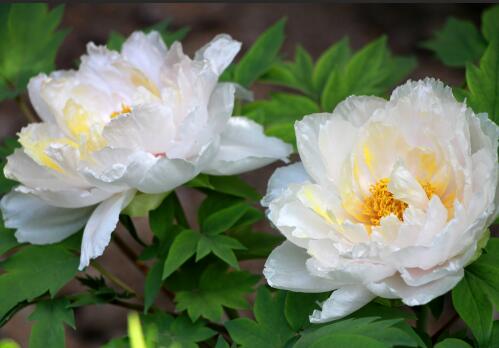
The peony's meaning is completeness, deep affection, wealth, and elegant magnificence.
The peony symbolizes defiance of power, heroic unyieldingness, and keeping one's word.
II. The Planting Time and Methods for Growing Peonies as Home Potted Plants
Propagation methods for peonies include division, cuttings, grafting, and sowing, but compared with the complexity of sowing and its long time to bloom, division and cuttings are more suitable for home potted plants.
(I) Planting Time for Potted Peonies
1. If division is used to propagate the peony, it can be done in early spring, when the peony's new buds begin to swell, the old plant's new leaves have unfurled, and before the new plant's new leaves have emerged. Dividing at this time is good for survival, and with proper care, it can bloom that same year.
2. If cuttings are used to propagate the peony, it can be done after the peony flowers have faded.
3. If seeds are used for propagation, you must wait until the peony seeds are ripe and sow them right after harvesting. If the peony seeds are purchased, you can choose to sow them in spring or summer, that is, from March to August each year.
(II) Planting Methods for Potted Peonies
1. The soil for planting peonies is best loose, fertile, and neutral or slightly alkaline. Place the prepared peony seedling, with broken and diseased roots removed, into the hole in the potting soil with its root system spread out, then fill the hole back in and firm the soil.
2. After planting, the peony should be watered once, and watered thoroughly. After that, whether to water depends on how dry or moist the soil is. Generally, in summer water once every three days, in winter about once every ten days, and in autumn about once a week. After the temperature drops in winter, if the soil in the pot is not dry, there is no need to water.
3. The peony is a flower that likes fertilizer, so generally it can be fertilized about three times a year: the first time in March, the second half a month after the flowers bloom, and the last before the onset of winter. When fertilizing, apply it around the root system and let it slowly seep into the potting soil. Experienced friends can make their own fertilizer, and those unsure about the ratios can also buy professional fertilizer on the market.
4. For peonies in the growing period, pruning should be done in a timely manner, cutting off dry, diseased, weak, and flowerless branches and leaves; the pruning shape can be according to your own preference. In addition, during the peony's growing period, weeds should be pulled out and the soil turned over. Potted peonies that have been planted for three or four years should be given extra fertilizer and repotted.
5. Before sprouting in early spring, spray lime sulfur mixture; in summer, use a mixed solution of insecticides and fungicides, once every 2 weeks depending on the condition. Along with fertilizing, it is also appropriate to add chemical fertilizers and growth regulators, etc. In addition, pay attention to attacks from pests and diseases such as black spot, root rot, and scale insects.