Detailed Guide to Planting Time and Methods for Ranunculus (Persian Buttercup)
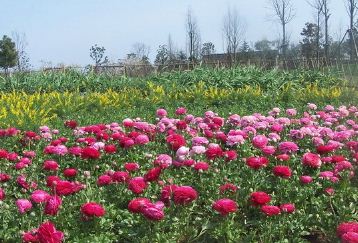
"Mao liang gen" (gèn) actually refers to Ranunculus, also known as celery flower, Persian buttercup, and buttercup rose. Because its flowers resemble peonies, it is also called Western peony, though its flower shape is smaller. It now commonly appears in parks and as a household potted plant, and it is excellent for decorating the environment because its flower colors are very vibrant. Today let's learn about the planting time and methods for Ranunculus.
I. Planting Time for Ranunculus
The planting time for Ranunculus affects whether it will bloom on schedule. Generally, Ranunculus seeds need to be sown at a temperature of around 20°C. Based on this characteristic, we usually choose September for planting. Of course, in places with lower temperatures in the north, it can be done slightly earlier, such as sowing in August, to accommodate Ranunculus's growth characteristics of being afraid of both cold and heat.
The general seed germination method is relatively simple: dry the Ranunculus seeds to evaporate excess moisture, then place them in a low-temperature (minus 1°C to 5°C), sealed space and let them sit. If the temperature drops below minus 1°C, the seeds will suffer frost damage, so keep this in mind. Generally, seeds that have undergone germination treatment have a much higher sprouting rate than those that have not, so it is best not to skip this step.
If you bought bulbs, they must be refrigerated before planting, and then sterilized with professional agents.
II. Planting Methods for Ranunculus
1. Suitable Temperature
The growing environment for Ranunculus must be semi-shaded and cool. Its most suitable growing temperature differs between day and night: during the day it is generally above 20°C, and at night it is generally 8-10°C. Ranunculus is neither cold-tolerant nor heat-tolerant. In hot summer weather, it enters dormancy, so the bulbs must be dug out and the surface dried before storage, because excess moisture will increase the likelihood of root rot. Remember, in winter, frost damage must be prevented in advance. If the temperature falls below 5°C, it must be moved indoors for care.
2. Loose and Fertile Soil
Based on the origin of Ranunculus, we can know that planting it requires fertile, loose soil for normal growth. Therefore, the soil in the pot usually needs to be mixed, for example using perlite mixture, peat, humus soil, etc. If you really don't know how, you can go to a flower shop to have it prepared.
3. Watering and Controlling Water Amount
There are mainly two points here: one is to control the amount of watering during the low-temperature period in winter, and the other is during the summer dormancy period, where the soil in the pot needs to be kept dry to avoid excessive water accumulation in the pot causing rhizome rot.
4. Fertilizing During the Growth Period
In addition to the base fertilizer applied to the soil, sufficient water and fertilizer are also needed during the growth period, because only then can the growth rate of leaves and flowers be ensured.
In addition, pay attention to disease problems in Ranunculus. Once diseases such as southern blight occur, they will quickly affect healthy plants, which will cause the entire Ranunculus plant to die. Early detection and early treatment with medication must be achieved.