How to grow strawberries in a greenhouse? Detailed explanation of planting time and key technical points
Strawberries have high nutritional value, contain a variety of nutrients, and have health benefits. Greenhouse cultivation has now developed, because greenhouse strawberry cultivation is easy, convenient to manage, low in production cost, high in yield, and good in returns, making it suitable for farmland structural adjustment and the development of profitable agriculture in various regions. Let's take a look below at the introduction to greenhouse strawberry planting time and key technical points.
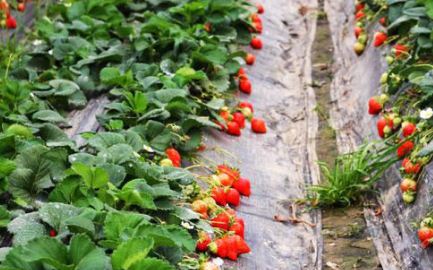
I. Greenhouse strawberry planting time
The time for planting strawberries is early to mid-September. In some areas, planting in late September is also acceptable, but the seedlings planted per mu should not be too dense. If too dense, it is easy to cause excessive vegetative growth of strawberry plants or tall leggy seedlings, and ventilation and air permeability will be poor, which is not conducive to the implementation of pest and disease control work. Generally, about 6000 seedlings per mu is sufficient. Strawberries are shallow-rooted crops, so achieve “deep planting does not bury the crown, shallow planting does not expose the roots.”
II. Greenhouse strawberry planting techniques
1. Land preparation and variety selection
The strawberry field should choose sandy or loamy soil with flat ground, slightly higher terrain, deep and loose soil layers, fertility, and good water permeability and aeration. The field can be sprayed with 1000-times dilution of 50% phoxim emulsifiable concentrate to control pests such as white grubs, mole crickets, and cutworms. For varieties, excellent varieties such as Jinmingxing and Tanfeng should be selected, which have strong growth vigor, high fruit-setting rate, shade tolerance, cold tolerance, resistance to powdery mildew, and a short dormancy period.
2. Timely planting and greenhouse covering
In order to strive for an early market, the time for transplanting strawberries into the greenhouse should be in early September. Seedlings should be transplanted as they are lifted. Plant 2 rows per bed, with a row spacing of 25 cm and a hole spacing of 20 cm, planting about 12000 plants per mu. Water promptly after planting, and bury the exposed roots into the soil layer. The time for covering the greenhouse is generally around mid-November.
3. Temperature and humidity management
The suitable temperature for strawberry fruit development is 18-25°C. To reach this temperature in winter and early spring, a middle tunnel can be built inside the greenhouse and plastic film mulch can be covered. During the day, the temperature inside the greenhouse should be maintained at 28-30°C, and at night it should be kept above 5°C. When high temperatures above 30°C occur, ventilate promptly to cool down. When the humidity inside the greenhouse exceeds 70%, ventilate promptly.
4. Fertilizer and water management
Greenhouse strawberries have a long fruiting period. To prevent fertilizer deficiency and premature senescence, apply heavy amounts of high-quality decomposed farmyard manure, topdress promptly, and frequently spray foliar fertilizer. Irrigate immediately after planting. Irrigate once each at flowering and at the early stage of berry growth. If there is drought, irrigate once every 5-7 days. In autumn when there is a lot of rain, drain promptly. Drainage ditches should be made around the strawberry field so that the water in the bed ditches inside the greenhouse can be drained completely.
5. Intertillage and loosening soil, leaf removal and fruit thinning
Intertillage and loosening the soil helps the decomposition of organic matter. Remove diseased and old leaves and weak fruits to reduce nutrient consumption, which is beneficial to strawberry growth and berry development.
6. Integrated pest and disease control
For greenhouse strawberry pests and diseases, agricultural control should be the main approach, supplemented by chemical control. The occurrence of pests and diseases can be prevented through measures such as selecting disease-resistant varieties, cultivating virus-free strong seedlings, planting on high ridges, covering with plastic film, reasonable crop rotation, cleaning the soil, and avoiding drought and high humidity. If diseases are found, note that pesticides should not be used before and after flowering, so as not to affect pollination and increase deformed fruits. High-efficiency, low-toxicity, low-residue pesticides should be selected, and pesticide dosage and the pre-harvest interval should be strictly controlled. If gray mold occurs, it can be sprayed with 300-times dilution of 25% carbendazim wettable powder.
7. Timely harvest
Strawberry harvesting is generally done from 8-10 a.m. or 4-6 p.m. Generally, do not pick dew-covered fruit or sun-heated fruit, so as to avoid rot and deterioration. When harvesting, handle gently and do not damage the calyx.