How much is broccoli per jin and a detailed explanation of key cultivation techniques
Broccoli, also known as green cauliflower, Italian kale, green broccoli, tender-stem cauliflower, etc., is a natural food ingredient with high nutritional value. We can always find broccoli in healthy diet recipes, so there are quite a few farmers who grow broccoli. How much is broccoli per jin? What are the key cultivation techniques?
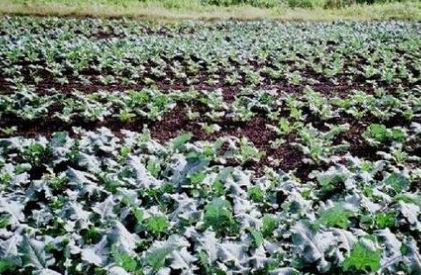
I. How much is broccoli per jin?
The price of broccoli is affected by factors such as sales region and quality. At present, the market price of broccoli per jin ranges from 4 to 10.5 yuan. Broccoli is a herbaceous plant of the cruciferous family, with a well-developed root system, a thick main root and stem base, and a shortened stem during the vegetative growth stage, in which the axillary buds remain dormant. After completing stage development, it produces flower stems, and the axillary buds also gradually sprout. Broccoli grows vigorously and has strong heat tolerance and cold resistance. At the top it produces densely clustered buds in a curd-like head, and the buds are green, hence it is also called green cauliflower. Leaf shapes include broad leaves and long leaves.
II. What are the key cultivation techniques for broccoli?
1. Land preparation before planting
After the plot is plowed finely and harrowed level, beds are made at 5 m, with the bed furrows parallel to the water inlet to facilitate irrigation and drainage; after the beds are made, planting holes are dug (both bed making and hole digging must use a line to ensure standard and neat work). The specification of the planting holes (that is, spacing between plants and rows) is 45×50 cm. After the planting holes are dug, apply 1500-2000 kg of farmyard manure per mu (if conditions permit), plus 50 kg of ternary compound fertilizer + 4.5 kg of boron sand as base fertilizer. The base fertilizer must be mixed evenly with the soil in the holes.
2. Mulching
To retain water, retain fertilizer, keep warm, and suppress weed growth, mulching is necessary. This time, black film with a width of 2 m is used, laid horizontally (that is, perpendicular to the bed surface). Each piece of film 5 m long (that is, the width of the bed) and 2 m wide can be used to plant about 44 broccoli plants. After mulching, press the edges of the film firmly with soil.
3. When planting, make a hole in the plastic film above the hole, plant the seedling, and cover the joint between the root collar of the seedling and the plastic film firmly with soil. (A line must be used when planting.)
4. Water thoroughly to settle the roots, and appropriately reduce the number of waterings after the plants survive.
5. Intertillage management
(1) Moisture: During the growth period of broccoli, the soil should be kept moist, especially during the stage of flower head growth and development after inflorescence differentiation, and it must not suffer drought. Watering can be done during or after topdressing, and should be controlled according to soil moisture and plant growth conditions. Furrow irrigation can be adopted, and water should be drained when it reaches half the bed height. If moisture is insufficient, flower head formation and expansion will be inhibited, and yield will decrease.
(2) Topdressing: Broccoli has a high fertilizer requirement, so topdressing should be applied in a timely manner according to different growth stages. Apply nitrogen fertilizer at the seedling stage to promote vegetative growth, control fertilization at the middle stage to prevent excessive lush growth, and focus on curd fertilizer at the later stage to promote flower head enlargement. Fertilization time: apply the first fertilization one week after planting and survival, using 20 kg of urea or compound fertilizer per mu; 25-30 days after planting, apply 20 kg of compound fertilizer again by hole application; when the flower head forms, the last topdressing should be applied heavily, with 15 kg of compound fertilizer and 10 kg of urea.
(3) Main pests and diseases and control techniques: Broccoli has relatively strong disease resistance, and pest damage is not serious. Commonly occurring pests and diseases include: downy mildew, soft rot, diamondback moth, cabbage caterpillar, and cabbage aphid.
Diseases: Downy mildew can occur in the early stage, and black rot is likely in the later stage. They can be controlled with chlorothalonil, dexon, and iprodione. Downy mildew is a fungal disease and is more obvious during the flower head development process. It starts on old leaves and then spreads to young leaves. At first, chlorotic spots appear and the leaves turn yellow. When dry, the leaves wither; when humid, mold appears on the underside of the leaves. The main factor is excessive humidity, which reduces plant resistance. In addition, there is soft rot: a bacterial disease, which is prone to occur when there is more rain in the late growth period of broccoli. The lesions are water-soaked, gradually soften and rot, and produce a foul odor. The pathogen invades through wounds on roots, stems, and leaves. Control: at the early stage of disease onset, promptly spray streptomycin sulfate or 72% agricultural streptomycin wettable powder 3000—4000 times solution, or new streptomycin 4000 times solution.
Pests: Diamondback moth: newly hatched larvae can only feed on leaf mesophyll, leaving transparent epidermis; 3—4 instar larvae can eat the leaves into holes or notches, and in severe cases the entire leaf is eaten into a net-like shape; cabbage caterpillar: larvae gnaw the leaf mesophyll, leaving only a layer of transparent epidermis, and in severe cases only leaf veins remain, and soft rot is likely to occur when they damage the flower head; cabbage aphid: adult aphids and nymphs suck the sap of the host, and severely damaged plants lose water, curl, turn yellow, and become distorted and deformed. Cabbage aphid damage can also develop into sooty mold and spread viral diseases. It can occur for 30—40 generations. Pest control: alternate spraying with chlorfenapyr, acetamiprid, and diaofengchongjing for control.