Large-scale Hyacinth Planting Methods and Key Points of Water and Fertilizer Management
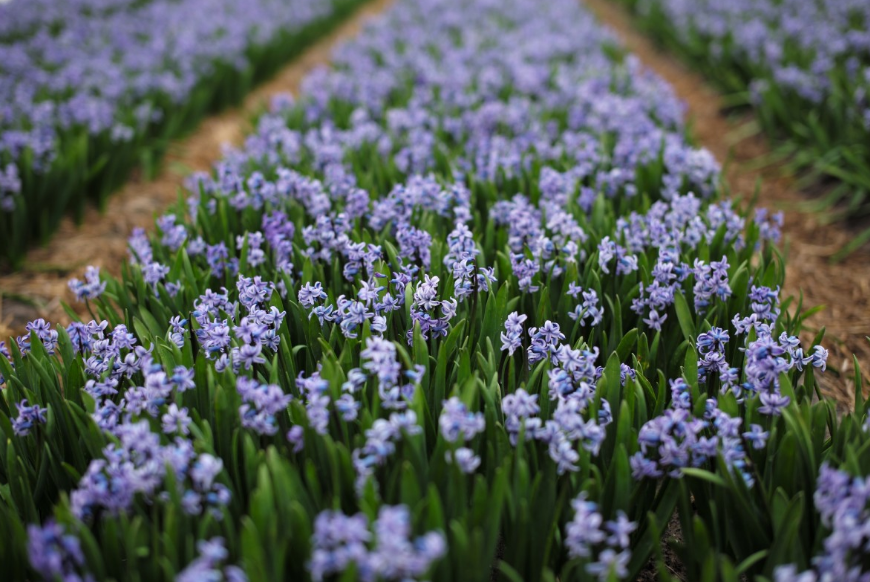
Hyacinth is a perennial herbaceous bulbous plant, originally native to Europe and other regions, and after being introduced to our country it has become very popular as an ornamental plant. The fragrance of hyacinth has effects such as relieving fatigue and refreshing the mind, and besides being ornamental, hyacinth is also one of the main plants from which aromatic oil is extracted. So how do you plant hyacinths on a large scale? Be sure to do a good job of water and fertilizer management!
I. Selecting Bulbs
The flowering and growth of hyacinth both require relatively large amounts of nutrients. The growth nutrients of hyacinth are mainly stored in the bulb. In order to ensure improved ornamental value and growth speed of hyacinth, you should choose bulbs with a smooth and glossy surface, relatively even scales, and plump, nutrient-rich bulbs for cultivation. The selection of bulbs is very important; a good bulb determines the later growth of the hyacinth, facilitates later management, and reduces cultivation costs.
II. Soil Selection and Cultivation
As just mentioned, the cultivation of hyacinth has relatively large nutritional needs, so when cultivating, try to choose sandy soil with sufficient fertility, rich in humus, and good drainage and irrigation. Also, in the later care of hyacinth, the requirements for soil are relatively high. After choosing the soil, water it thoroughly and let the soil remain in a moist state for about one day, then carry out cultivation. After cultivation, water timely according to the growth condition of the hyacinth and do a good job of management.
III. Controlling Light
During the growth process, hyacinth needs sufficient light. If sufficient light is not ensured, it will lead to a series of problems such as poor growth of hyacinth, weak plants, hindered flower bud enlargement, and leaf chlorosis. However, light should not be too strong either, because if it is too strong it may scorch hyacinth leaves and shorten the flowering period of hyacinth. Therefore, we must reasonably control light, avoid direct sunlight on hyacinth, but also ensure there is enough sunlight.
IV. Temperature and Humidity
Hyacinth is a warmth-loving plant. The growing temperature should not be too high or too low. If too high, it will affect the growth of hyacinth, causing abnormal growth and increasing the rate of blind flowers. But if too low, it easily causes freezing damage to hyacinth. Therefore, keeping the temperature at around 25 degrees is most suitable, and the soil should maintain a humidity of around 65%. If too high, it inhibits the respiration of hyacinth and easily causes root rot and decay. If too low, there is too little water, and above ground there will be wilting due to water shortage, and in severe cases death.
V. Precautions
After successful cultivation, be sure to do a good job of water and fertilizer management to prevent the hyacinth bulb from cracking at the base and rotting. Also, control the harvest time well. If harvested too early, the bulb is not mature enough; if not harvested in time, when encountering rainy weather and overly moist soil, the drying of the bulb is hindered, and it is extremely prone to rot during storage. Therefore, during storage, ensure the storage room is dry, spread them on the ground to improve ventilation, and prevent spoilage.
The above is the introduction by Tuliu.com on hyacinth planting methods and precautions. During cultivation, hyacinth needs timely topdressing, and topdressing should mainly be applying more but in small amounts. Spring and autumn are the peak growth periods of hyacinth, so fertilizer should be applied at least twice a month, but topdressing should also depend on temperature. If it exceeds the range of 10-30 degrees, stop fertilizing and control the temperature.